Advertisements
Advertisements
प्रश्न
Prepare a Fact file of any of the following plants/trees, using the points given.
[coconut/neem/basil/cactus/apple]
- Name of Plant/Tree .................
- Scientific name .................
- Region and climate .................
- Features .................
- Growth .................
- Size, shape and colour .................
- Uses .................
- Any special feature .................
Advertisements
उत्तर
- Name of Plant/Tree: Neem
- Scientific name: Azadirachta Indica
- Region and climate: Native to India, but also grown in Nepal, Pakistan, Sri Lanka, and Bangladesh. It grows in tropical and semitropical regions and requires a sub-arid and sub-humid climate. It can tolerate temperatures of up to 50 degrees Celsius.
- Features: It is a tall evergreen tree that bears flowers and fruit. Neem tree has a similar appearance to the Chinaberry tree.
- Growth: It is a fast-growing tree and requires plenty of sunlight to grow healthily.
- Size, shape and colour: The tree can reach a height of about 16-21 metres. It has wide branches and a dense, roundish crown. The leaves are pinnate and alternating. They can be about 20-40 cm long. The tree has green to dark green leaves and white flowers. It has a straight trunk and rough, scaly bark. It grows a fruit that is oval or round in shape and has a thin skin.
- Uses: Various parts of the neem tree are used for the following purposes:
- The neem leaves are used to treat skin ailments, and the powder is taken as a herbal supplement to moisturise the skin.
- Neem oil, obtained from its seeds, is used in skin care products, pesticides and in organic gardening.
- The bark of the tree is used in dental care for its antiseptic and anti-inflammatory properties.
- The twigs of the tree are used as a natural toothbrush in Indian villages, as they prevent cavities and gum diseases.
- Any special feature: It is one of the very few shade-giving trees in the dry, drought-prone regions of India.
APPEARS IN
संबंधित प्रश्न
Various aspects of Nature have special features that make them differ from one another.
For example,
Birds: appearance, shape, colour, size, food habits, habitat, sound etc.
Write such special features of each of the following.
- Land
- Water
- Trees
- Animals
- Insects
What things in nature teach us the following:
Nothing is impossible to achieve
What things in nature teach us the following:
Problems are not permanent.
What things in nature teach us the following:
Delicate structures are not a sign of weakness
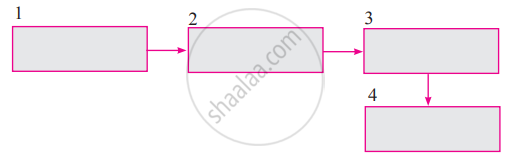
Go through the lesson again and complete the flow-chart that highlights the life of a ‘hibiscus’ flower.
Think and answer in your own words.
‘An oyster turns a grain of sand into a pearl.’ What can we learn from this example?
Look at the following thing. Discuss with your friend, what you learn from them.
A bee ............
Look at the following thing. Discuss with your friend, what you learn from them.
A creeper ..........
The writer explains the contrasting features of ‘water’ and ‘rock’ in the text. Write all the features of both water and rock in the given table.
| Water | Rock |
| 1. | 1. |
| 2. | 2. |
| 3. | 3. |
| 4. | 4. |
Read the following passage and do the activities:
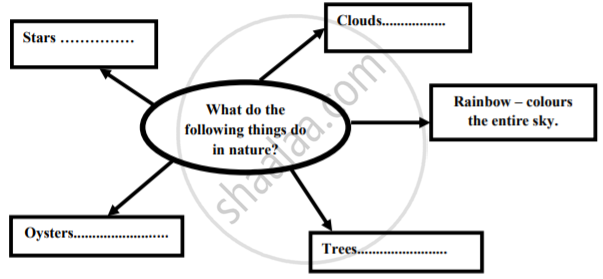
A1. Complete the following web:
We saw small bits of grass peeping through the small cracks in the concrete pavement. It left us thinking: however impossible things may look, there is always an opening......
We saw a tree bare of all leaves in the cold winter months. We thought its chapter was over. But three months passed, spring set in, and the tree was back to its green majesty once again, full of leaves, flowers, birds, and life. What if we too had the conviction that, however difficult things are right now, it will not remain so forever. Remember, this too shall pass.
We saw an army of ants lugging a fly which was at least ten times the ant’s size. The ants organized themselves around the fly, lifted it on frail feelers, and carried it to quite a distance. Their teamwork and perseverance were impressive. What if we too are consistent, organized focused.......
Spider webs are delicate, yet very strong. A rainbow colours the entire sky. Oysters take in a grain of sand they open up with a pearl. Innumerable stars shine across the infinite sky. Clouds take new shapes with every passing moment. The wind makes trees dance with unhindered passion. Water, without a hint of ego, changes its form according to the dictates of the sun and the wind. When we see a caterpillar turn into a butterfly, a flower turns into a fruit, we experience the alchemy of nature… we touch it and become gold ourselves.
A2. What do the following things in nature teach us: (02)
- Ants ______
- Grass ______
A3. Complete the following collocations with the help of the passage: (02)
- ............... winter
- ................... moment
- ………….passion
- ……………. sky
A4. Do as directed:
- Spider webs are delicate, yet very strong. (02)
(Rewrite the sentence beginning with ‘Although ..........’) - We touch it and become gold ourselves.
(Add a question tag and Rewrite the sentence)
A5. How do you deal with difficulties and problems in life? Explain in brief. (02)
