Advertisements
Advertisements
Question
Name the reagents used in the following reactions:

Advertisements
Solution
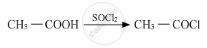
Thionyl chloride
APPEARS IN
RELATED QUESTIONS
On acid hydrolysis, propane nitrile gives.
Show how the following compound can be converted to benzoic acid.
Ethylbenzene
Show how the following compound can be converted to benzoic acid.
Acetophenone
Show how the following compound can be converted to benzoic acid.
Phenylethene (Styrene)
Predict the products formed when cyclohexanecarbaldehyde reacts with the following reagent.
Tollens’ reagent
An organic compound (A) (molecular formula C8H16O2) was hydrolysed with dilute sulphuric acid to give a carboxylic acid (B) and an alcohol (C). Oxidation of (C) with chromic acid produced (B). (C) on dehydration gives but-1-ene. Write equations for the reactions involved.
How will you prepare the given compound from benzene? You may use any inorganic reagent and any organic reagent having not more than one carbon atom.
p-Nitrobenzoic acid
How is methoxy benzene prepared from carbolic acid?
The end product Y in the sequence of reaction:
\[\ce{RX ->[CN^-] X ->[NaOH] Y}\] is:
Alkaline hydrolysis of C4H8Cl2 gives a compound (A) which on heating with NaOH and I2 produces a yellow precipitate of CHI3. The compound (A) should be ______.
