Advertisements
Advertisements
Question
In which of the following case, do the quantities vary directly with each other?
Options
x 0.5 2 8 32 y 2 8 32 128 p 12 22 32 42 q 13 23 33 43 r 2 5 10 25 50 s 25 10 5 2 0.5 u 2 4 6 9 12 v 18 9 6 4 3
Advertisements
Solution
| x | 0.5 | 2 | 8 | 32 |
| y | 2 | 8 | 32 | 128 |
Explanation:
x = 0.5, 2, 8, 32 and y = 2, 8, 32, 128
If we multiply x with 4, we get the directly required result as same as shown in corresponding y. In this case, as the value of x increases, the value of y also increases.
APPEARS IN
RELATED QUESTIONS
68 boxes of a certain commodity require a shelf-length of 13.6 m. How many boxes of the same commodity would occupy a shelf length of 20.4 m?
In 10 days, the earth picks up 2.6 × 10⁸ pounds of dust from the atmosphere. How much dust will it pick up in 45 days?
For 9 cows, 13 kg 500 g of food supplements are required every day. In the same proportion, how much will be needed for 12 cows?
A truck requires 108 liters of diesel for covering a distance of 594 km. How much diesel will be required to cover a distance of 1650 km?
If x = 5y, then x and y vary ______ with each other.
The perimeter of a circle and its diameter vary ______ with each other.
A car is travelling 48 km in one hour. The distance travelled by the car in 12 minutes is ______.
It is given that l varies directly as m. Find m when l is 8.
If Naresh walks 250 steps to cover a distance of 200 metres, find the distance travelled in 350 steps.
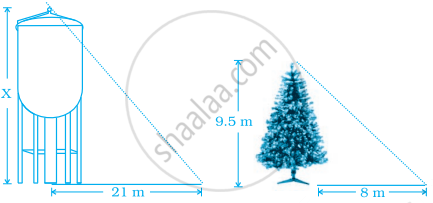
A water tank casts a shadow 21 m long. A tree of height 9.5 m casts a shadow 8 m long at the same time. The lengths of the shadows are directly proportional to their heights. Find the height of the tank.