Advertisements
Advertisements
Question
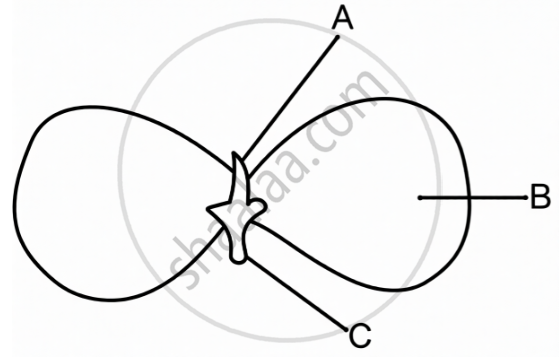
In the figure given alongside, the parts marked A, B and C are sequentially:
Options
cotyledon, plumule and radicle
plumule, radicle and cotyledon
plumule, cotyledon and radicle
radicle, cotyledon and plumule
Advertisements
Solution
plumule, cotyledon and radicle
Explanation:
- A: Plumule (develops into the shoot)
- B: Cotyledon (stores food for the embryo)
- C: Radicle (develops into the root)
APPEARS IN
RELATED QUESTIONS
State significance of pollination.
Sketch the reproductive parts of a flower.
Name the male part of the flower.
Where is the male gamete formed in flowering plants?
In tobacco plant, the male gametes have 24 chromosomes.
What is the number of chromosomes in the zygote?
What changes take place in the flower after fertilisation which lead to the formation of seeds and fruit?
Fill in the blanks:
A carpel consists of ________ , ________ and ________.
Fill in the blank:
Seeds are formed from________.
Draw a diagram of the longitudinal section of a flower and label on it sepal, petal, ovary and stigma.
What is phototropism?
Fill in the blank by selecting suitable word:
Transfer of pollen grains from the anther to the stigma is known as______________.
Answer the following question.
How does suitable pollination lead to fertilization?
Give scientific reason.
Flower is a structural unit of sexual reproduction in plants.
Identify the parts A, B, C, and D?
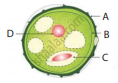
Length of pollen tube depends on the distance between ______
Give reason for the following:
Fertilization cannot take place in flowers if pollination does not occur.
In a plant flower the female whorl is ______.
Sexual maturation of reproductive tissues and organs are necessary link for reproduction. Elucidate.
The number of pollen sacs in a dithecous anther is ______.
