Advertisements
Advertisements
प्रश्न
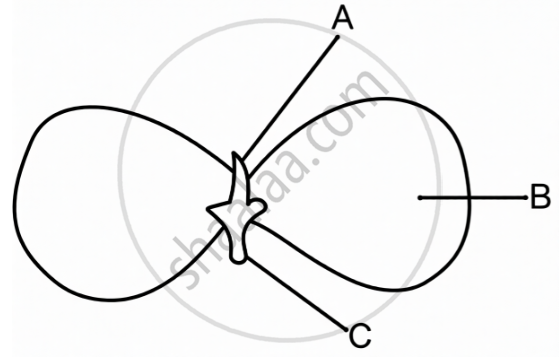
In the figure given alongside, the parts marked A, B and C are sequentially:
विकल्प
cotyledon, plumule and radicle
plumule, radicle and cotyledon
plumule, cotyledon and radicle
radicle, cotyledon and plumule
Advertisements
उत्तर
plumule, cotyledon and radicle
Explanation:
- A: Plumule (develops into the shoot)
- B: Cotyledon (stores food for the embryo)
- C: Radicle (develops into the root)
APPEARS IN
संबंधित प्रश्न
Sketch the reproductive parts of a flower.
The reproductive part of a plant is the ______.
Where are a plant's sex organs located?
What is made in anther of a flower?
Explain the term 'fertilisation'.
In tobacco plant, the male gametes have 24 chromosomes.
What is the number of chromosomes in the zygote?
Draw a diagram of a pistil showing pollen tube growth into the ovule and label the following:
Pollen grain, male gamete, female gamete, ovary.
Answer the following question.
How does suitable pollination lead to fertilization?
Find an odd one out.
Pollen tube reaches the embryo sac via style.
Pollen grains from anther are transferred to the stigma.
Draw a neat and labelled diagram.
Double fertilization in angiosperms
Match the following
| 1. | Petal | Opuntia |
| 2. | Fern | Chrysanthemum |
| 3. | Phylloclade | Attracts insect |
| 4. | Hooks | Spore |
| 5. | Sucker | Bignonia |
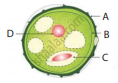
Identify the parts A, B, C, and D?
Which of the following are the chemical components of the wall of pollen tube?
How many middle layers are generally present in the wall of the anther lobes?
In a flowering plant, archesporium gives rise to ______.
Conidia are formed endogenously while zoospores are formed endogenously.
Pollen grains are produced by ______
The pollen tube usually enters the embryo sac ______.
