Advertisements
Advertisements
Question
The correct sequence of reproductive stages occurring in flowering plants is ______.
Options
gametes, zygote, embryo, seed
zygote, gametes, embryo, seed
seed, embryo, zygote, gametes
gametes, embryo, zygote, seed
Advertisements
Solution
The correct sequence of reproductive stages occurring in flowering plants is gametes, zygote, embryo, seed.
Explanation:
The male and female gametes fuse to form a zygote. The zygote develops into an embryo, which later develops into a seed.
APPEARS IN
RELATED QUESTIONS
Name the parts A, B and C shown in the following diagram and state one function of each.

Sketch the reproductive parts of a flower.
What is the function of a flower?
Draw a neat sketch of the stamen of a flower. Mark in it filament and anther.
How do the insects help in cross-pollination?
In tobacco plant, the male gametes have 24 chromosomes.
What is the number of chromosomes in the female gamete?
What is meant by ‘unisexual flowers’?
Draw a neat diagram of a flower showing its various parts. In this diagram mark stem, receptacle, sepals, petals, stamen and carpel.
In what ways is fertilisation in a plant similar to fertilisation in a human?
Identify A, B, C and D in the given diagram and write their names.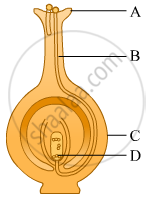
Identify the odd. Stigma, Style, Pollen, Ovary.
What is meant by pollination?
Find the odd one out:
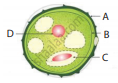
Identify the parts A, B, C, and D?
Sperm and egg nuclei fuse due to ______.
What would be the number of chromosomes in the cells of the aleurone layer in a plant species with 8 chromosomes in its synergids?
Conidia are formed endogenously while zoospores are formed endogenously.
Where is the zygote located in the flower after fertilization?
The ovaries of different flowers may contain ______.
State the post-fertilisation changes that lead to fruit formation in plants.
