Advertisements
Advertisements
Question
In a filtration, plant water is filtered using layers of
Options
sand and clay
clay and fine gravel
sand and fine gravel
sand, fine gravel and medium gravel
Advertisements
Solution
sand, fine gravel and medium gravel
Explanation:
In wastewater treatment, wastewater is allowed to enter a grit and sand removal tank. Here, the speed of wastewater is reduced in order to allow sand, grit and pebbles to settle down.
APPEARS IN
RELATED QUESTIONS
Name the gas produced when steam is passed over hot coke.
Name the gas produced when a piece of calcium is added to water.
Freezing mixture contains ............. and .............
The solubility of a gas in water.............. with rise in temperature and.......................with rise in pressure.
Give one word for the following statement:
A mixture of common salt and ice .
Two gases found dissolved in natural water are
Explain how the peculiar variation of density of water with temperature can protect marine-life.
Identify A, B, C and D; first one is done for you.
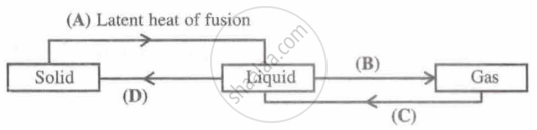
Define
Henry's law
What do you understand by soft water?
The water in a lake is called ground water.
Give the importance of dissolved air – in water.
State any two sources of water pollution.
What is meant by the term ‘offshore drilling’. State the main environmental effects of offshore drilling.
Give a reason for the following:
Efflorescence is minimum during humid conditions.
Differentiate between the following:
Natural water and treated water
Unscramble the words and fill in the blanks.
- ondencsaonti ______
- vaeionorpat ______
- ecippitatrino ______
Water changes to ice at ______.
A man travelling on a train threw an empty packet of food on the platform. Do you think this is a proper waste disposal method? Elaborate.
In which of the following activities will you use minimum amount of water?
