Advertisements
Advertisements
Question
Identify True/False statement. Correct the false statement to make it true.
Oogenesis takes place in the corpus luteum.
Advertisements
Solution
This statement is false.
Correct statement:
Oogenesis takes place in the ovary.
APPEARS IN
RELATED QUESTIONS
Male and female gametes are ______.
The process of release of the ovum from a mature follicle is called ______.
Define spermiation.
Multiple choice question.
The given figure shows human sperm. Various parts of it are labelled as A, B, C, and D. Which labelled part represents acrosome?
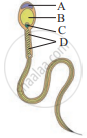
Explain the structure of secondary oocyte.
In meiosis, the number of chromosomes becomes ___________.
Explain two main process in sexual reproduction.
Expand the acronym.
LH
Formation of ____________ is an indication of the termination of oogenesis.
Identify the CORRECT sequence of events.
First meiotic division is observed in ____________.
Which among the following has 23 chromosomes?
Preparation of sperm before penetration of ovum is ______.
How many sperms are formed from 4 primary spermatocytes?
Aquatic animals in which fertilisation occurs in water are said to be
Fetal sex can be determined by examining cells from amniotic fluid looking for:
Which of the following cells during gametogenesis is normally diploid?
What is spermatogenesis?
What is the primary purpose of gametogenesis in organisms?
Which of the following phases are shared by both spermatogenesis and oogenesis?
