Advertisements
Advertisements
Question
How much is the potential difference between live and neutral wires?
Advertisements
Solution
The potential difference between live and neutral wires is around 220 V.
APPEARS IN
RELATED QUESTIONS
What do the following symbols mean in circuit diagrams?
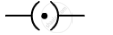
What is a circuit diagram
Explain the construction and working of the following. Draw a neat diagram and label it.
Electric motor
Find the odd one out and justify it.
Fuse wire, M.C.B., Rubber Gloves, Generator
In an electric circuit, electron flow a from of point of ______ potential to the point of ______ potential.
Answer the following question.
With the help of a suitable circuit diagram prove that the reciprocal of the equivalent resistance of a group of resistances joined in parallel is equal to the sum of the reciprocals of the individual resistances.
What do you understand by the closed electric circuit
Name the instrument used to control current in an electric circuit.
Explain the following:
Open circuit
In any electric circuit, when the switch is on and the current flows through it why do the wire, switches, bulb or devices become hot?
The unit of electrical power is _______.
Right or wrong sentence.
Increasing the current passing through the wire decreases the magnetic field intensity.
The switch is used to close or open an electric circuit.
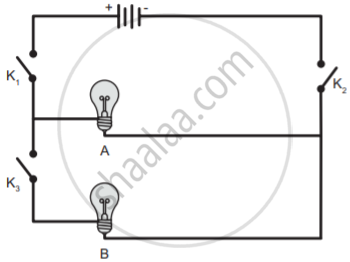
In the given circuit diagram, which of the given switch(s) should be closed. So that only bulb A glows.
Draw the circuit diagram for the series connection.
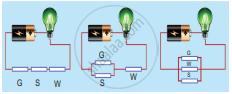
Study the three electric circuits below. Each of them has a glass rod (G), a steel rod (S), and a wooden rod (W).
In which of the electric circuits would the bulb not light up.
Fuse is
_____ has a thin metallic filament that melts and breaks the connection when the circuit is overheated.
In a simple circuit, why does the bulb glow when you close the switch?
Assertion: In an open circuit, the current passes from one terminal of the electric cell to another.
Reason: Generally, the metal disc of a cell acts as a positive terminal.
______ is a kind of fish which is able to produce an electric current.
In the following circuits (Figure), heat produced in the resistor or combination of resistors connected to a 12 V battery will be
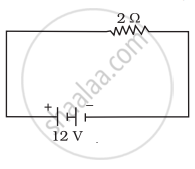 |
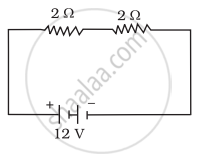 |
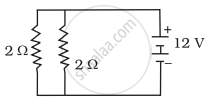 |
| (i) | (ii) | (iii) |
Draw a circuit diagram of an electric circuit containing a cell, a key, an ammeter, a resistor of 2 Ω in series with a combination of two resistors (4 Ω each) in parallel and a voltmeter across the parallel combination. Will the potential difference across the 2 Ω resistor be the same as that across the parallel combination of 4 Ω resistors? Give reason.
Choose the statement which is not correct in the case of an electric fuse.
Our body is a ______ of electricity.
In an electric circuit a fuse is a ______ ______ to prevent possible fire.

In the above circuit, if the current reading in the ammeter A is 2A, what would be the value of R1?
In the following arrangement shown in the following figure, the bulb will not glow if the ends A and B are connected with
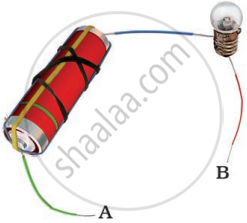
Will the bulb glow in the circuit shown in the following figure? Explain.
Paheli connected two bulbs to a cell as shown in the following figure.
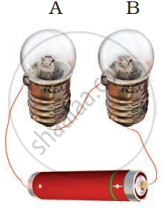
She found that filament of bulb B is broken. Will the bulb A glow in this circuit? Give reason.
Boojho has a cell and a single piece of connecting wire. Without cutting the wire in two, will he be able to make the bulb glow? Explain with the help of a circuit diagram.
How is Joule's law effect useful in electric circuits where fuse is used as a safety device?
Set up the circuit shown in Figure again. Move the key to ‘ON’ position and watch carefully in which direction the compass needle gets deflected. Switch ‘OFF’ the current. Now keeping rest of the circuit intact, reverse the connections at the terminal of the cell. Again switch ‘on’ the current. Note the direction in which the needle gets deflected. Think of an explanation.