Advertisements
Advertisements
Question
Find distance between point A(7, 5) and B(2, 5).
Advertisements
Solution
Let A(x1, y1) = A(7, 5) and B(x2, y2) = B(2, 5)
∴ By distance formula,
d(A, B) = `sqrt((x_2 - x_1)^2 + (y_2 - y_1)^2`
= `sqrt((2 - 7)^2 + (5 - 5)^2`
= `sqrt((-5)^2 + 0^2)`
= `sqrt(25)`
= 5 cm
∴ The distance between points A and B is 5 cm.
RELATED QUESTIONS
If the point P(2, 2) is equidistant from the points A(–2, k) and B(–2k, –3), find k. Also, find the length of AP.
Find the distance between two points
(i) P(–6, 7) and Q(–1, –5)
(ii) R(a + b, a – b) and S(a – b, –a – b)
(iii) `A(at_1^2,2at_1)" and " B(at_2^2,2at_2)`
Find the coordinates of the circumcentre of the triangle whose vertices are (8, 6), (8, – 2) and (2, – 2). Also, find its circum radius
If P (2, – 1), Q(3, 4), R(–2, 3) and S(–3, –2) be four points in a plane, show that PQRS is a rhombus but not a square. Find the area of the rhombus
Determine if the points (1, 5), (2, 3) and (−2, −11) are collinear.
If the distance between the points (4, k) and (1, 0) is 5, then what can be the possible value of k?
Find the values of x, y if the distances of the point (x, y) from (-3, 0) as well as from (3, 0) are 4.
Find the circumcenter of the triangle whose vertices are (–2, –3), (–1, 0), (7, –6).
Using the distance formula, show that the given points are collinear:
(1, –1), (5, 2) and (9, 5)
Find the distance between the following pair of point.
P(–5, 7), Q(–1, 3)
Determine whether the points are collinear.
A(1, −3), B(2, −5), C(−4, 7)
Find the distances between the following point.
A(a, 0), B(0, a)
Find the distance between P and Q if P lies on the y - axis and has an ordinate 5 while Q lies on the x - axis and has an abscissa 12 .
Prove that the points (4 , 6) , (- 1 , 5) , (- 2, 0) and (3 , 1) are the vertices of a rhombus.
Find the coordinates of the points on the y-axis, which are at a distance of 10 units from the point (-8, 4).
A point P (2, -1) is equidistant from the points (a, 7) and (-3, a). Find a.
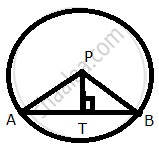
Point P (2, -7) is the centre of a circle with radius 13 unit, PT is perpendicular to chord AB and T = (-2, -4); calculate the length of AB.
Give the relation that must exist between x and y so that (x, y) is equidistant from (6, -1) and (2, 3).
If (– 4, 3) and (4, 3) are two vertices of an equilateral triangle, find the coordinates of the third vertex, given that the origin lies in the interior of the triangle.
Show that Alia's house, Shagun's house and library for an isosceles right triangle.
