Advertisements
Advertisements
Question
Draw a neat diagram for the following:
One purine base from nucleic acid
Advertisements
Solution
Adenine A:

Guanine G:

APPEARS IN
RELATED QUESTIONS
The following statement applies to DNA only, some to RNA only, and some to both. Label them accordingly.
The polynucleotide is double stranded. (_______)
The following statement applies to DNA only, some to RNA only, and some to both. Label them accordingly.
The polynucleotide contains D-ribose. (_______)
Sugar present in DNA is ___________
Draw structure of following.
Cytosine
An example of feedback inhibition is ______.
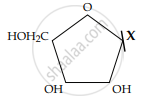
Given below is the diagrammatic representation of one of the categories of small molecular weight organic compounds in the living tissues. Identify the category shown & one blank component “ X” in it.
Distinguish between Nitrogen base and a base found in inorganic chemistry.
Write the characteristic feature of DNA.
Explain the structure and function of different types of RNA.
In an experiment, DNA was found to have 31 % adenine and 19% guanine. Identify the percentage of cytosine in the given molecule of DNA.
The correct statement regarding RNA and DNA respectively is ____________.
If one strand of the DNA has the sequence ‘ATGCTTGA’, then the sequence of complementary strand would be ____________.
What type of linkages holds together monomers of DNA?
What are different types of RNA which are found in cells?
Write a note on the formation of α-helix.
Complete the flow chart on central dogma.

Which of the following are substituted purines?
Give names of the purines.
Draw a neat diagram for the following:
AMP
What type of sugar molecule is present is DNA?
The following ratio is generally constant for a given species
Refer to the given figure.

Select the option which correctly identifies.
Identify the INCORRECT statement regarding nuclein.
Match List - I with List - II.
| List - I | List - II |
| A. Adenosine | I. Nitrogen base |
| B. Adenylic acid | II. Nucleotide |
| C. Adenine | III. Nucleoside |
| D. Alanine | IV. Amino acid |
Choose the option with all correct matches.
Which scientist discovered and isolated nucleic acids from pus cells in 1869?
What are the three distinct chemical components that make up a nucleotide?
Which nitrogenous bases are classified as pyrimidines?
