Advertisements
Advertisements
Question
Describe the structure of chromosomes with a suitable diagram.
Advertisements
Solution
Chromosomes are filamentous bodies present in the nucleus and are visible during cell division. A metaphasic chromosome has 2 identical halves called sister chromatids. Each chromatid is in turn made up of sub chromatids called chromonemata (singular – chromonema). The chromatids lie side by side and are held together at one point called the centromere. The centromere is also called the primary constriction. During cell division, the spindle fibres are attached at the centromere. Besides the primary constriction, additional narrow areas called secondary constrictions are present. Some of the secondary constrictions are called nucleolar organizers because they are necessary for the formation of the nucleolus. The part of the chromosome beyond the nucleolar organizer is short, spherical and is called satellite. The tip of the chromosome is called telomere. It has a unique property in that it prevents the ends of the chromosomes from sticking together but attaches to the nuclear envelope. The surface of a chromosome bears the number of small swellings called chromomeres.

APPEARS IN
RELATED QUESTIONS
What is gene pool?
Choose the correct options of the following question:
Study the given monohybrid cross:
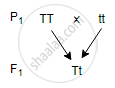
A test cross for this Fj will be:
Codon – anticodon interactions occur by
A B B C C D E F G H I
From the above figure identify the type of mutation and explain it.
Write the salient features of the Sutton and Boveri concept.
Identify the scientists who proposed chromosomal theory of inheritance.
A haemophilic man marries a carrier woman and they have a daughter. What is the probability of their daughter being haemophilic?
In what year did Walter Sutton publish the formal paper "The Chromosomes in Heredity" that linked Mendel's laws to chromosome behaviour?
How many scientists independently rediscovered Mendel's laws of inheritance in the year 1900?
During which cellular process do homologous chromosomes separate and distribute one chromosome from each pair to resulting gametes?
