Advertisements
Advertisements
Question
Describe the composition and functions of blood.
Advertisements
Solution
Blood is a fluid connective tissue. In blood, cells move in a medium called blood plasma.
It is composed of following three types of blood cells:
(a) RBCs (red blood corpuscles) or erythrocytes.
(b) WBCs (white blood cells) or leucocytes.
(c) Platelets.
RBCs and WBCs are living, while plasma and platelets are non-living. Blood plasma is a complex fluid consisting of inorganic salts and organic compounds. Albumins, globulins, fibrinogen, glucose, amino acids, lipids, enzymes, hormones, and waste materials are the organic substance of plasma.
WBCs consist of phagocytes (granulocytes and agranular leucocytes) and immunocytes.
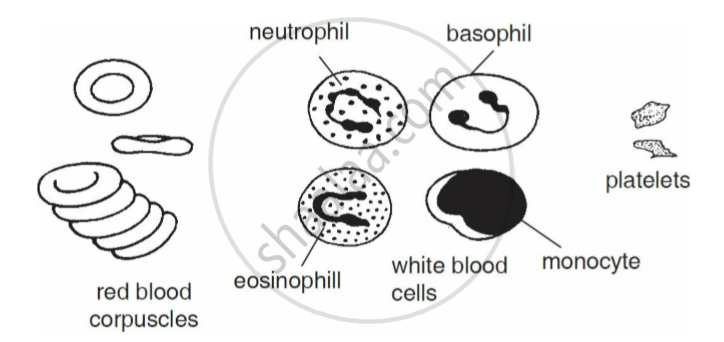
Functions :
1. Blood transports nutrients, hormones and vitamins to the tissues and transports excretory products from the tissues to the liver and kidney.
2. The red blood corpuscles (RBCs) carry oxygen to the tissues for the oxidation of food stuff.
3. The white blood cells (WBCs) fight disease either by engulfing and destroying foreign bodies or by producing antitoxins and antibodies that neutralise the harmful effects of germs.
4. Blood platelets disintegrate at the site of injury and help in the clotting of blood.
APPEARS IN
RELATED QUESTIONS
Name the tissue that stores fat in our body.
Distinguish between the following pairs in one or two sentences for each
(a) RBCs and WBCs;
(b) bone and cartilage;
(c) blood and lymph.
(d) tendon and ligament
Identify the odd word and explain why it is odd.
How does cartilage differ from the bone?
Write 'True or False' for the following statement:
The end of the bones is connected with ligaments.
The question has four answers. Choose the correct answer:
Connective tissue connects
Differentiate white adipose tissue from brown adipose tissue.
Select the incorrect sentence
List the characteristics of cork. How are they formed? Mention their role.
How does WBC help in defense?
