Advertisements
Advertisements
प्रश्न
Describe the composition and functions of blood.
Advertisements
उत्तर
Blood is a fluid connective tissue. In blood, cells move in a medium called blood plasma.
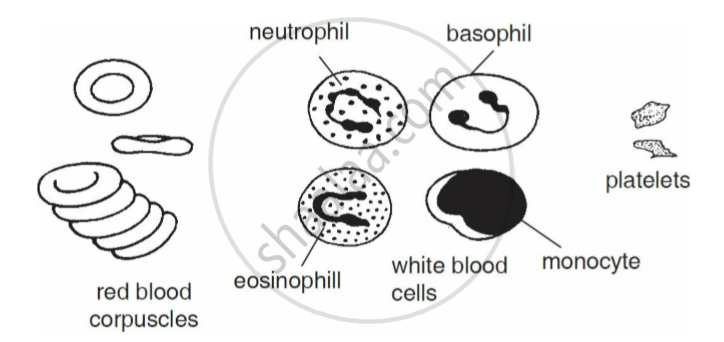
It is composed of following three types of blood cells:
(a) RBCs (red blood corpuscles) or erythrocytes.
(b) WBCs (white blood cells) or leucocytes.
(c) Platelets.
RBCs and WBCs are living, while plasma and platelets are non-living. Blood plasma is a complex fluid consisting of inorganic salts and organic compounds. Albumins, globulins, fibrinogen, glucose, amino acids, lipids, enzymes, hormones, and waste materials are the organic substance of plasma.
WBCs consist of phagocytes (granulocytes and agranular leucocytes) and immunocytes.
Functions :
1. Blood transports nutrients, hormones and vitamins to the tissues and transports excretory products from the tissues to the liver and kidney.
2. The red blood corpuscles (RBCs) carry oxygen to the tissues for the oxidation of food stuff.
3. The white blood cells (WBCs) fight disease either by engulfing and destroying foreign bodies or by producing antitoxins and antibodies that neutralise the harmful effects of germs.
4. Blood platelets disintegrate at the site of injury and help in the clotting of blood.
APPEARS IN
संबंधित प्रश्न
Distinguish between Dense regular and dense irregular connective tissues
Differentiate between:
Blood and Lymph
Differentiate between:
Tendon and Ligament
Where is cartilage found in a man?
Bone possesses a hard matrix composed of ______ and ______.
______ is a non-flexible skeletal connective tissue.
______ acts as a fat reservoir.
Name the supportive connective tissues.
Write one point of difference between
Bone and cartilage.
Umbilical cord blood is collected at the time of child birth and stored in stem cell banks? Reason out.
