Advertisements
Advertisements
प्रश्न
Describe the composition and functions of blood.
Advertisements
उत्तर
Blood is a fluid connective tissue. In blood, cells move in a medium called blood plasma.
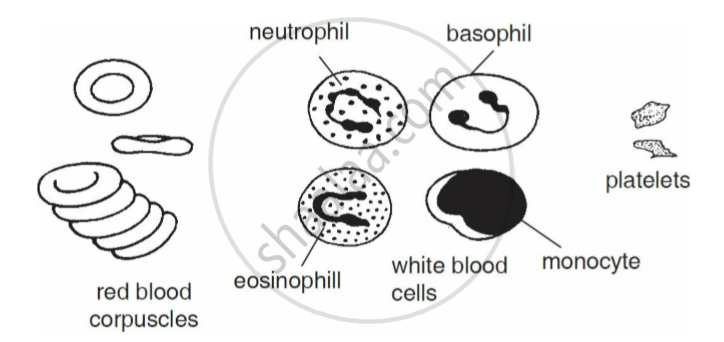
It is composed of following three types of blood cells:
(a) RBCs (red blood corpuscles) or erythrocytes.
(b) WBCs (white blood cells) or leucocytes.
(c) Platelets.
RBCs and WBCs are living, while plasma and platelets are non-living. Blood plasma is a complex fluid consisting of inorganic salts and organic compounds. Albumins, globulins, fibrinogen, glucose, amino acids, lipids, enzymes, hormones, and waste materials are the organic substance of plasma.
WBCs consist of phagocytes (granulocytes and agranular leucocytes) and immunocytes.
Functions :
1. Blood transports nutrients, hormones and vitamins to the tissues and transports excretory products from the tissues to the liver and kidney.
2. The red blood corpuscles (RBCs) carry oxygen to the tissues for the oxidation of food stuff.
3. The white blood cells (WBCs) fight disease either by engulfing and destroying foreign bodies or by producing antitoxins and antibodies that neutralise the harmful effects of germs.
4. Blood platelets disintegrate at the site of injury and help in the clotting of blood.
APPEARS IN
संबंधित प्रश्न
What are the functions of areolar tissue?
Define the term of connective tissue
List One Function of the Following : 2. Chondroblasts
Write the name of the following tissue.
Tissue joining muscles and bones.
Tendons and ligaments are examples of
Why blood is considered as a typical connective tissue?
What are the fibers present in the connective tissue proper?
Why is blood considered to be a fluid connective tissue?
Identify figures A and B.

- ______ epithelium forms the outer lining of the buccal cavity.
- ______ epithelium consists of ceils that are tall and pillar-like.
- Which one allows the diffusion of substances?
- Which is called pavement epithelium?
- Which epithelium lines the gastrointestinal tract and epiglottis
Write down the common features of the connective tissue. On the basis of structure and function, differentiate between bones and cartilages.
