Advertisements
Advertisements
Questions
Define.
Fertilization
Define the following term:
Fertilization
Advertisements
Solution
The formation of a zygote by the union of male and female gametes is known as fertilization.
APPEARS IN
RELATED QUESTIONS
State whether the following statement is true (T) or false (F):
The plumule of an embryo gives rise to the root system.
Rewrite the terms in the correct order so as to be in a logical sequence.
coitus, ovum, Sperm, sperm duct, urethra, Vagina.
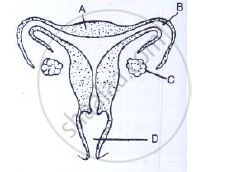
The figure given alongside represents the female reproductive system of a mammal.
Name the parts labelled A - D
Rewrite the correct statement by changing the last one word if these statement is false.
Pregnancy in women can be prevented by the method of vasectomy.
Give appropriate term of the following:
The attachment of developing zygote (blastocyst) on the uterine wall.
Choose the correct answer:
Virgin birth is called ______________
The diagram given below is that of a developing human foetus in the womb. Study the same and answer the question that follow:
What term is given to the period of development of the foetus in the womb?
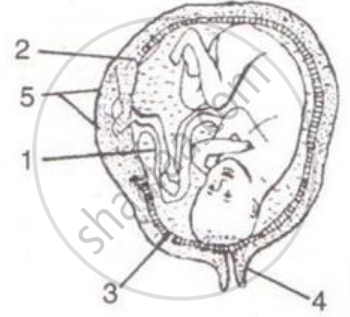
The diagram given below is that of a developing human foetus in the womb. Study the same and answer the question that follow:
How many days does the foetus take to be fully developed?

Give Reasons
The urethra is also called urinogenital duct.
Differentiate
External fertilization and Internal fertilization.
Give Technical Term:
A method of contraception in which the sperm duct is cut and ligated.
Write the functional activity of the following structure:
Prostate gland
Answer the following question.
What is capacitation? Give its importance.
Describe the process of fertilization.
Give scientific reason.
The new individual produced by sexual reproduction always has the recombined genes of both the parents.
Which of the following occurs due to the process of capacitation?
Name the parts of fallopian tubes.
What are the potential drawbacks in adoption of the IVF method?
- High fatality risk to mother.
- Expensive instruments and reagents.
- Husband/wife necessary for being donors.
- Less adoption of orphans.
- Not available in India.
- Possibility that the early embryo does not survive.
Choose the correct answer from the options given below:
What role do secretions of the female genital tract play in capacitation?
