Advertisements
Advertisements
Question
Complete the following reaction giving major products.
\[\begin{array}{cc}\ce{CH3 - CH = CH3 ->[Red P/Br2] A ->[Ag2O/H2O]B}\\|\phantom{.........................}\\
\ce{OH\phantom{.......................}}\end{array}\]
Advertisements
Solution
\[\begin{array}{cc}
\ce{3CH3-CH-CH3->[Red P/Br2][(Bromination)]3CH3-CH-CH3 +H3PO3->[Ag2O/H2O]3CH3-CH-CH3}\\
\phantom{}|\phantom{.............................}|\phantom{.....................................}|\phantom{}\\
\ce{\underset{2-Hydroxypropane}{OH}\phantom{................}\underset{2-Bromopropane(A)}{Br}\phantom{.........................}\underset{Propan-2-ol(B)}{OH}}
\end{array}\]
APPEARS IN
RELATED QUESTIONS
from the following pair would undergo SN2 faster from the other?
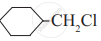

from the following pair would undergo SN2 faster from the other?
a. CH3CH2CH2I b. CH3CH2CH2Cl
Distinguish between SN1 and SN2 mechanism of substitution reaction.
Convert the following:
Propene to propan-1-ol
Convert the following:
2-Chloropropane to propan-1-ol
HCl is added to a hydrocarbon ‘A’ \[\ce{(C4H8)}\] to give a compound ‘B’ which on hydrolysis with aqueous alkali forms tertiary alcohol ‘C’ \[\ce{(C4H10O)}\]. Identify ‘A’ ,‘B’ and ‘C’.
Observe the following and answer the question given below.

Name the type of halogen derivative.
Observe the following and answer the question given below.
Comment on the bond length of C–X bond in it.
The following will react faster by SN1 mechanism
Write the correct order of increasing ease of dehydrohalogenation.
\[\ce{\underset{\text{(I)}}{CH3 - CH2 - CH2 - Cl}}\]
\[\ce{\underset{\text{(II)}}{CH3 - CH(Cl) - CH3}}\]
\[\begin{array}{cc}
\ce{CH3}\\
|\\
\ce{CH3-C-Cl}\phantom{...}\\
|\\
\ce{CH3}\\
\ce{(III)}
\end{array}\]
Dehydrohalogenation of an alkyl halide is ____________.
Which one is most reactive towards nucleophilic addition reaction?
What type of hybridisation is present in carbocation formed during the alkaline hydrolysis of 1- bromo-1- phenyl ethane?
Which of the following is FALSE regarding SN2 reaction mechanism?
Identify 'B' in the following reaction.
\[\ce{2-Bromobutane ->[KOH alc.][\Delta] A ->[HI] B}\]
What is the major product obtained in the sulphonation of chlorobenzene with concentrated sulphuric acid?
Convert the following.
p-Nitrochlorobenzene to p-nitrophenol
The order of reactivities of the following alkyl halides for an SN2 reaction is ______.
The order of reactivity of the given haloalkanes towards nucleophiles is:
The compound that reacts the fastest with sodium methoxide is ______.
Observe the following and answer the question given below:

Comment on the bond length of C-X bond in it.
Complete the reaction:
\[\ce{CH3CH2Cl ->[AgCN][alc.\Delta]}\] ?
Identify the chiral molecule from the following.
Give a reason for the following:
Ethoxy ethane with conc. HI at 373 K gives C2H5OH and CH3I but not CH3OH and C2H5I.
Complete the following reaction giving major product.
\[\begin{array}{cc}
\ce{CH3}\phantom{................}\\
|\phantom{...................}\\
\ce{CH3 - C - CH2 - Cl->[Na/ dry ether]A}\\
|\phantom{...................}\\
\ce{CH3}\phantom{................}\\
\end{array}\]
