Advertisements
Advertisements
Question
Comment on the influence of English – the language and the way of life – on Indian life as reflected in the story. What is the narrator's attitude to English?
Advertisements
Solution
When the English came to our land, they did not bring the industrialisation alone. They carried with themselves their culture, their religion and their language to our home. We, who had been ruled by the Slaves and the Moguls for centuries were now about to face yet another foreign dominance, which was to leave an impact on us that was to live for ever in the future. The biggest of all influences was the language English. Even after so many years of independence, we Indians are not able to pull ourselves out of this inferiority complex. They ruled our nation once and now even after so many decades, they rule our minds. We consider those inferior who do not know the English language. It is nothing but a language after all, why feel so proud about it when it is not even ours. Yes it is a global language and it is good to know foreign languages, however we must treat a language as language only and not as a status symbol.
This falsehood has been reflected very well in the story. The narrator, Shyama, showed how when Ranga returns from Bangalore, after completing his studies, the way people anticipated his return and the excitement on knowing that Ranga now knew English, “a priceless commodity”. They all wanted to see if there has been any change in Ranga after studying English in Bangalore. However, there was no change or little in Ranga's personality. He even did the traditional namaskar to Shyama by bowing down and touching his feet.
RELATED QUESTIONS
How did Helen Keller enjoy her visit to the World fair? (120‒150 words)
Answer the following question in 200-250 words:
What is the main theme of 'The Diary of a Young Girl'?
Tick the statement that is true.
The places mentioned in the story are all imaginary.
Briefly explain the following statement from the text.
“The lack of determinism in quantum theory!”
Why do you think Professor Gaitonde decided never to preside over meetings again?
How do Shahid and the writer react to the knowledge that Shahid is going to die?
We 'draw up a deed'. Complete the following phrase with an appropriate word.
________a loan
The ending of the story is an instance of irony. Suppose Paul had not died at the end, how would you have reacted to the story?
Why does Russell call the three passions 'simple'?
Read the extract and state whether the following statement is true or false. Correct the false statement.
The aroma of the ‘desi’ rice would spread around the village.
Make groups and discuss the following:
What inspired them to spend the best part of their lives to research and share their findings?
Expand the idea inherent in the following proverb:
A Bad workman blames his tools.
Fill in the gap, choosing a word from the bracket to make an appropriate comparison.
(tall / quiet / humble / merry / busy / slippery / fast / sly / slow / big)
as ______ as a lark
Read the following phrase and use it in a sentence of your own in proper form.
To voice something
Answer the following question in short.
What do you learn about Pundits of Vijaynagar?
Read the description of the Kabaddi match and do the following:
Choose any one event and draw a diagram to show what happened.
The word 'Review' is different from summarizing and appeal writing. Choose the correct statements of the following.
Find sentences from the play related to the given points.
Loyalty in Irish Nationalism:
- Maybe Sergeant you’ll be on the side of the country yet.
- ____________________________
- ____________________________
- ____________________________
Shakespeare’s poetry has come to be valued for its own sake on the stage. Comment with reference to the play ‘A Midsummer Night’s Dream.’
Explain the following statement with reference to the context.
From now on The Herald shall be my artillery.
Discuss the following questions after you have seen a presentation of the ‘ad’.
Will you love your brother or sister only if she’s fair?
Read the story and write about the following in short.
Yonamine Chiru of Okinawa
Expand the following ideas in a paragraph or two:- Courage and resourcefulness are the keys to overcome problems.
Write about what you would like to do if ‘Time’ was your friend.
Read the passage and answer the following:
Which book is introduced in the passage?
Guess the meaning of the following word:
exorbitantly
Write the smaller and related words that you see within this word.
Choose a suitable heading for each announcement from those given below.
(Change in School Hours, Cleanliness, Story-telling Competition, Lost and Found, Warning, Football Match)
1.
|
6 July 2015 It has been observed by the Head Boy and Head Girl that certain classes do not clean up their classrooms before leaving. If any class is found untidy and littered after school, that class will be detained the next day after school hours up to 4 pm. Please take note of this. |
2.
| Tomorrow, that is, on the 10th of July, the school will close an hour earlier, as the teachers have to attend an important P. T. A. meeting. So please inform your parents to arrange to pick you up at 2 pm instead of 3 pm. |
3.
| On Sunday, 12th July 2015 there is a football match between classes VIII and IX, on the school ground. The match will begin at 9 am. All students are invited to come and cheer their favorite team. Please come on time, so that the players are not distracted. |
4.
|
The school has organized a Story-telling Competition for Classes V, VI, and VII from 21st to 25th of July. The competition will be held in the school hall at 10 in the morning. Children may select -
Three prizes will be given for each category. The time limit is 3-5 minutes. Those who wish to participate may contact Mrs. Sanjana Mohite for other details. They must register their names with her before the 16th of July. |
5.
|
Construction work to extend the school building will start next week. All students are cautioned not to cross over the fence at the construction site. It is dangerous and may cause you injury. Please stay away from that fence. |
6.
| A cycle key with a blue key chain has been found on the ground. Whoever has lost it can contact the clerk Mrs. Neena Pinto and see if it belongs to him/her. |
Discuss how you will measure the worth of a journey.
Who was the first person to withdraw cash from the ATM?
Write the name of the toys against each picture.

Tom lay thinking. Presently it occurred to him that he wished he was sick; then he could stay home from school. He examined himself. He found no symptoms or sickness, and he investigated again. This time he felt he had a stomach ache, but it soon grew feeble, and presently died wholly away. He reflected further.
What did he detect?
Match the following.
| 1. | A man of ease | Emanuel |
| 2. | John’s trainer | Lalli and Lolly |
| 3. | Mathew’s secretary | John Mathew |
| 4. | John’s chef | Louise |
| 5. | Mathew’s friends | Basky |
Turtles are sea animals.
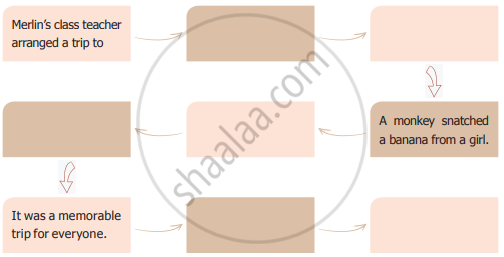
Recall Merlin’s memories and complete the story map.
Name the vegetables harvested in the vegetation hab.
The girl was badly hurt.
Why did the girl reply haughtily?
Imagine you are the girl and give a different ending to the story.
The villagers, built a _______ on his memory.
Find the rhyming word from the poem.
Language - ______.
Complete the following sentence using the prepositions from the option.
The summer vacation ends _____ Monday.
Jaswant decided to stay in his post.
Name the character or speaker.
“Believe yourself.”
Why was the fish floating on top?
Recite the poem 'Treasure Trove' with the correct intonation.
Appu felt hungry and ate a______.
Which disaster had hit the village?
Guess how would the sparrow pull the elephant and the crocodile.
Moles trap worms and store them.
List the things that humans should save.
Divya loved solving _______.
Senthil bought a ______ from his savings.
The king gave______ seeds.
Name the pictures and match it with the rhyming words.
 |
dancer | |
 |
floor | |
 |
will | |
 |
rush |
______ was helpful for his father to drive out the wild animals.
What was the truth finally learned by Chris?
What is the poem about?
Who was Hiawatha?
Match the following items from column-A with those column-B:
| Column 'A' | Column 'Non-Textual' |
| (a) Geoffrey Chaucer | (i) Trinidad |
| (b) Daniel Defoe | (ii) Wuthering Heights |
| (c) V.S. Naipaul | (iii) Robinson Crusoe |
| (d) Emile Bronte | (iv) The Canterbury Tales |
Activity: Live English: Packs, packets, pouches, wrappers

Given above is the picture of an imaginary food item’s packet. Let us see how to ‘read’ the matter on the packet as a vigilant consumer.
- Look at the wrapper and complete the sentences.
- The name of the food item is ______.
- It is made by ______.
- It is a ______ food item. (Veg/Non-veg)
- The ______ sign indicates whether it is a Veg or Non-veg food item.
- The ingredients are ______, ______, ______, ______.
- The date of packing is ______ and the expiry date is ______.
- It should be consumed before ______ from the date of manufacturing.
- Try and obtain more information about the various symbols printed on the packet.
- Discuss the following -
- Why the ‘recipe’ is given on the packet.
- Why the packet tells us to visit the website of the company.
- What ideas are used to make the packet attractive?
- How you will verify whether something is good for you to eat.
