Advertisements
Advertisements
Question
Answer the following in brief.
What are the units of the rate constant?
Advertisements
Solution
The unit of the rate constant for the zero-order reaction is mol dm-3 s-1.
APPEARS IN
RELATED QUESTIONS
Answer the following in brief.
Obtain the relationship between the rate constant and half-life of a first-order reaction.
What are pseudo-first-order reactions?
Answer the following in brief.
Derive the integrated rate law for the first-order reaction.
Derive the integrated rate law for the zeroth order reaction.
Answer the following in brief.
Give one example and explain why it is pseudo-first-order.
For a first-order reaction \[\ce{A -> B}\] the rate constant is x min−1. If the initial concentration of A is 0.01 M, the concentration of A after one hour is given by the expression.
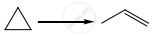
This reaction follows first-order kinetics. The rate constant at particular temperature is 2.303 × 10⁻² hour−1. The initial concentration of cyclopropane is 0.25 M. What will be the concentration of cyclopropane after 1806 minutes? (log 2 = 0.3010)
In a first order reaction \[\ce{x -> y}\]; if k is the rate constant and the initial concentration of the reactant x is 0.1 M, then, the half life is
The time for half change in a first order decomposition of a substance A is 60 seconds. Calculate the rate constant. How much of A will be left after 180 seconds?
The integrated rate law is a direct relationship between ____________ and ____________.
A first order reaction has a rate constant 0.00813 min-1. How long will it take for 60% completion?
How long would it take to electroplate a spoon with 0.1 mol of silver (108 g/mol) at a constant current of 2.0 A using AgNO3?
The rate constant of a reaction has same units as the rate of reaction. The reaction is of ____________.
If [A]0 is the initial concentration, then the half life of zero order reaction is ____________.
The rate constant of a first order reaction is 3 × 10⁻⁶ per s. If the initial concentration is 0.10 mol dm−3, the initial rate of reaction is ____________.
The integrated rate equation for first-order reaction, A → product, is ______.
Which of the following represents the expression for `(3/4)^"th"` life of 1st order reaction?
The rate and the rate constants of the reaction, \[\ce{A + 2B -> C + D}\] are 8 × 10⁻³ mol dm−3 s−1 and 2 × 10⁻³ s−1 respectively. The concentrations of A and B are 4 mol dm−3 each. The overall order of the reaction is ____________.
For first order reaction the slope of the graph of log10 [A]t Vs. time is equal to ____________.
In the reaction \[\ce{2SO2 + O2 -> 2SO3}\] the rate of appearance of SO3 is 4 × 10⁻⁴ M/s, the rate of disappearance of O2 is ____________.
Reaction given below follows first order kinetics:
\[\ce{2N2O2 -> 4NO2 + O2}\]
Calculate the rate constant of reaction if concentration of N2O2 is 0.05 M and rate of reaction is 1.5 × 10⁻⁶ mol L−1 s−1?
The rate of formation of B at time t for reaction \[\ce{2A -> 3B}\] is equal to ____________.
A first order reaction, A → B takes 100 minutes for it's 90% completion. What is the rate constant of reaction?
The integrated rate law is a direct relationship between time and ______
If the rate constant for a first-order reaction is k, the time (t) required for the completion of 99% of the reaction is given by:
Calculate half-life of a first order reaction in minute if the rate constant is 1 × 10⁻³ s-1.
A radioactive isotope decayed to 17/32 of its original mass after 60 minutes. Find the half-life of this radioisotope.
Which of the following correctly represents integrated rate law equation for a first order reaction in a gas phase?
A first order reaction takes 10 minute for 30% completion. Find rate constant of the reaction.
