Advertisements
Advertisements
Question
Addition of sodium bisulphite to ethanol is ____________ type of reaction.
Options
electrophilic addition
electrophilic substitution
nucleophilic addition
nucleophilic substitution
Advertisements
Solution
Addition of sodium bisulphite to ethanol is nucleophilic addition type of reaction.
APPEARS IN
RELATED QUESTIONS
Answer in brief.
Write reaction showing conversion of Acetaldehyde into acetaldehyde dimethyl acetal.
Which of the following is Schiff's reagent?
Ethyl methyl ketone can be reduced to n-butane by which of the following reactions?
Which of the following gives red precipitate with Fehling's solution?
If acetaldehyde is treated with Fehling's solution, the change that occurs in the system is ____________.
Acetone reacts with iodine (I2) to form iodoform, in the presence of ____________.
Which of the following represents the structure of isopropyl methyl ketone?
The first oxidation product of secondary alcohols is ____________.
Which of the following carbonyl compounds does NOT undergo aldol condensation?
Identify the product Y in the following series of reactions.
\[\ce{4-Nitrotoluene ->[(CH3CO)2O/CrO3][273 - 278 K] X ->[H3O^+][\Delta] Y}\]
Which one of the following reaction is an example of disproportionation reaction.
Phenyl methanal is reacted with concentrated NaOH to give two products X and Y. X reacts with metallic sodium to liberate hydrogen X and Y are ____________.
In which of the following reactions new carbon-carbon bond is not formed?
Identify A, B and C.

How will you convert benzaldehyde into the following compound?
Benzoic acid
How will you convert benzaldehyde into the following compound?
α-hydroxy phenyl acetic acid
How will you prepare ethyl acetate from methyl acetate?
How will you prepare acetophenone from acetyl chloride?
How will you prepare malachite green from benzaldehyde?
How acetone is converted into propane.
Which of the following compound will show a positive silver mirror test?
A substance C4H10O yields on oxidation a compound, C4H8O which gives an oxime and a positive iodoform test. The original substance on treatment with a conc. H2SO4 gives C4H8. The structure of the compound is ______.
Which of the following is most reactive towards the addition reaction of hydrogen cyanide to form the corresponding cyanohydrin?
What is the number of different products formed when mixture of ethanal and propanal reacts with aq. NaOH after warming?
A carbonyl compound A having molecular formula C5H10O forms crystalline precipitate with sodium bisulphate and gives positive iodoform test. A does not reduce Fehling solution. Identify A.
How are the following compound obtained from alkyne?
Acetaldehyde
How are the following compound obtained from alkyne?
Acetone
Write the structure of the products obtained from the following ketones by action of hydrazine in presence of strong base KOH.

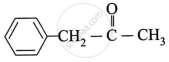
What is the action of the following regent on propanal?
Sodium Bisulphite
