Advertisements
Advertisements
Question
Arrange the following compounds in increasing order of rate of reaction towards nucleophilic substitution.
| (a) |  |
| (b) |  |
| (c) |  |
Options
(a) < (b) < (c)
(a) < (c) < (b)
(c) < (b) < (a)
(b) < (c) < (a)
Advertisements
Solution
(b) < (c) < (a)
Explanation:
The presence of electron releasing group at ortho- and para-positions decreases the reactivity of haloarenes. Because of the possible repulsion, it is less likely for the electron-rich nucleophile to approach electron-rich arenes. \[\ce{CH3}\] is an electron releasing group and is ortho and para - directors.
APPEARS IN
RELATED QUESTIONS
What happens when \[\ce{CH3 - Br}\] is treated with KCN?
Chlorobenzene is extremely less reactive towards a nucleophilic substitution reaction. Give two reasons for the same.
Write the final product(s) in each of the following reactions:

The presence of nitro group (−NO2) at o/p positions increases the reactivity of haloarenes towards nucleophilic substitution reactions.
How the following conversion can be carried out?
Chlorobenzene to p-nitrophenol
Write the product formed on reaction of D-glucose with Br2 water.
What is Grignard reagent?
Write chemical equation in support of your answer.
Out of  Cl and
  CH2- Cl, which one is more reactive towards nucleophilic substitution reaction and why?
Out of (CH3)3 C-Br and (CH3)3 C-I, which one is more reactive towards SN1 and why?
Assertion: Presence of a nitro group at ortho or para position increases the reactivity of haloarenes towards nucleophilic substitution.
Reason: Nitro group, being an electron-withdrawing group decreases the electron density over the benzene ring.
Which of the following compounds will give racemic mixture on nucleophilic substitution by \[\ce{OH-}\] ion?
(a) \[\begin{array}{cc}
\phantom{}\ce{CH3 - CH - Br}\\
\phantom{}|\\
\phantom{....}\ce{C2H5}\phantom{}
\end{array}\]
(b) \[\begin{array}{cc}
\phantom{..}\ce{Br}\\
\phantom{}|\\
\phantom{}\ce{CH3 - C - CH3}\\
\phantom{}|\\
\phantom{....}\ce{C2H5}\phantom{}
\end{array}\]
(c) \[\begin{array}{cc}
\phantom{....}\ce{CH3 - CH - CH2Br}\\
\phantom{}|\\
\phantom{....}\ce{C2H5}\phantom{}
\end{array}\]
Arrange the following compounds in increasing order of rate of reaction towards nucleophilic substitution.
| (a) | 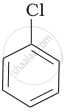 |
| (b) | 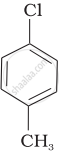 |
| (c) |  |
Haloarenes are less reactive than haloalkanes and haloalkenes. Explain.
Allyl chloride is hydrolysed more readily than n-propyl chloride. Why?
Assertion: Chlorobenzene is resistant to nucleophilic substitution reaction at room temperature.
Reason (R): C–Cl bond gets weaker due, to resonance.
In the reaction, \[\mathrm{CH}_3\mathrm{C}\equiv\mathrm{\overline{C}Na}^++(\mathrm{CH}_3)_2\mathrm{CHCl}\to\] the product formed is ______.
