Advertisements
Advertisements
प्रश्न
Many sentences and paragraphs in the excerpt begin with the word ‘And’. To what extent does this contribute to the rhetorical style of the lecture?
Advertisements
उत्तर
John Ruskin gave ‘What is a Good Book’ as a public lecture in the nineteenth century. His style of speaking is more fluid and conversational as compared to an essay. His repetitive use of ‘And’ or ‘but’ helps in explaining an idea even further. It is more spontaneous like an interaction rather than written and rewritten like an essay.
APPEARS IN
संबंधित प्रश्न
A1. True or False
State whether the following statements are true or false:
(1) The author's new house was situated at Bangalore.
(2) The writer was delighted because their new house, was the biggest they ever lived.
One of the advantages of growing up in an Army household was the frequency with which we moved. 'Postings' came with predictable regularity every three years. What was unpredictable and therefore exciting was the suspense. Where would we go this time? Ambala, Pune, Dehradun, Allahabad, Tejpur, Bangalore, Yo! ............ In my short span of thirteen years we had moved lock. stock and barrel eleven times!
Every move meant change. New journeys, new places, new schools, my new books, new uniforms, new friends and new houses. We lived in tents, bashas, Nissen huts, flats and bungalows. No matter what the shape and size of the dwelling, mother soon put her own special stamp on it and transformed it into a familiar place - our home - complete with bright yellow-curtains, coffee-brown carpet, assorted pictures, hanging ferns and potted palms - providing a comforting sense of continuity in our essentially nomadic life.
I was thirteen, the year we moved to the Cantonment at Allahabad. In stark contrast to the razzle-dazzle of the city's commercial areas like Katra and Chowk, the Cantonment was a quiet, orderly place with broad tree-lined roads that still carried the names of long-dead Britishers. Our bungalow was on a sleepy by-lane called MacPherson Road. When we first saw it, my brothers and I were delighted. It was by far the biggest house we had ever lived in. The task of furnishing those huge, echoing rooms daunted Mother.
A2. Complete
a. The broad tree-lined roads were named after.............................
b. Katra and Chowk are .............................
c. Mother was daunted with the task of................................. .
d. The suspense was exciting because the posting was.........................
A3. Personal response
What do you think are the problems faced by those who change households frequently.
Answer any four of the following questions in 30 - 40 words each:
(a) What does the poet's smile in the poem, 'My Mother at Sixty-six' show?
(b) Listening to them, I see two distinct worlds ... ." In the context of Mukesh, the bangle maker's son, which two worlds is Anees Jung referring to ?
(c) Though the sharecroppers of Champaran received only one-fourth of the compensation, how can the Champaran struggle still be termed a huge success and victory?
(d) Which article in McLeery's suitcase played perhaps the most significant role in Evans' escape and how?
(e) Why does Derry’s mother not want him to go back to visit Mr. Lamb?
(f) What considerations influenced the Tiger King to get married?
Answer any four of the following in 30-40 words each:
(a) Why was the peddler amused at the idea of the world being a rattrap?
(b) Why did Gandhiji agree to a settlement of mere 25 percent?
(c) Aunt Jennifer's efforts to get rid of her fear proved to be futile. Comment.
(d) What does Stephen Spender want to be done for the children of the school in a slum?
(e) How did the ten-day-old baby (the future Tiger King) react to the prediction about his future made by the astrologers?
(f) Why was Dr. Sadao not sent abroad along with the troops?
Read the following extract of the poem and complete the activities given below :
B1 State which of the following statements are
True or False :
(i) The elderly are nearest to our own exalted personality.
(ii) The elderly are those persons whose growth is stunted.
(iii) We should know our elderly people well, in order to receive guidance.
(iv) The elderly hold on to the frivolous aspects of life.
Elderly people should be around us. Justify.
(b) abb
(c) abba
Briefly comment on:
The author’s physical condition in Darchen.
Explain the associations that the colour 'white' has in the story.
Make groups and discuss the following:
Name a few scientists/explorers/social reformers/inventors/discoverers, who spent most of their lives to find solutions to some major problems/setbacks, that mankind faced.
Read the following words :
Brigadier, Commander, capture, evicting, enemy, defense
All these words are related to war affairs and war.
Find more such words from the passage.
The tongue justifies the possession of the spectacles on behalf of the nose. Pick up the expressions from the poem that argues in favour of the Nose and complete the following web diagram.

Read the description of the Kabaddi match and do the following:
Choose any one event and draw a diagram to show what happened.
'It all builds on the charm of the 1967 film, which by itself is a must-watch for any child.'
Explain this sentence in the context of the movie, focusing on the two given phrases- 'Charm of the 1967 film' and 'must-watch'.
Explain the following statement with reference to the context.
And then, once the ring's broken, we'll get to work and show the public every day just how incompetent the Mayor is!
Read aloud/Enact the play.
The merchant ships brought spices and other treasures from India and other countries to Italy.
What themes would you like to add to the themes given in this passage?
Visit a library:
Read the stories of King Arthur and his Knights of the Round Table.
Correct the following sentence using facts from the passage.
Achilles was killed by an arrow that pierced his heart.
Find three lines, that contain images of nature in the autumn season.
During daytime
- _______________________
- _______________________
- _______________________
Choose the appropriate phrase to insert in the gap, to make the sentence meaningful. Use the appropriate form of the verb.
After I took the medicine, I ______ ______ the pain.
Using your imagination, write how the other pets in the house could have objected to Caesar living in their house.
Pick out from the poem, two lines each that reflect an optimistic (positive) attitude and pessimistic (negative) attitude.
Optimism :
- ______
- ______
Pessimism :
- ______
- ______
Write in your own words.
In which professions is a person forced to stay away from his home/ homeland for a long time? Try to guess why the poet is forced to stay away from his home?
Say whether you agree or disagree.
The children showed disinterest even in the bachelor’s story-telling, throughout.
Find out how the following game is played.
Hockey
Find two examples of the following from the lesson.
A Statement
Find a word that has a similar meaning.
happily
The second human being that Miranda saw on the island was __________________.
Who were on the ship? How were they related to Prospero?
Is the bird a crow?
Why did Dr. Ashok’s cousin call him?
What was Mrs. Krishnan busy with?
Hamid’s friends are ______
Write the name of the toys against each picture.

The parents noticed some changes in the child. What were they?
Read these lines and answer the questions given below.
Where the voice of the wind calls our wandering feet
Whose ‘Wandering feet’ is referred to here?
The eggs of an Olive Ridley are in the shape and size of a cricket ball.
Read the lines and answer the question given below.
And ever again, in the wink of an eye,
Painted stations whistle by
- ‘In the wink of an eye’ means very quickly. Explain ‘painted stations whistle by’.
The horses were four and a half inches tall.
Complete the sentence given below with word/phrase.
The wild dogs came to the spot to catch______.
In Mars ______ Earth days make a year.
How did Santhosh record his diary?
Vicky was an active boy.
Whom did Vicky want to do all his work?
Name the character or speaker.
"You want me to strain my back?"
How do the wheels go?
Did they find a new country?
Appu felt hungry and ate a______.
Choose and write the adverbs to complete the sentence.

The lion fought _____.
Who showed love and care to the children?
Find and write the clues.
Clue for lame ______.
Who lived in the old house?
Read the passage 3 times and colour the trees for each time.
Trees help us in many ways. The colour green is calming and heals your worries. By planting and caring for trees, we help improve our surroundings, as they give fresh air. When air is dirty the people of Delhi suffered a lot. But people of Madhubani district in Bihar have shown how art can be used to make our air clean. So that people made paintings on trees to stop people from cutting the trees.

What was the truth finally learned by Chris?
Write the correct word.
| rooster, king, hen, tiger, queen, tigress. |
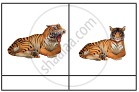
Do you think Nasruddin was good at archery?
Where did the naughty boy go?
On the basis of your understanding of the given passage, make notes in any appropriate format.
The Sherpas were nomadic people who first migrated from Tibet approximately 600 years ago, through the Nangpa La pass and settled in the Solukhumbu District, Nepal. These nomadic people then gradually moved westward along salt trade routes. During 14th century, Sherpa ancestors migrated from Kham. The group of people from the Kham region, east of Tibet, was called “Shyar Khamba”. The inhabitants of Shyar Khamba, were called Sherpa. Sherpa migrants travelled through Ü and Tsang, before crossing the Himalayas. According to Sherpa oral history, four groups migrated out of Solukhumbu at different times, giving rise to the four fundamental Sherpa clans: Minyagpa, Thimmi, Sertawa and Chawa. These four groups have since split into the more than 20 different clans that exist today
Sherpas had little contact with the world beyond the mountains and they spoke their own language. AngDawa, a 76-year-old former mountaineer recalled “My first expedition was to Makalu [the world’s fifth highest mountain] with Sir Edmund Hillary’’. We were not allowed to go to the top. We wore leather boots that got really heavy when wet, and we only got a little salary, but we danced the Sherpa dance, and we were able to buy firewood and make campfires, and we spent a lot of the time dancing and singing and drinking. Today Sherpas get good pay and good equipment, but they don’t have good entertainment. My one regret is that I never got to the top of Everest. I got to the South Summit, but I never got a chance to go for the top.
The transformation began when the Sherpa Tenzing Norgay and the New Zealander Edmund Hillary scaled Everest in 1953. Edmund Hillary took efforts to build schools and health clinics to raise the living standards of the Sherpas. Thus life in Khumbu improved due to the efforts taken by Edmund Hillary and hence he was known as ‘Sherpa King’.
Sherpas working on the Everest generally tend to perish one by one, casualties of crevasse falls, avalanches, and altitude sickness. Some have simply disappeared on the mountain, never to be seen again. Apart from the bad seasons in 1922, 1970 and 2014 they do not die en masse. Sherpas carry the heaviest loads and pay the highest prices on the world’s tallest mountain. In some ways, Sherpas have benefited from the commercialization of the Everest more than any group, earning income from thousands of climbers and trekkers drawn to the mountain. While interest in climbing Everest grew gradually over the decades after the first ascent, it wasn’t until the 1990s that the economic motives of commercial guiding on Everest began. This leads to eclipse the amateur impetus of traditional mountaineering. Climbers looked after each other for the love of adventure and “the brotherhood of the rope” now are tending to mountain businesses. Sherpas have taken up jobs as guides to look after clients for a salary. Commercial guiding agencies promised any reasonably fit person a shot at Everest.
How can we identify insecure websites?
Match the following items from column-A with those column-B:
| Column 'A' | Column 'Non-Textual' |
| (a) Geoffrey Chaucer | (i) Trinidad |
| (b) Daniel Defoe | (ii) Wuthering Heights |
| (c) V.S. Naipaul | (iii) Robinson Crusoe |
| (d) Emile Bronte | (iv) The Canterbury Tales |
