Advertisements
Advertisements
प्रश्न
Given below are the speed -time graphs. Match them with their corresponding motions :
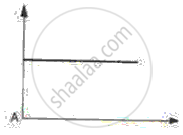 |
(a) Uniformity retared motion |
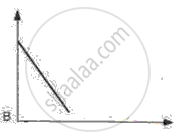 |
(b) Non-uniformity acceleration |
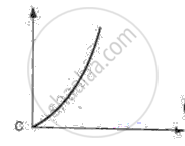 |
(c) Non-uniform motion |
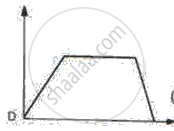 |
(d) uniform motion |
Advertisements
उत्तर
|
(d) uniform motion |
|
(a) Uniformity retared motion |
|
(b) Non-uniformity acceleration |
|
(c) Non-uniform motion |
APPEARS IN
संबंधित प्रश्न
The velocity-time graph for part of a train journey is a horizontal straight line. What does this tell you about its acceleration ?
Draw a velocity-time graph for the free fall of a body under gravity starting from rest. Take g = 10m s-2
Multiple choice Question. Select the correct option.
In the velocity-time graph, the acceleration is
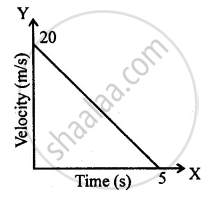
Draw displacement – time graph for the following situation:
When a body is stationary.
Name the physical quantity which is equal to the area under speed-time graph.
Draw the following graph:
Speed versus time for a stepped motion
Draw the following graph:
Distance versus time for a body at rest.
Which of the following graphs represents a motion with negative acceleration?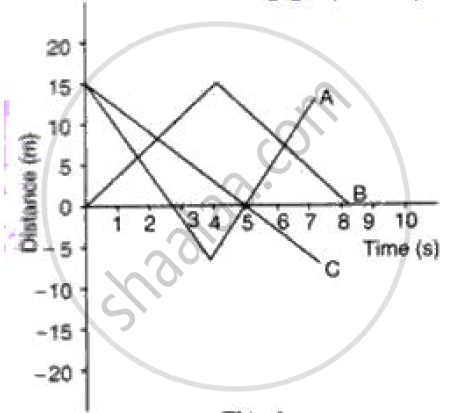
Figure shows the distance-time graph of three students A, B and C. On the basis of the graph, answer the following :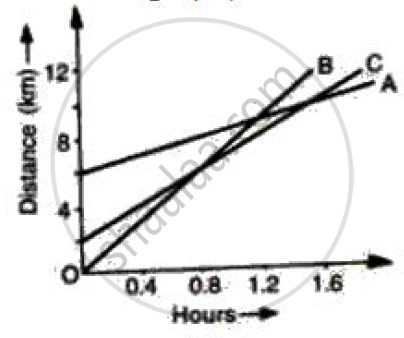
Which of the three is traveling the fastest?
The area under velocity – time graph represents the ______
