Advertisements
Advertisements
प्रश्न
Derive an expression for the relation between half-life and rate constant for first-order reaction.
With the help of integrated rate law, derive an expression for the half-life of a first order reaction.
Advertisements
उत्तर
The integrated rate law for the first-order reaction is
k = `2.303/t * log_10 [A]_0/[A]_t`
Where [A]0 is the initial concentration of reactant at t = 0. It falls to [A]t at time t after the start of the reaction.
The time required for [A]0 to become `[A]_0/2` is denoted as t1/2 or [A]t = `[A]_0/2` at t = t1/2
Putting this condition in the integrated rate law we write
k = `2.303/t_(1//2) log_10 [A]_t/([A]_0/2)`
= `2.303/t_(1//2) log_10 2`
Substituting value of log102,
k = `2.303/t_(1//2) xx 0.3010`
∴ k = `0.693/t_(1//2)`
∴ `t_(1//2) = 0.693/k`
The half-life of a first-order reaction is independent of the initial reactant concentration.
APPEARS IN
संबंधित प्रश्न
Answer the following in brief.
Obtain the relationship between the rate constant and half-life of a first-order reaction.
Answer the following in brief.
Derive the integrated rate law for the first-order reaction,
\[\ce{A_{(g)} -> B_{(g)} + C_{(g)}}\] in terms of pressure.
In a first-order reaction, the concentration of the reactant decreases from 20 mmol dm−3 to 8 mmol dm−3 in 38 minutes. What is the half-life of reaction?
Rate constant of a reaction is 3.6 × 10⁻³ s–1. The order of reaction is ______.
A zero-order reaction \[\ce{X -> Product}\], with an initial concentration 0.02 M has a half-life of 10 min. if one starts with concentration 0.04 M, then the half-life is
For a first order reaction \[\ce{A ->Product}\] with initial concentration x mol L−1, has a half life period of 2.5 hours. For the same reaction with initial concentration `("x"/2)` mol L−1 the half life is
The decomposition of phosphine (PH3) on tungsten at low pressure is a first-order reaction. It is because the
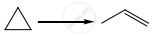
This reaction follows first-order kinetics. The rate constant at particular temperature is 2.303 × 10⁻² hour−1. The initial concentration of cyclopropane is 0.25 M. What will be the concentration of cyclopropane after 1806 minutes? (log 2 = 0.3010)
Give two examples for zero order reaction.
A first order reaction has a rate constant 0.00813 min-1. How long will it take for 60% completion?
A first order reaction has rate constant 1 × 10⁻² s−1. What time will, it take for 20 g or reactant to reduce to 5 g?
A first order reaction is 25% completed in 40 minutes. What is the rate constant k tor the reaction?
Which among the following reaction is an example of a zero order reaction?
A first order reaction completes its 10% in 20 minutes, then the time required to complete its 19% is ____________.
In a first order reaction, the concentration of the reactant is reduced to 25% in one hour. The half-life period of the reaction is ____________.
What is the order of reaction if the unit of rate constant (k) is mol dm−3 s−1?
For the first order reaction, plot of log10 [A]t against time 't' is a straight line with a negative slope equal to ____________.
The order of the reaction for which the unit of rate constant is s−1 is ____________.
The initial concentration of reactant (A) is 2 mol dm−3 for a zero order reaction \[\ce{A -> B}\]. The rate constant (k) is related to its half-life `("t"_(1//2))` by the equation:
The half-life of a first order reaction is 6.0 hour. How long will it take for the concentration of reactant to decrease from 0.4 M to 0.12 M?
Which among the following is an example of zero order reaction?
A first order reaction takes 40 minutes for 30% completion. Calculate the half-life of reaction.
Half-life of first order reaction is 20 minutes. What is the time taken to reduce the initial concentration of the reactant to `1/10`th?
What is the unit of rate constant for the zero order reaction?
Which is the unit of rate constant for the first-order reaction if time is expressed in seconds?
The integrated rate law is a direct relationship between time and ______
Which one of the following reactions is a true first-order reaction?
Calculate half-life of a first order reaction in minute if the rate constant is 1 × 10⁻³ s-1.
What is the rate constant of a first order reaction if 0.08 mole of reactant reduces to 0.02 mole in 23.03 minutes?
