Advertisements
Advertisements
प्रश्न
Answer the following in brief.
Obtain the relationship between the rate constant and half-life of a first-order reaction.
Derive a relationship between the half-life and the rate constant for a first order reaction.
Advertisements
उत्तर
i. The integrated rate law for the first-order reaction is k = `2.303/t log_10 [A]_0/[A]_t`
Where [A]0 is the initial concentration of the reactant at t = 0. The concentration falls to [A]t at time t after the start of the reaction. The concentration of the reactant falls to `[A]_0/2` at time t1/2.
ii. The time required for [A]0 to become `[A]_0/2` is denoted as `t_(1/2)` or `[A]_t = [A]_0/2` at t = t1/2
Putting this condition in the integrated rate law we write
k = `2.303/t_(1/2) log_10 [A]_0/([A]_0/2)`
= `2.303/t_(1/2) log_10 2`
Substituting the value of `log_10 2`,
k = `2.303/t_(1/2) xx 0.3010`
∴ k = `0.693/t_(1/2)`
∴ `t_(1/2) = 0.693/k`
APPEARS IN
संबंधित प्रश्न
Answer the following in one or two sentences.
What are the units for rate constants for zero-order and second-order reactions if time is expressed in seconds and concentration of reactants in mol/L?
How will you represent first order reactions graphically.
Answer the following in brief.
Derive the integrated rate law for the first-order reaction,
\[\ce{A_{(g)} -> B_{(g)} + C_{(g)}}\] in terms of pressure.
Time required for 100% completion of a zero order reaction is _______.
The rate of catalysed reaction is large than the uncatalysed reaction as _______.
Write a mathematical expression for integrated rate law for zero-order reaction.
The rate constant of the first order reaction is 1.386 min–1. Calculate the time required for 80% reactant to decompose?
For a first-order reaction \[\ce{A -> B}\] the rate constant is x min−1. If the initial concentration of A is 0.01 M, the concentration of A after one hour is given by the expression.
A zero-order reaction \[\ce{X -> Product}\], with an initial concentration 0.02 M has a half-life of 10 min. if one starts with concentration 0.04 M, then the half-life is
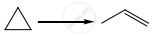
This reaction follows first-order kinetics. The rate constant at particular temperature is 2.303 × 10⁻² hour−1. The initial concentration of cyclopropane is 0.25 M. What will be the concentration of cyclopropane after 1806 minutes? (log 2 = 0.3010)
For a first-order reaction, the rate constant is 6.909 min−1 the time taken for 75% conversion in minutes is
Identify the order for the following reaction.
Radioactive disintegration of 92U238
A zero order reaction is 20% complete in 20 minutes. Calculate the value of the rate constant. In what time will the reaction be 80% complete?
The rate of the reaction \[\ce{A + B -> C}\] is 3.6 × 10⁻² mol dm−3 s−1 when [A] = 0.3 mol dm−3 and [B] = 0.2 mol dm−3. Calculate k if reaction is first order in A and zero order in B.
A first order reaction is 25% completed in 40 minutes. What is the rate constant k tor the reaction?
The order of the reaction for which the unit of rate constant is s−1 is ____________.
In the reaction \[\ce{2SO2 + O2 -> 2SO3}\] the rate of appearance of SO3 is 4 × 10⁻⁴ M/s, the rate of disappearance of O2 is ____________.
The initial concentration of reactant (A) is 2 mol dm−3 for a zero order reaction \[\ce{A -> B}\]. The rate constant (k) is related to its half-life `("t"_(1//2))` by the equation:
For a first order reaction, \[\ce{A -> B}\], if [A] = 1 M and rate is 4 × 10⁻² M s−1. What is the rate constant of the reaction?
Which among the following is an example of pseudo first order reaction?
A first order reaction takes 40 minutes for 30% decomposition. What is the half-life of reaction?
0.0210 M solution of N2O5 is allowed to decompose at 43°C. How long will it take to reduce to 0.0150 M?
(Given k = 6.0 × 10⁻⁴ sec−1)
A first order reaction, A → B takes 100 minutes for it's 90% completion. What is the rate constant of reaction?
Half-life of first-order reaction \[\ce{X -> Y + Z}\] is 3 minutes. What is the time required to reduce the concentration of 'X' by 90 % of it's initial concentration?
Which one of the following reactions is a true first-order reaction?
If the rate constant for a first-order reaction is k, the time (t) required for the completion of 99% of the reaction is given by:
The rate constant for a first order reaction is 7.0 × 10⁻⁴ s-1. If initial concentration of reactant is 0.080 M, what is the half-life of reaction?
Which of the following equations exhibits the integrated rate law equation for first order reaction?
