Advertisements
Advertisements
प्रश्न
Convert the following.
p-Nitrochlorobenzene to p-nitrophenol
Advertisements
उत्तर

APPEARS IN
संबंधित प्रश्न
from the following pair would undergo SN2 faster from the other?
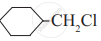

Complete the following reaction giving major products.
\[\ce{CH3 - CH = CH2 ->[HBr][peroxide] A ->[alc. KOH] B}\]
Name the reagent used to bring about the following conversion.
1-Chloropropane to 1-nitropropane
Name the reagent used to bring about the following conversion.
Ethyl bromide to ethyl isocyanide
Name the reagent used to bring about the following conversion.
Chlorobenzene to biphenyl
Convert the following:
Benzyl alcohol to benzyl cyanide
Convert the following:
2-Chloropropane to propan-1-ol
Convert the following:
tert-Butyl bromide to isobutyl bromide
Observe the following and answer the question given below.

Comment on the bond length of C–X bond in it.
Major product of the following reaction is _______________
\[\ce{CH3-CH2-Mg-Br + NH3 ->?}\]
Nucleophilic substitution reaction of 2, 4-dinitrochlorobenzene is faster than p-nitrochlorobenzene. Give reason.
What is dehydrohalogenation? State the rule for the formation of the preferred product of dehydrohalogenation.
In alkaline hydrolysis of tertiary butyl bromide, ____________.
Which of the following is a primary halide?
Dehydrohalogenation of an alkyl halide is ____________.
The following mechanism has been proposed for the reaction of NO2 with F2 to form NO2F:
\[\ce{NO2_{(g)} + F2_{(g)} -> NO2F_{(g)} + F_{(g)} (slow)}\]
\[\ce{F_{(g)} + NO2_{(g)} -> NO2F_{(g)} (fast)}\]
The order of the reaction with respect to NO2(g)
Write the product formed when alkyl halide reacts with silver nitrite.
Complete the following reaction giving a major product.
\[\begin{array}{cc}
\ce{CH3}\phantom{.................}\\
|\phantom{...................}\\
\ce{CH3 - C - CH2 - Cl->[Na/dry ether]A}\\
|\phantom{..................}\\
\ce{CH3}\phantom{................}
\end{array}\]
Observe the following and answer the question given below:

Comment on the bond length of C-X bond in it.
Define and explain the SN1 mechanism with a suitable example.
Complete the following reaction giving major product.
\[\begin{array}{cc}
\ce{CH3}\phantom{...............}\\
|\phantom{..................}\\
\ce{CH3 - C - CH2 - Cl->[Na/dry ether]A}\\
|\phantom{..................}\\
\ce{CH3}\phantom{...............}\\
\end{array}\]
What is the action of following on ethyl bromide?
alcoholic sodium hydroxide
Identify the chiral molecule from the following.
Give a reason for the following:
Ethoxy ethane with conc. HI at 373 K gives C2H5OH and CH3I but not CH3OH and C2H5I.
Complete the following reaction giving major product.
\[\begin{array}{cc}
\ce{CH3}\phantom{.................}\\
|\phantom{...................}\\
\ce{CH3 - C - CH2 - Cl ->[Na/dry ether] A}\\
|\phantom{...................}\\
\ce{CH3}\phantom{.................}\\
\end{array}\]
Which of the following reagent is used for conversion of alkyl halide into nitrile?
