Advertisements
Advertisements
प्रश्न
from the following pair would undergo SN2 faster from the other?
Advertisements
उत्तर
Compound (a) will undergo SN2 mechanism faster than (b).
Explanation:
- Sincey
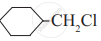 is a primary halide it undergoes S2N reaction faster than
  .
. - Since iodine is a better leaving group than chloride, 1-iodo propane (CH3CH2CH2I) undergoes S2N reaction faster than l-chloropropane (CH3CH2CH2CI).
APPEARS IN
संबंधित प्रश्न
from the following pair would undergo SN2 faster from the other?
a. CH3CH2CH2I b. CH3CH2CH2Cl
Complete the following reaction giving major products.
\[\ce{CH3 - CH = CH2 ->[HBr][peroxide] A ->[alc. KOH] B}\]
Arrange the following in the increasing order of boiling points.
- 1-Bromopropane
- 2- Bromopropane
- 1- Bromobutane
- 1-Bromo-2-methylpropane
Distinguish between SN1 and SN2 mechanism of substitution reaction.
Convert the following:
Benzyl alcohol to benzyl cyanide
Convert the following:
Ethanol to propane nitrile
Convert the following:
2-Chloropropane to propan-1-ol
The following will react faster by SN1 mechanism
Nucleophilic substitution reaction of 2, 4-dinitrochlorobenzene is faster than p-nitrochlorobenzene. Give reason.
Explain the factors affecting SN1 and SN2 mechanism.
What is dehydrohalogenation? State the rule for the formation of the preferred product of dehydrohalogenation.
The least reactive towards nucleophilic addition reactions is ____________.
Which of the following is least reactive towards SN1 reactions?
Ethyl bromide undergoes the following reaction:
\[\ce{\underset{Ethyl bromide}{C2H5Br} + \underset{(aq.)}{KOH} ->[\Delta] \underset{Ethyl alcohol}{C2H5OH} + KBr}\]
Which of the following is a WRONG statement?
How many metameric ethers are represented by the molecular formula C4H10O?
Which one is most reactive towards nucleophilic addition reaction?
What type of hybridisation is present in carbocation formed during the alkaline hydrolysis of 1- bromo-1- phenyl ethane?
Which of the following carbocation is the most stable?
Convert the following.
p-Nitrochlorobenzene to p-nitrophenol
Which among the following statements is not correct about SN2 reaction mechanism?
Complete the following reactions giving a major product.
\[\begin{array}{cc}
\ce{CH3}\phantom{................}\\
|\phantom{..................}\\
\ce{CH3 - C - CH2 - Cl ->[Na/dry ether] A}\\
|\phantom{..................}\\
\ce{CH3}\phantom{................}
\end{array}\]
Observe the following and answer the question given below:

Can react by SN1 mechanism? Justify your answer.
Discuss β - elimination reaction.
Complete the following reaction sequences by writing the structural formulae of the organic compounds 'A', 'B' and 'C'.
\[\ce{2-Bromobutan ->[alc. KOH] A ->[][Br2] B ->[][NANH2] C}\]
Define and explain the SN1 mechanism with a suitable example.
What is the action of following on ethyl bromide?
alcoholic sodium hydroxide
Complete the reaction:
\[\ce{CH3CH2Cl ->[AgCN][alc.\Delta]}\] ?
Complete the following reaction giving major product.
\[\begin{array}{cc}
\ce{CH3}\phantom{................}\\
|\phantom{...................}\\
\ce{CH3 - C - CH2 - Cl ->[Na/dry ether] A}\\
|\phantom{...................}\\
\ce{CH3}\phantom{................}\\
\end{array}\]
