Advertisements
Advertisements
प्रश्न
Arrange the following in the increasing order of their reactivity towards nucleophilic addition reaction:
C6H5COCH3, CH3-CHO, CH3COCH3
Advertisements
उत्तर
Aldehydes are generally more reactive than ketones in nucleophilic addition reactions because of steric and electronic reasons. In case of ketones, aromatic ketones are more susceptible to nucleophilic attack than aliphatic ketones.
CH3COCH3 < C6H5COCH3 < CH3CHO
APPEARS IN
संबंधित प्रश्न
Write balanced chemical equations for action of ammonia on - formaldehyde
Give a simple chemical test to distinguish between 
Write the main product formed when propanal reacts with the following reagents:
2 moles of 3 CH OH in presence of dry HCl
Which of the following is the correct representation for intermediate of nucleophilic addition reaction to the given carbonyl compound (A):
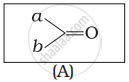
(i) 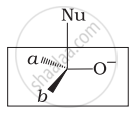
(ii) 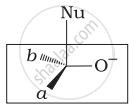
(iii) 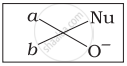
(iv) 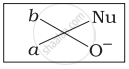
Write a test to differentiate between pentan-2-one and pentan-3-one.
Alkenes  and carbonyl compounds
  , both contain a π bond but alkenes show electrophilic addition reactions whereas carbonyl compounds show nucleophilic addition reactions. Explain.
A Idol condensation will not be observed in
Paraldehyde is formed as a result of polymerisation:-
What happens when ethanal is treated with excess ethanol and acid?
Draw structures of the following derivatives.
Acetaldehydedimethylacetal
