Topics
Applied History
Working of the Constitution
Historiography : Development in the West
Geographical discoveries and colonization
- Concept for Geographical Discoveries and Colonization
Africa
- Imperialism - Africa
Asia: India, China, Japan
- Concept for Asia: India, China, Japan
Historiography : Indian Tradition
Working of the Indian Constitution
The Electoral Process
Dictatorships in Europe, Second World War and world
- Concept on Dictatorships in Europe
- Second World War (1939-1945 C.E.)
First world war
The League of Nations
Russian Revolution
- Concept for Russian Revolution
United Nations Organization
- Concept for United Nations Organization
Political Parties
Applied History
Africa
- Emancipation of Africa
Asia
- Emancipation of Asia
Social and Political Movements
History of Indian Arts
Globalization
- Globalization After World War II
Scientific and Technological Progress
- Scientific and Technological Progress After World War II
Cold war
- Formation of the Cold War
Challenges Faced by Indian Democracy
Mass Media and History
Social Diversity and Democracy
- Social Diversity
- Coccept for Caste/Race and Democracy
- Concept for Language and Democracy
- Cocnept for Religion and Democracy
- Concept for Gender and Democracy
- Concept for Democracy and Diversity
Challenges to Democracy Remedial Measures to the Challenges
- Concept for Challenges to Democracy Remedial Measures to the Challenges
Internal work
Democracy
- Democracy - Meaning, Types and Characteristics
Political Parties and Types
- Political Parties
- Importance of Political Parties
- Major National and Regional Parties in India/ Types of Political Parties
Entertainment and History
Sports and History
Tourism and History
Heritage Management
History - Imperialism
History - 20th Century Age of conflict
History - Emancipation of Asia and Africa
History - World after World War 2
Political Science
Notes
Affiliated Professional Fields of Applied History:
1. Museums:
- A museum is a building or institution that cares for and displays a collection of artifacts and other objects of artistic, cultural, historical, or scientific importance.
- Some roles in museums require specialized education and training to learn the skills and techniques frequently used on the job.
- Professions associated with Museum are Director, Curator, Archivist, Education coordinator, Registrar, etc.
Indian Museum, Kolkata:
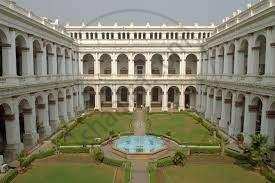
The Asiatic Society established the 'Indian Museum' in Kolkata in 1814 C.E. Nathaniel Wallich, a Danish botanist, served as the institution's first curator. The museum is depicted in this image, which dates around 1905. Three major divisions make up the museum: arts, archaeology, and anthropology. Conservation, publishing, photography, exhibition-presentation, modelmaking, training, library, and security are further related departments.
2. Archives:
- Ancient documents, official records, old films, etc. are preserved and kept in archives.
- New Delhi is home to the National Archives of India. In India, each state is responsible for maintaining its own archives.
- Professions related to the field of archives are archivist; Archives Publications Coordinator; Director; Archives Digitizer; Manager, Film Archives; etc.
3. Preservation and conservation of the historical site:
- Professions associated with the Preservation and conservation of the historical site:
i) Geoarchaeologist
ii) Cultural Resource Specialist and Architectural Historian
iii) Archaeologist
4. Tourism and Hospitality:
- Tourism is a social, cultural, and economic phenomenon that entails the movement of people to countries or places outside their usual environment for personal or business/professional purposes.
- Employment Opportunities in Tourism and Hospitality: For example employment by hotels, restaurants, travel agencies, tourism information offices, museums, protected areas such as national parks, palaces, religious sites, monuments, aircraft, cruise lines, resorts, or shopping outlets, souvenirs, photography, sightseeing tours, farmhouses, bed and breakfast, rural inns, and guest houses local transportation (state-owned airlines and railways, private transport facilities), Guides, cooks, and scouts.
5. Entertainment and Mass Media:
- Professions related to Entertainment and Mass Media are actor, film crew, animal trainer, choreographer, publicist, personal assistant, photographer, video editor, caterer, producer, background actor, entertainment writer, booking agent, animator, theatre manager, dancer, makeup artist, voice-over artist, cinematographer, casting manager, etc.
|
Indian Museum, Kolkata:
|
i) Geoarchaeologist
ii) Cultural Resource Specialist and Architectural Historian
iii) Archaeologist
Text
Museum of ‘Ur’:
|
Clay Tablets |
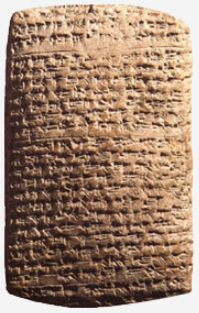
The world's oldest museum, dating to the sixth century B.C.E., was found during excavations at the Mesopotamian city of 'Ur'. Sir Leonard Woolley directed the excavations (1922-1934). The Mesopotamian princess named Ennigaldi created this museum. She herself was the curator of the museum. The clay tablets with descriptions of the displayed artefacts engraved on them are a notable aspect of that museum.
Text
National Film Archives of India, Pune :
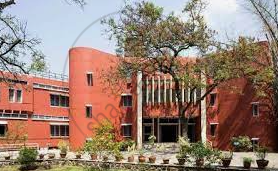
- The National Film Archives of India's headquarters is in Pune, Maharashtra.
- It was started in 1964 as the Media Unit of the Indian Government's Ministry of Information and Broadcasting.
- It accomplished three things:
(i) To look for and acquire rare Indian films and to protect the culture's history for the benefit of the next generations.
(ii) To classify the key aspects of films, produce documentation and catalogues, and conduct in-depth research.
(iii) To create a hub for the dissemination of 'films culture'.
Key Points: Affiliated Professional Fields
- Knowledge of history helps in decision-making in fields such as museums, archives, tourism, and mass media.
- Applied history requires trained experts from various professional fields.
- Archives preserve old documents, official records, and films for future generations.
- National and specialised archives play an important role in protecting historical heritage.
- Applied history creates employment opportunities and helps conserve heritage for the future.
