Please select a subject first
Advertisements
Advertisements
Give reasons : n-Butyl bromide has higher boiling point than t-butyl bromide.
Concept: Physical Properties of Haloalkanes and Haloarenes
The presence of nitro group (−NO2) at o/p positions increases the reactivity of haloarenes towards nucleophilic substitution reactions.
Concept: Reactions of Haloarenes - Nucleophilic Substitution
What is the principle behind the zone refining of metals?
Concept: Refining of Crude Metals
Explain the principle of the method of electrolytic refining of metals. Give one example.
Concept: Refining of Crude Metals
Write the structures of A, B and C in the following:

Concept: Reactions of Haloalkanes - Nucleophilic Substitution Reactions
p-Dichlorobenzene has higher m.p. and lower solubility than those of o- and m-isomers. Discuss.
Concept: Physical Properties of Haloalkanes and Haloarenes
Give reasons:
The dipole moment of chlorobenzene is lower than that of cyclohexyl chloride.
Concept: Reactions of Haloarenes - Nucleophilic Substitution
Which reducing agent is employed to get copper from the leached low-grade copper ore?
Concept: Types of Separation or Concentration of an Ore >> Leaching
Draw the structure of major monohalo product in each of the following reactions :
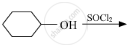
Concept: Classification of Haloalkanes and Haloarenes
Arrange the following compounds in increasing order of their boiling points.
(a) \[\begin{array}{cc}
\ce{CH3}\phantom{..................}\\
\backslash\phantom{...........}\\
\ce{CH - CH - CH2Br}\\
/\phantom{.............}\\
\ce{CH3}\phantom{..................}
\end{array}\]
(b) \[\ce{CH3CH2CH2CH2Br}\]
(c) \[\begin{array}{cc}
\phantom{...}\ce{CH3}\\
\phantom{}|\\
\ce{H3C - C - CH3}\\
\phantom{}|\\
\phantom{..}\ce{Br}
\end{array}\]
Concept: Physical Properties of Haloalkanes and Haloarenes
Arrange the following compounds in increasing order of their boiling points:
CH3CH2OH, CH3−CHO, CH3−COOH
Concept: Physical Properties of Haloalkanes and Haloarenes
Arrange the following compounds in increasing order of reactivity towards SN2 reaction.
2-Bromopentane, 1-Bromopentane, 2-Bromo-2-methylbutane
Concept: Reactions of Haloalkanes - Nucleophilic Substitution Reactions
Complete the reaction with the main product formed:

Concept: Reactions of Haloalkanes - Nucleophilic Substitution Reactions
Convert bromoethane to propanamine.
Concept: Reactions of Haloalkanes - Nucleophilic Substitution Reactions
Give the mechanism of the following reaction:
\[\ce{CH3CH2OH ->[H2SO4][413 K] CH3CH2-O-CH2CH3 + H2O}\]
Concept: Reactions of Haloalkanes - Nucleophilic Substitution Reactions
The following questions are case-based questions. Read the passage carefully and answer the questions that follow:
|
Nucleophilic Substitution: Influences of solvent polarity: The reaction rate (SN2) of 2-bromopropane and NaOH in ethanol containing 40% water is twice slower than in absolute ethanol. Hence the level of solvent polarity has an influence on both SN1 and SN2 reactions but with different results. Generally speaking, a weak polar solvent is favourable for SN2 reaction, while a strong polar solvent is favourable for SN1. Generally speaking, the substitution reaction of tertiary haloalkane is based on SN1 mechanism in solvents with a strong polarity (for example ethanol containing water). |
Answer the following questions:
(a) Why racemisation occurs in SN1? (1)
(b) Why is ethanol less polar than water? (1)
(c) Which one of, the following in each pair is more reactive towards SN2 reaction? (2)
(i) CH3 – CH2 – I or CH3CH2 – Cl
(ii)
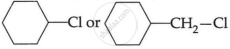
OR
(c) Arrange the following in the increasing order of their reactivity towards SN1 reactions: (2)
(i) 2-Bromo-2-methylbutane, 1-Bromo-pentane, 2-Bromo-pentane
(ii) 1-Bromo-3-methylbutane, 2-Bromo-2-methylbutane, 2-Bromo-3- methylbutane
Concept: Reactions of Haloalkanes - Nucleophilic Substitution Reactions
Account for the following:
Helium is used in diving apparatus.
Concept: Group 18 Elements - The Noble gas Family
Draw the structures of the following molecules: XeF2
Concept: Group 18 Elements - The Noble gas Family
Draw the structures of the following: H4P2O7 (Pyrophosphoric acid)
Concept: Group 15 Elements - The Nitrogen Family >> Oxoacids of Phosphorus
What happens when
H3PO3 is heated ?
Write the reactions involved.
Concept: Group 15 Elements - The Nitrogen Family >> Phosphine
