Advertisements
Advertisements
प्रश्न
Solve the following.
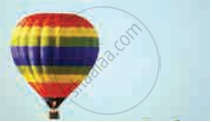
A hot air balloon has a volume of 2800 m3 at 99°C. What is the volume if the air cools to 80°C?
Advertisements
उत्तर
Given:
V1 = Initial volume = 2800 m3,
T1 = Initial temperature = 99°C = 99 + 273.15 = 372.15 K,
T2 = Final temperature = 80°C = 80 + 273.15 K = 353.15 K
To find: V2 = Final volume
Formula: `"V"_1/"T"_1="V"_2/"T"_2` (at constant n and P)
Calculation:
According to Charles’ law,
`"V"_1/"T"_1="V"_2/"T"_2` (at constant n and P)
∴ V2 = `("V"_1"T"_2)/"T"_1=(2800xx353.15)/372.15` = 2657 m3
The volume of the balloon when the air cools to 80°C is 2657 m3
APPEARS IN
संबंधित प्रश्न
Give reason for the following:
Gases exert pressure in all directions.
State the following:
The absolute temperature of a gas at 7°C
Answer in one sentence.
A bubble of methane gas rises from the bottom of the North sea. What will happen to the size of the bubble as it rises to the surface?
Convert the following temperature from degree Celcius to kelvin.
−15° C
Convert the following temperature from degree Celcius to kelvin.
−197° C
Convert the following temperature from degree Celcius to kelvin.
273° C
Convert the following pressure value into Pascals.
107000 Nm−2
Convert the following pressure value into Pascals.
1 atmosphere
Convert 101.325 kPa to bar.
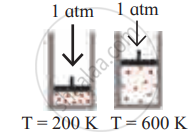
Identify the gas laws from the following diagram.
| Diagram | Gas laws |
 |
______________ |
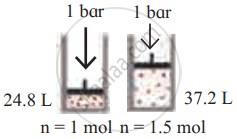
Identify the gas laws from the following diagram.
| Diagram | Gas laws |
 |
______________ |
Write the statement for Charles’ law
With the help of the graph answer the following -
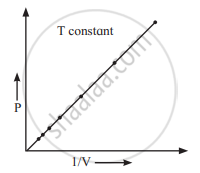
At constant temperature, Identify the law.
Solve the following.
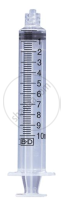
A syringe has a volume of 10.0 cm3 at pressure 1 atm. If you plug the end so that no gas can escape and push the plunger down, what must be the final volume to change the pressure to 3.5 atm?
Solve the following.
The volume of a given mass of a gas at 0°C is 2 dm3. Calculate the new volume of the gas at constant pressure when the temperature is increased by 10°C.
Solve the following.
The volume of a given mass of a gas at 0°C is 2 dm3. Calculate the new volume of the gas at constant pressure when the temperature is decreased by 10°C.
The temperatures at which real gases obey the ideal gas laws over a wide range of pressure is called __________.
Name two items that can serve as a model for Gay Lusaac’s law and explain.
Explain the following observation.
The size of a weather balloon becomes larger and larger as it ascends up to larger altitude
Hydrochloric acid is treated with a metal to produce hydrogen gas. Suppose a student carries out this reaction and collects a volume of 154.4 × 10⁻³ dm3 of a gas at a pressure of 742 mm of Hg at a temperature of 298 K. What mass of hydrogen gas (in mg) did the student collect?
For a given mass of an ideal gas, which of the following statements is CORRECT?
According to Andrews isothermals, the minimum temperature at which carbon dioxide gas obeys Boyles law is ______.
According to Andrews isothermals at what temperature the carbon dioxide gas starts to condense at 73 atmosphere?
A gas occupies a volume of 4.2 dm3 at 101 kPa pressure. What volume will gas occupy if the pressure is increased to 235 kPa keeping the temperature constant?
If 2 moles of an ideal gas at 546 K has volume of 44.8 L, then what will be it's pressure? (R = 0.082)
10 g of gas at one atomospheric pressure is cooled from 273.15°C to 0°C keeping the volume constant. What is the final pressure?
