Advertisements
Advertisements
प्रश्न
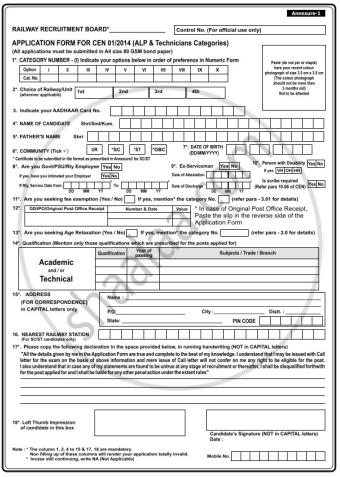
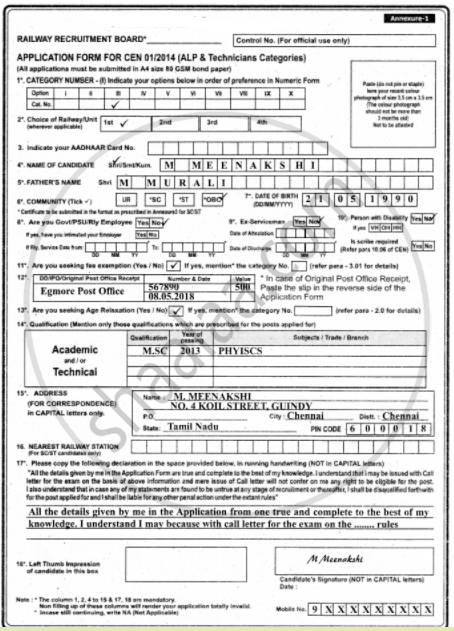
Fill in the following forms with imaginary details.
Advertisements
उत्तर
APPEARS IN
संबंधित प्रश्न
Closed Circuit Television (CCTV) must be installed in every classroom.
Give your views, either for or against this statement.
Write an e-mail to the Principal of a neighbouring school requesting him/her to send a team of three members to participate in the Quiz Competition.
Fill in the blanks in the passage givben below with the appropriate form of the verb given in brackets. Do not write the passage, but write the verbs in the correct order.
One day I ____________ (1)(be) in the lunch line, and there I saw a pile of apples. The teacher-incharge _____________ (2)(state) at me and said, “Just __________ (3)(take) one. God ________ (4)(watch)”. So, I ____________ (5)(take) an apple, and the line __________ (6)(move) along. At the next table there ____________ (7)(be) a pile of chocolate chip cookies. I ____________ (8)(not know) what to do. “Put,” the kid behind me ____________ (9)(whisper), “_____________ (10)(take) all you want. God’s watching the apples. ”
What are the techniques used by Ruskin Bond to create an atmosphere of strangeness, mystery and super naturalism in the story? Can Ruskin Bond be called a visual writer? Why?
Your uncle has offered to get you a pet for your birthday. Write a letter to him telling him what you would like, give reasons for your choice and tell him how you Would-take care of your pet.
Write a composition (350 - 400 words) on the following:
“The use of Mobile Phones must be allowed in schools.” Express your views either for or against the statement.
Referring closely to the essay Unbirthday and Other Presents, discuss why E V Lucas feels that `unbirthday‘ gifts are better than the regular gifts people give.
Read the extract given below and answer the questions that follow:
But mercy is above this sceptred sway;
It is enthroned in the hearts of kings,
It is an attribute to God himself;
And earthly power doth then show likest God’s
When mercy seasons justice.
(i) Name the speaker. Why did the speaker appeal to the Jew for mercy? Earlier who else in the play appealed for mercy?
(ii) What are the three qualities of mercy which the speaker has stated just before the extract?
(iii) Give the meaning of‘But mercy is above this sceptred sway’. How does Shylock turn down Portia’s plea for mercy? What does he insist on?
(iv) What is Bassanio ready to do for Antonio in the court? Why is Bassanio snubbed immediately by the disguised Portia?
(v) Mention two prominent character traits of Shylock as highlighted through the scene from which the extract has been taken. Substantiate your answer with examples from the text.
Fill in the blank with an appropriate word:
The noise prevented us _______ sleeping.
Fill in the blank with an appropriate word:
The young man put the flute _______ his lips and began to play.
Why do you think people undertake such adventurous expeditions in spite of the risk involved?
‘A bird in hand is worth two in the bush’.
- Explain the above statement in the literal sense.
- Explain it in the context in which it is mentioned in the story.
- Is there a corresponding proverb in your own language?
Your teacher will speak the word given below. Write against two new words that rhyme with it.
fast ______ ______
Would you like to join the Indian Army/Navy/ Air force? If not, suggest other ways in which you could serve your nation.
Write a summary of the poem using the following points.
- Title
- Introductory paragraph (about the poem, type, Nature, tone)
- Main body (central idea, the gist of the poem)
- Conclusion (opinion, views, appeal)
Multinational companies expect a different type of Professional CV. Browse through the net to gather information about it.
Place the given areas of questioning from the list in the appropriate columns.
- future plans
- inspiration
- overcoming hurdles/ struggle
- coach/ mentor/ guide/ teacher
- message for the youngsters
- family support
- alternate career choice
- first or maiden award/ achievement /success /setbacks
- a turning point in life/ success formula/technique.
| Section of the interview | Aspects to be covered | |
| 1. | Introduction | Welcoming/Greeting, Introduction of the guest/Occasion. |
| 2. | Opening questions | |
| 3. | Main body | |
| 4. | Concluding questions | |
| 5. | Summing up | Concluding the statement, Expressing gratitude. |
You can add your points.
Give, in your own words, TWO reasons for each of the following :
One of the schoolboys helped the old woman cross the street.
Look at the picture given below and frame your own slogan.

Imagine that you have parked your vehicle (two-wheeler)/ bicycle inside the school premises. You find it missing in the evening. Write a complaint to the head of the school regarding this issue.
Are the singers homeless travellers? Why do you think so?
State whether the following statement are true or false
Both Jimmy and Bob were of the same age.
State whether the following statement are true or false
Jimmy grew a little taller after he was twenty.
What would you do in this situation, if you were Jimmy Wells? Substantiate your reason.
Reading a map
Nowadays though locations are traced easily using GPS, (Global Positioning System) one should know what to look for in the map to reach the destination. Here are a few general instructions to be followed while reading a map.
- Identify and understand the elements of the map correctly.
- Look out for the title to know what the map shows.
- Study the symbols/colors that are used on the map and find what they stand for.
- Look at the scale of the map. (whether to be scaled or not to be scaled)
- Look for the pointer to know the direction.
Let us together scale the summit. Here is a drawing of the Everest showing the way to the summit, and the position of the camps with their heights. Trace the trekking trail to reach the summit with the given details and write an interesting paragraph in about 100 words.
The Summit of Mount Everest

Observe the following picture and write a paragraph in about 150 word about each one of them.

Identify the list in which Abou Ben Adhem's name appeared right at the top.
Describe your dream vehicle in a few lines.
Describe the event that led the narrator, Shankar, to suggest digging the ground under the Deodar tree in the short story, Fritz. Write your answer in a short paragraph of about 100-150 words.
Write a composition (in approximately 400 – 450 words) on the following subject.
Write an original short story that ends with the words "..….That is when they realised that sometimes, the most extraordinary stories begin with the simplest of moments."
