Advertisements
Advertisements
प्रश्न
Draw a neat diagram for the following:
Haworth formula of maltose
Advertisements
उत्तर

APPEARS IN
संबंधित प्रश्न
\[\ce{CH2OH-CO-(CHOH)4-CH2OH}\] is an example of ______.
Give two evidences for presence of formyl group in glucose.
The glycosidic linkage in maltose is formed between _______________
Draw the structure of α-D glucopyranose.
Classify the following carbohydrates into monosaccharide, disaccharide, oligosaccharide and polysaccharide:
glucose, cellulose, maltose, stachyose
What is the action of the following reagents on glucose?
hydroxylamine
What is the action of the following reagents on glucose?
hydrogen iodide
Define carbohydrates.
What is monosaccharide?
Draw the structure of the pyran.
Formation of lactose by conden ation results in the release of how many molecules of water?
From the following which is a heteropolysaccharide?
The reserve food material in animals is ____________.
Identify the sugar having the molecular formula C6H1206.
From the following identify the materials that are made up of cellulose.
i. Plant cell wall
ii. Exoskeleton of arthropods
iii. Paper from plant pulp
iv. Cotton fibre
Identify the WRONG statement.
Which is the product obtained, when Br2 water reacts with glucose?
Match the Column I and Column II select the correct option.
| Column I | Column II | ||
| i. | Monosaccharides | a. | Stored energy in animals |
| ii. | Glycogen | b. | Polymer made from ß-glucose molecules |
| iii. | Cellulose | c. | Exoskeleton of arthropods |
| iv. | Chitin | d. | Building blocks of carbohydrates |
| e. | Plant hormone |
From the following identify the two types of glucose polymers present in starch.
Match the columns and select the correct option.
| Column I | Column II | ||
| i. | Starch | a. | Animal storage molecule |
| ii. | Cellulose | b. | Plant storage molecule |
| iii. | Glycogen | c. | Heparin |
| iv. | Heteropolysaccharide | d. | Plant cell wall component |
Which reagent among the following is used to confirm presence of aldehydic carbonyl group in glucose?
Which carbon atoms of α- D glucopyranose and β-D-fructofuranose respectively are linked together to form glycosidic linkage in sucrose?
Raffinose, sucrose and stachyose are respectively ____________.
One mole of a carbohydrate on hydrolysis gives one mole of glucose and one mole of galactose. Identify the carbohydrate.
Which element among the following is not present in saccharine?
Which one of the following carbohydrates is insoluble in water?
Which one of the following sugar does NOT have same empirical fonnula as that of carbohydrate?
What is the number of hydroxyl groups present in lactic acid?
Which among the following sugars does not reduce Tollen's reagent?
Which among the following reagents is used for conversion of glucose to glucoxime?
Which among the following reagents is used to obtain gluconic acid from glucose?
How many moles of acetic acid are obtained in the reaction when one mole glucose is treated with excess acetic anhydride?
What is the product obtained when Br2 water reacts with glucose?
When one mole of lactose is hydrolysed, the hydrolysate contains ____________.
Which among the following observations suggests that glucose also exists in cyclic form?
How many optical isomers are possible for a compound having four asymmetric carbon atoms?
Which one given below is a non-reducing sugar?
Assertion: A solution of sucrose in water is dextrorotatory. But on hydrolysis in the presence of little hydrochloric acid, it becomes levorotatory.
Reason: Sucrose hydrolysis gives equal amounts of glucose and fructose. As a result of this change in sign of rotation is observed.
Classify the following into monosaccharides, oligosaccharides and polysaccharides.
Fructose
Write the structure of α-D (+) glucopyranose.
Which carbon atoms of fructose are bonded together through oxygen forming fructofuranose?
Corn is immersed in boiling water. It is then cooled, and the solution becomes sweet. It is due to ______.
Which one is a non-reducing commercial sugar?
The glycosidic linkage present in maltose is ______.
Why carbohydrates are generally optically active.
Assign D/L configuration to the following monosaccharides:
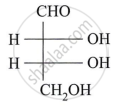
Why carbohydrates are generally optically active.
The linkage present in Lactose is ______.
Why carbohydrates are generally optically active?
\[\ce{CH2OH-CO-(CHOH)4-CH2OH}\] is an example of ______.
What are the number of chiral carbon atoms and the number of formyl groups, respectively, present in ribose?
