Advertisements
Advertisements
प्रश्न
Draw a formula for the first five members of the homologous series beginning with the given compound.
H–COOH
Advertisements
उत्तर
The first five members of the homologous series beginning with the given compound are
H–COOH : Methanoic acid
CH3–COOH : Ethanoic acid
CH3–CH2–COOH : Propanoic acid
CH3–CH2–CH2–COOH : Butanoic acid
CH3–CH2–CH2–CH2–COOH : Pentanoic acid
APPEARS IN
संबंधित प्रश्न
Draw a formula for the first five members of the homologous series beginning with the given compound.
H–CH=CH2
Identify the functional group in the following compound.
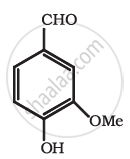
Identify the functional group in the following compound.
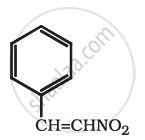
Find out all the functional groups present in the following polyfunctional compound.
Thyroxine, the principal thyroid hormone.

Write the first four members of the homologous series that begins with H-C≡C-H. Also, write down their general molecular formula.
Structure of the compound whose IUPAC name is 5, 6 – dimethylhept - 2 - ene is
Give the general characteristics of organic compounds.
Describe the classification of organic compounds based on their structure.
The reagent used to confirm the presence of five hydroxyl groups in glucose is ____________.
How many primary, secondary and tertiary carbon atoms respectively are present in isobutane?
The correct decreasing order of priority for the functional groups of organic compounds in the IUPAC system of nomenclature is ______.
Identify primary, secondary, tertiary and quaternary carbon in the following compounds.
\[\begin{array}{cc}
\ce{CH3}\phantom{.................}\\
|\phantom{....................}\\
\ce{CH3 - C - CH - CH2 - CH2 - CH3}\\
|\phantom{.....}|\phantom{...............}\\
\ce{CH3}\phantom{..}\ce{CH3}\phantom{.............}
\end{array}\]
Identify primary, secondary, tertiary and quaternary carbon in the following compound.
\[\begin{array}{cc}
\ce{CH3}\phantom{..................}\\
|\phantom{....................}\\
\ce{CH3 - C - CH - CH2 - CH2 - CH3}\\
|\phantom{....}|\phantom{................}\\
\ce{CH3}\phantom{..}\ce{CH3}\phantom{..............}\\
\end{array}\]
Identify primary, secondary, tertiary and quaternary carbon in the following compound.
\[\begin{array}{cc}
\ce{CH3}\phantom{..................}\\
|\phantom{....................}\\
\ce{CH3 - C - CH - CH2 - CH2 - CH3}\\
|\phantom{....}|\phantom{................}\\
\ce{CH3}\ce{CH3}\phantom{..............}
\end{array}\]
Indicate the σ and π bonds in the following molecule:
\[\ce{HCONHCH3}\]
Identify the α-carbons in the following species and give the total number of α-hydrogen.
\[\ce{CH2 = CH - CH2 - CH3}\]
Identify primary, secondary, tertiary and quaternary carbon in the following compound.
\[\begin{array}{cc}
\ce{CH3}\phantom{.................}\\
|\phantom{....................}\\
\ce{CH3 - C - CH - CH2 - CH2 - CH3}\\
|\phantom{.....}|\phantom{................}\\
\ce{CH3}\phantom{.}\ce{CH3}\phantom{..............}
\end{array}\]
Which of the following is neopentyl chloride?
