Advertisements
Advertisements
प्रश्न
Draw a formula for the first five members of the homologous series beginning with the given compound.
H–CH=CH2
Advertisements
उत्तर
The first five members of each homologous series beginning with the given compounds are
H–CH=CH2 : Ethene
CH3–CH=CH2 : Propene
CH3–CH2–CH=CH2 : 1-Butene
CH3–CH2–CH2–CH=CH2 : 1-Pentene
CH3–CH2–CH2–CH2–CH=CH2 : 1-Hexene
APPEARS IN
संबंधित प्रश्न
Identify the functional group in the following compound.
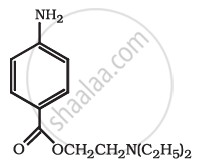
Find out all the functional groups present in the following polyfunctional compound.
Thyroxine, the principal thyroid hormone.

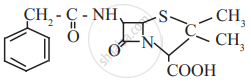
Find out all the functional groups present in the following polyfunctional compound.
Penicillin G, a naturally occurring antibiotic.
How many cyclic and acyclic isomers are possible for the molecular formula C3H6O?
Write a note on homologous series.
Write the molecular formula of the first six members of homologous series of nitro – alkanes.
The reagent used to confirm the presence of five hydroxyl groups in glucose is ____________.
Which of the following statements is INCORRECT for the organic compounds which belong to homologous series?
Identify the number of carbon atoms and number of oxygen atoms respectively present in pyran molecule.
Identify primary, secondary, tertiary and quaternary carbon in the following compounds.
\[\begin{array}{cc}
\ce{CH3}\phantom{.................}\\
|\phantom{...................}\\
\ce{CH3 - C - CH - CH2 - CH2 - CH3}\\
\phantom{}|\phantom{....}|\phantom{...............}\\
\phantom{}\ce{CH3}\phantom{.}\ce{CH3}\phantom{.............}
\end{array}\]
Identify primary, secondary, tertiary, and quaternary carbon in the following compounds.
\[\begin{array}{cc}
\ce{CH3}\phantom{..................}\\
|\phantom{....................}\\
\ce{CH3 - C - CH - CH2 - CH2 - CH3}\\
\phantom{}|\phantom{....}|\phantom{................}\\
\phantom{.}\ce{CH3\phantom{.}CH3}\phantom{..............}
\end{array}\]
Identify primary, secondary, tertiary and quaternary carbon in the following compounds.
\[\begin{array}{cc}
\ce{CH3}\phantom{.................}\\
|\phantom{....................}\\
\ce{CH3 - C - CH - CH2 - CH2 - CH3}\\
|\phantom{....}|\phantom{................}\\
\ce{CH3}\ce{CH3}\phantom{..............}
\end{array}\]
Identify primary, secondary, tertiary and quaternary carbon in the following compound.
\[\begin{array}{cc}
\ce{CH3}\phantom{..................}\\
|\phantom{....................}\\
\ce{CH3 - C - CH - CH2 - CH2 - CH3}\\
|\phantom{....}|\phantom{................}\\
\ce{CH3}\phantom{..}\ce{CH3}\phantom{..............}\\
\end{array}\]
Identify primary, secondary, tertiary, and quaternary carbons in the following compound.
\[\begin{array}{cc}
\ce{CH3\phantom{.................}}\\
|\phantom{....................}\\
\ce{CH3 - C - CH - CH2 - CH2 - CH3}\\
|\phantom{....}|\phantom{................}\\
\ce{CH3 CH3\phantom{.............}}
\end{array}\]
Identify primary, secondary, tertiary and quaternary carbon in the following compound.
\[\begin{array}{cc}
\ce{CH3}\phantom{..................}\\
|\phantom{....................}\\
\ce{CH3 - C - CH - CH2 - CH2 - CH3}\\
|\phantom{....}|\phantom{................}\\
\ce{CH3}\phantom{.}\ce{CH3}\phantom{..............}
\end{array}\]
Indicate the σ and π bonds in the following molecule:
\[\ce{HCONHCH3}\]
Identify primary, secondary, tertiary and quaternary carbon in the following compound.
\[\begin{array}{cc}
\ce{CH3}\phantom{.................}\\
|\phantom{....................}\\
\ce{CH3 - C - CH - CH2 - CH2 - CH3}\\
|\phantom{....}|\phantom{................}\\
\ce{CH3}\phantom{.}\ce{CH3}\phantom{..............}
\end{array}\]
Identify primary, secondary, tertiary and quaternary carbon in the following compound.
\[\begin{array}{cc}
\ce{CH3}\phantom{..................}\\
|\phantom{....................}\\
\ce{CH3 - C - CH - CH2 - CH2 - CH3}\\
|\phantom{....}|\phantom{................}\\
\ce{CH3}\phantom{.}\ce{CH3}\phantom{..............}
\end{array}\]
