Advertisements
Online Mock Tests
Chapters
1: GST [Goods and Service Tax]
2: Banking (Recurring Deposit Account)
3: Shares and Dividend
Unit 2. Algebra
4: Linear Inequations (In one variable)
5: Quadratic Equations
▶ 6: Solving (simple) Problems (Based on Quadratic Equations)
7: Ratio and Proportion (Including Properties and Uses)
8: Factorization of Polynomials (Remainder and Factor Theorems)
9: Matrices
10: Arithmetic Progression
11: Geometric Progression
Unit 3. Co-ordinate Geometry
12: Reflection
13: Section Formula and Mid-Point Formula
14: Equation of a Line
Unit 4. Geometry
15: Similarity (With Applications to Maps and Models)
16: Loci (Locus and Its Constructions)
17: Circles
18: Tangents and Intersecting Chords
19: Constructions (Circles)
Unit 5. Mensuration
20: Cylinder, Cone and Sphere
Unit 6. Trigonometry
21: Trigonometrical Identities
22: Height and Distances
Unit 7. Statistics
23: Graphical Representation
24: Measure of Central Tendency (Mean, Median, Quartiles and Mode)
25: Probability
![Selina solutions for Concise Mathematics [English] Class 10 ICSE chapter 6 - Solving (simple) Problems (Based on Quadratic Equations) - Shaalaa.com](/images/concise-mathematics-english-class-10-icse_6:7eb8c97e7ccc4a1c956f7ac8305d25e3.jpg "Selina solutions for Concise Mathematics [English] Class 10 ICSE chapter 6 - Solving (simple) Problems (Based on Quadratic Equations)")
Advertisements
Solutions for Chapter 6: Solving (simple) Problems (Based on Quadratic Equations)
Below listed, you can find solutions for Chapter 6 of CISCE Selina for Concise Mathematics [English] Class 10 ICSE.
Selina solutions for Concise Mathematics [English] Class 10 ICSE 6 Solving (simple) Problems (Based on Quadratic Equations) EXERCISE 6(A) [Pages 64 - 65]
Multiple Choice Type: Choose the correct answer from the options given below.
The sum of two natural numbers is 5 and the sum of their reciprocals is `5/6`, the numbers are ______.
2 and 5
4 and 2
2 and 3
3 and 4
The product of two consecutive even whole numbers is 24, the numbers are ______.
– 8 and – 2
3 and 8
– 4 and – 6
4 and 6
The sum of the squares of two consecutive integers is 41. The integers are ______.
4 and – 5 or – 4 and 5
4 and 5 or – 4 and – 5
3 and 4 or – 4 and – 3
6 and 3 or – 6 and – 3
The sum of a number and its reciprocal is 5.2. The number is ______.
`5 or 1/5`
`2 or 1/2`
`4 or 1/4`
`-2 or -1/2`
Two integers differ by 2 and sum of their squares is 52. The integers are ______.
4 and 6
4 or 6
– 4 or 6
– 4 and – 6 or 6 and 4
Divide 15 into two parts such that the sum of their reciprocals is `3/10`.
The sum of the squares of two positive integers is 208. If the square of the large number is 18 times the smaller. Find the numbers.
Find two consecutive positive odd numbers, the sum of whose squares is 74.
Divide 20 into two parts such that three times the square of one part exceeds the other part by 10.
Three consecutive natural numbers are such that the square of the middle number exceeds the difference of the squares of the other two by 60. Assume the middle number to be x and form a quadratic equation satisfying the above statement. Hence; find the three numbers.
Out of three consecutive positive integers, the middle number is p. If three times the square of the largest is greater than the sum of the squares of the other two numbers by 67; calculate the value of p.
A positive number is divided into two parts such that the sum of the squares of the two parts is 20. The square of the larger part is 8 times the smaller part. Taking x as the smaller part of the two parts, find the number.
The difference of two natural numbers is 5 and the difference of their reciprocals is `1/10`. Find the numbers.
The sum of the squares of two consecutive odd natural numbers is 650. Find the two numbers.
The sum of the squares of two consecutive multiples of 7 is 637. Taking the bigger number x as a positive number, find the smaller of these two numbers.
Two positive numbers differ by 5. Three times the square of the larger number exceeds twice the square of the smaller number by 334, find the larger of these two numbers.
Find three consecutive positive odd integers, the sum of whose squares is 155.
Find three consecutive positive even integers such that three times the square of the least integer plus seven times the square of the middle integer minus five times the square of the third integer is 328.
Selina solutions for Concise Mathematics [English] Class 10 ICSE 6 Solving (simple) Problems (Based on Quadratic Equations) EXERCISE 6(B) [Pages 66 - 67]
Multiple Choice Type: Choose the correct answer from the options given below.
The sum of the numerator and the denominator is 8 and their product is 15. Then the fraction is ______.
\[\dfrac{5}{3}\] and \[\dfrac{3}{5}\]
\[\dfrac{5}{3}\] or \[\dfrac{3}{5}\]
3 and 5
3 or 5
The sum of the digits of a two digit number is 9 and the product of the digits is 20. If the unit digit is greater than the tens digit, the number is ______.
45
54
None of these
Two whole numbers are in the ratio 3 : 2. If the sum of their squares is 52, the numbers are ______.
9 and 6
6 and 4
9 and 4
None of these
A two digit number is 5 times the sum of its digits. The number is ______.
63
36
45
54
Three positive numbers are in the ratio 4 : 3 : 2. If the difference between the squares of the largest and smallest numbers is 48, the numbers are ______.
48, 36, and 24
24, 18, and 12
8, 6, and 2
8, 6, and 4
The numerator of a fraction is 3 less than its denominator. If 1 is added to the denominator, the fraction is decreased by `1/15`. Find the fraction.
The denominator of a fraction is 3 more than its numerator. The sum of the fraction and its reciprocal is `2 9/10`. Find the fraction.
The product of the digits of a two digit number is 24. If its unit’s digit exceeds twice its ten’s digit by 2; find the number.
A two-digit number is such that the product of its digits is 18. When 63 is subtracted from the number, the digits interchange their places. Find the number.
The ratio between two positive numbers is \[\dfrac{1}{5}:\dfrac{1}{7}\]. If the sum of the squares of the numbers is 666, find the numbers.
The ratio between three positive numbers is \[\dfrac{1}{4}:\dfrac{1}{3}:\dfrac{1}{2}\]. When the square of the middle number is subtracted from the sum of the squares of the other numbers, the result is 725. Find the numbers.
The numerator of a fraction is 3 less than its denominator. If 2 is added to both the numerator and the denominator, then the sum of the new fraction and original fraction is `29/20`. Find the original fraction.
A two digit number is 4 times the sum of its digits and twice the product of its digits. Find the number.
Divide 27 into two parts such that the sum of their reciprocals is `3/20`.
Selina solutions for Concise Mathematics [English] Class 10 ICSE 6 Solving (simple) Problems (Based on Quadratic Equations) EXERCISE 6(C) [Pages 68 - 69]
Multiple Choice Type: Choose the correct answer from the options given below.
A and B together can do a piece of work in 6 days. Whereas A alone can do the same work in 9 days. Then B alone will do same work in ______.
15 days
6 days
18 days
54 days
A can do a piece of work in 5 days and B can do the same work in (x + 5) days. The total number of days taken by A and B, working together, is `3 1/3`. The value of x is ______.
5
10
15
`2 1/2`
An article is bought for ₹ x and is sold at the profit of x%. If its selling price is ₹ 56, the cost price is ______.
₹ 60
₹ 50
₹ 40
₹ 28
An empty tank is filled by a pipe in 2 hours, whereas an another pipe empties the full tank in 3 hours. If the tank is empty and both the pipes are opened together the tank will be filled in ______.
5 hours
1 hour
6 hours
none of these
A can do a piece of work in ‘x’ days and B can do the same work in (x + 16) days. If both working together can do it in 15 days. Calculate ‘x’.
One pipe can fill a cistern in 3 hours less than the other. The two pipes together can fill the cistern in 6 hours 40 minutes. Find the time that each pipe will take to fill the cistern.
A trader bought an article for Rs. x and sold it for Rs. 52, thereby making a profit of (x – 10) per cent on his outlay. Calculate the cost price.
The C.P. of an article is ₹ x which is sold for 27 at a loss of (x − 5) percent; find the value of x.
The C.P. of an article is ₹ x which is sold for 152 at a profit of (x + 10)%. Find the value of x.
Two pipes running together can fill an empty cistern in `4 20/21` min. If one pipe takes 5 minutes more than the other takes to fill the empty cistern. Find the time in which each pipe would fill the cistern.
In order to fill an empty swimming pool completely, a pipe of larger diameter alone takes 10 hour less than the time taken by the pipe of the smaller diameter alone. If the pipe of the larger diameter is used for 4 hours and the pipe of the smaller diameter is used for 9 hours, half of the pool is filled. In how many hours will the pipe of the larger diameter alone fill the pool.
Selina solutions for Concise Mathematics [English] Class 10 ICSE 6 Solving (simple) Problems (Based on Quadratic Equations) EXERCISE 6(D) [Pages 72 - 73]
Multiple Choice Type: Choose the correct answer from the options given below.
Two years ago the ages of Radha and Meena were in the ratio 5 : 2. If the sum of their present ages is 39 years, their ages, 2 years ago, were ______.
27 years and 12 years
17 years and 22 years
25 years and 10 years
11 years and 28 years
The perimeter of a rectangular field is 28 m and its area is 40 sq. m. Its sides are ______.
8 m and 6 m
4 m and 10 m
10 m and 6 m
3 m and 11 m
The perimeter of a square is numerically equal to its area. The perimeter of the square is ______.
4 units
8 units
12 units
16 units
If the width of the uniform shaded portion of x m; its area in terms of x is ______.

320 m2 – (16 – 2x)(20 – 2x) m2
320 m2 – (16 – x)(20 – x) m2
320 m2 – (16 – 2x)(20 – x) m2
320 m2 – (16 – x)(20 – 2x) m2
The speed of a boat in still water is 32 km/h. If the speed of stream is 8 km/h, the speed of boat upstream is ______.
36 km/h
40 km/h
16 km/h
24 km/h
The speed of train A is x km/h and speed of train B is (x – 5) km/h. How much time will each train take to cover 400 km?
`x/400` hrs and `(x - 5)/400` hrs
x × 400 hrs and (x – 5) × 400 hrs
`400/x` hrs and `400/(x - 5)` hrs
`800/(x(x - 5))` hrs
A boy is twice as old as her sister. Four year hence, the product of their ages (in years) will be 160. Find their present ages.
Seven years ago Rohit's age was five times the square of Geeta's age. 3 years hence, Geeta's age will be two fifths of Rohit's age. Find their ages.
The sum of the reciprocals of Joseph's age 3 years ago and five years from now is `1/3` Find his present age.
The diagonal of a rectangular field is 16 metres more than the shorter side. If the longer side is 14 metres more than the shorter side, then find the lengths of the sides of the field.
Sum of the areas of two squares is 260m2. If the difference of their perimeters is 24 m, find the sides of the two squares.
A man walks 1 km/hr faster than his usual speed and covers a distance of 3 km in 15 minutes less time. Find his usual speed.
A bus travels at a certain average speed for a distance of 75 km and then travels a distance of 90 km at an average speed of 10 km/h more than the first speed. If it takes 3 hours to complete the total journey, find its first speed?
The speed of an ordinary train is x km per hr and that of an express train is (x + 25) km per hr.
- Find the time taken by each train to cover 300 km.
- If the ordinary train takes 2 hrs more than the express train; calculate speed of the express train.
A goods train leaves a station at 6 p.m., followed by an express train which leaved at 8 p.m. and travels 20 km/hour faster than the goods train. The express train arrives at a station, 1040 km away, 36 minutes before the goods train. Assuming that the speeds of both the train remain constant between the two stations; calculate their speeds.
Selina solutions for Concise Mathematics [English] Class 10 ICSE 6 Solving (simple) Problems (Based on Quadratic Equations) EXERCISE 6(E) [Pages 75 - 76]
Multiple Choice Type: Choose the correct answer from the options given below.
The product of two whole numbers, each greater than 4, is 35; the numbers are ______.
–7 and –5
7 and 5
7 and –5
–7 and 5
The difference between the digits of a two-digit number is 2 and the product of digits is 24. If tens digit is bigger, the number is ______.
24
26
46
64
If 18 is added to a two-digit number, its digits are reversed. If the product of the digits of the number is 24, the number is ______.
46
64
56
48
Three years hence, the ages of Radha and Meena will be in the ratio 5 : 2. If the sum of their present ages is 62 years, their ages, 2 years ago, were:
43 years and 19 years
41 years and 17 years
40 years and 16 years
none of these
₹ 320 were divided equally among 8 children. If 2 more children join them, each will get, how many rupees more or less?
₹ 40 more
₹ 32 more
₹ 8 less
₹ 8 more
The product of the digits of a two digit number is 24. If its unit’s digit exceeds twice its ten’s digit by 2; find the number.
The ages of two sisters are 11 years and 14 years. In how many years’ time will the product of their ages be 304?
One year ago, a man was 8 times as old as his son. Now, his age is equal to the square of his son’s age. Find their present ages.
The age of a man is twice the square of the age of his son. Eight years hence, the age of the man will be 4 years more than three times the age of his son. Find the present age.
Mr. Mehra sends his servant to the market to buy oranges worth Rs. 15. The servant having eaten three oranges on the way, Mr. Mehra pays Rs. 25 paise per orange more than the market price. Taking x to be the number of oranges which Mr. Mehra receives, form a quadratic equation in x. Hence, find the value of x.
Rs. 250 is divided equally among a certain number of children. If there were 25 children more, each would have received 50 paise less. Find the number of children.
An employer finds that if he increases the weekly wages of each worker by Rs. 5 and employs five workers less, he increases his weekly wage bill from Rs. 3,150 to Rs. 3,250. Taking the original weekly wage of each worker as Rs. x; obtain an equation in x and then solve it to find the weekly wages of each worker.
A trader bought a number of articles for Rs. 1,200. Ten were damaged and he sold each of the remaining articles at Rs. 2 more than what he paid for it, thus getting a profit of Rs. 60 on the whole transaction. Taking the number of articles he bought as x, form an equation in x and solve it.
The total cost price of a certain number of identical articles is Rs. 4800. By selling the articles at Rs. 100 each, a profit equal to the cost price of 15 articles is made. Find the number of articles bought.
Selina solutions for Concise Mathematics [English] Class 10 ICSE 6 Solving (simple) Problems (Based on Quadratic Equations) TEST YOURSELF [Pages 76 - 78]
Multiple Choice Type: Choose the correct answer from the options given below.
The sum of a number and its reciprocal is 4.25; the number is ______.
2 or `1/2`
4 or `1/4`
`1/5` or 5
`1/3` or 3
The sum of two whole numbers is 18 and their product is 45, the numbers are ______.
15 and 3
– 15 and – 3
– 15 and 3
15 and – 3
The length of a rectangle is 3 m more than its width. If its area is 180 m2; the length of the rectangle is ______.
12 m
9 m
15 m
10 m
The speed of a boat in still water is 15 km/h and speed of stream is 5 km/h. The boat goes x km downstream and then returns back to the point of start is ______.
`(x/20 - x/5)` hrs
`(x/10 - x/20)` hrs
`(x/20 + x/10)` hrs
`(x/20 - x/10)` hrs
One pipe can fill an empty cistern in 3 hrs less than the another pipe. When both the pipes are opened together, the empty cistern is filled in 2 hrs. The second pipe will fill the empty cistern in ______.
3 hrs
6 hrs
1 hr
5 hrs
The sum of the ages of Rohan and his father is 35 years, whereas the product of their ages is 150 .
Assertion (A): Rohan's age is 5 years.
Reason (R): If Rohan's age is x years then x(35 − x) = 150
A is true, R is false.
A is false, R is true.
Both A and R are true and R is the correct reason for A.
Both A and R are true and R is the incorrect reason for A.
The speed of a boat downstream is 20 km/h and upstream is 16 km/h.
Assertion (A): The speed of boat in still water = `(20-18)/2` km/h.
Reason (R): If speed of boat in still water is x km/h and speed of stream is y km/h, the speed downstream = (x + y) km/h and speed upstream = (x - y) km/h
A is true, R is false.
A is false, R is true.
Both A and R are true and R is the correct reason for A.
Both A and R are true and R is the incorrect reason for A.
Two consecutive natural numbers each of which is multiple of 3 and with their product = 108.
Statement (1): The required natural numbers are 9 and 12.
Statement (2): If two natural numbers are 3x and 3x + 3; 3x(3x + 3) = 108
Both the statements are true.
Both the statements are false.
Statement 1 is true, and statement 2 is false.
Statement 1 is false, and statement 2 is true.
The selling price of an article is ₹ 24. If cost price is ₹ x and loss is x%.
Statement (1): x − x% of ₹ 24 = 24.
Statement (2): x − x% of x = 24.
Both the statements are true.
Both the statements are false.
Statement 1 is true, and statement 2 is false.
Statement 1 is false, and statement 2 is true.
The distance by road between two towns A and B is 216 km and by rail it is 208 km. A car travels at a speed of x km/hr and the train travels at a speed which is 16 km/hr faster than the car. Calculate:
- the time taken by the car to reach town B from A, in terms of x;
- the time taken by the train to reach town B from A, in terms of x.
- If the train takes 2 hours less than the car, to reach town B, obtain an equation in x and solve it.
- Hence, find the speed of the train.
A trader buys x articles for a total cost of Rs. 600.
- Write down the cost of one article in terms of x. If the cost per article were Rs. 5 more, the number of articles that can be bought for Rs. 600 would be four less.
- Write down the equation in x for the above situation and solve it for x.
A hotel bill for a number of people for overnight stay is Rs. 4800. If there were 4 people more, the bill each person had to pay, would have reduced by Rs. 200. Find the number of people staying overnight.
An aeroplane travelled a distance of 400 km at an average speed of x km/hr. On the return journey, the speed was increased by 40 km/hr. Write down an expression for the time taken for:
- the onward journey;
- the return journey.
If the return journey took 30 minutes less than the onward journey, write down an equation in x and find its value.
A plane left 30 minutes later than the scheduled time and in order to reach its destination 1500 km away on time, it has to increase its speed by 250 km/hr from its usual speed. Find the usual speed of the plane.
In an auditorium, seats were arranged in rows and columns. The number of rows was equal to the number of seats in each row. When the number of rows was doubled and the number of seats in each row was reduced by 10, the total number of seats increased by 300. Find:
- the number of rows in the original arrangement.
- the number of seats in the auditorium after re-arrangement.
In a certain positive fraction, the denominator is greater than the numerator by 3. If 1 is subtracted from the numerator and the denominator both, the fraction reduces by `1/14`. Find the fraction.
In a two-digit number, the ten’s digit is bigger. The product of the digits is 27 and the difference between two digits is 6. Find the number.
Rs. 480 is divided equally among ‘x’ children. If the number of children were 20 more, then each would have got Rs. 12 less. Find ‘x’.
A rectangular plot has an area of 24 m2. If its perimeter is 20 m, find its length.
A rectangular garden 10 m by 16 m is to be surrounded by a concrete walk of uniform width. Given that the area of the walk is 120 square metres, assuming the width of the walk to be x, form an equation in x and solve it to find the value of x.
A stone is thrown into air from the top of a building of height h m. The height of the stone (in metres) above the ground after t seconds is given by h (t) = 5t2 + 30t + 2; where 't' is the time from when the stone is thrown.
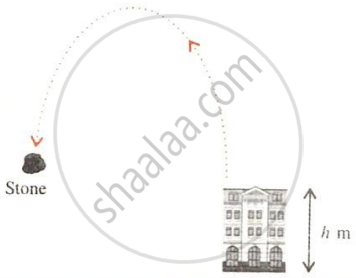
- How high will the stone be from the ground after 2 seconds?
- From what height, above the ground, the stone is thrown?
- At what time will the stone be 37 m above the ground?
Case-Study Based Question
Malik and Rakesh are best friends who are also neighbours living in Gurugram. Their families are also on exellent terms.
During summer, they decide to go for a vacation together along with their families to Ahmedabad by their own vehicles.
Malik travels by a Jeep and Rakesh by a car.
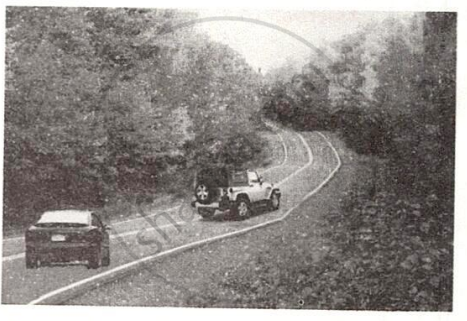
Malik's jeep travels at a speed of x km/h and Rakesh's car travels 10 km/h slower than Malik's jeep. Rakesh took 2 hours more than Malik to reach Ahmedabad. The distance between Gurugram and Ahmedabad (by road) is approximately 975 km .
- What will be the distance covered by Rakesh's car in five hours?
- Form a quadratic equation to describe the speed of Malik's jeep.
- What is the speed of Malik's jeep?
- How much time is taken by Rakesh to reach Ahmedabad?
Solutions for 6: Solving (simple) Problems (Based on Quadratic Equations)
Selina solutions for Concise Mathematics [English] Class 10 ICSE chapter 6 - Solving (simple) Problems (Based on Quadratic Equations)
Shaalaa.com has the CISCE Mathematics Concise Mathematics [English] Class 10 ICSE CISCE solutions in a manner that help students grasp basic concepts better and faster. The detailed, step-by-step solutions will help you understand the concepts better and clarify any confusion. Selina solutions for Mathematics Concise Mathematics [English] Class 10 ICSE CISCE 6 (Solving (simple) Problems (Based on Quadratic Equations)) include all questions with answers and detailed explanations. This will clear students' doubts about questions and improve their application skills while preparing for board exams.
Further, we at Shaalaa.com provide such solutions so students can prepare for written exams. Selina textbook solutions can be a core help for self-study and provide excellent self-help guidance for students.
Concepts covered in Concise Mathematics [English] Class 10 ICSE chapter 6 Solving (simple) Problems (Based on Quadratic Equations) are Method of Solving a Quadratic Equation, Nature of Roots of a Quadratic Equation, Concept of Quadratic Equations, Equations Reducible to Quadratic Equations, Factorisation Method, Quadratic Formula (Shreedharacharya's Rule), Method of Solving a Quadratic Equation, Nature of Roots of a Quadratic Equation, Concept of Quadratic Equations, Equations Reducible to Quadratic Equations, Factorisation Method, Quadratic Formula (Shreedharacharya's Rule), Method of Solving a Quadratic Equation, Nature of Roots of a Quadratic Equation, Concept of Quadratic Equations, Equations Reducible to Quadratic Equations, Factorisation Method, Quadratic Formula (Shreedharacharya's Rule).
Using Selina Concise Mathematics [English] Class 10 ICSE solutions Solving (simple) Problems (Based on Quadratic Equations) exercise by students is an easy way to prepare for the exams, as they involve solutions arranged chapter-wise and also page-wise. The questions involved in Selina Solutions are essential questions that can be asked in the final exam. Maximum CISCE Concise Mathematics [English] Class 10 ICSE students prefer Selina Textbook Solutions to score more in exams.
Get the free view of Chapter 6, Solving (simple) Problems (Based on Quadratic Equations) Concise Mathematics [English] Class 10 ICSE additional questions for Mathematics Concise Mathematics [English] Class 10 ICSE CISCE, and you can use Shaalaa.com to keep it handy for your exam preparation.
