Advertisements
Chapters
2: Factors and Multiples
3: Whole Numbers
▶ 4: Integers
Chapter 5: Fractions
6: Simplification
7: Decimals
8: Algebraic Expressions
9: Linear Equation in One Variable
10: Ratio, Proportion and Unitary Method
Chapter 11: Line Segment, Ray and Line
Chapter 12: Parallel Lines
Chapter 13: Angles and Their Measurement
Chapter 14: Constructions (Using Ruler and a Pair of Compasses)
Chapter 15: Polygons
Chapter 16: Triangles
Chapter 17: Quadrilaterals
Chapter 18: Circles
Chapter 19: Three-Dimensional Shapes
Chapter 20: Two-Dimensional Reflection Symmetry (Linear Symmetry)
Chapter 21: Concept of Perimeter and Area
Chapter 22: Data Handling
Chapter 23: Pictograph
Chapter 24: Bar Graph
![R.S. Aggarwal solutions for Mathematics [English] Class 6 chapter 4 - Integers - Shaalaa.com](/images/mathematics-english-class-6_6:33c16d70f7d44841a2f75f8a6c346822.jpg "R.S. Aggarwal solutions for Mathematics [English] Class 6 chapter 4 - Integers")
Advertisements
Solutions for Chapter 4: Integers
Below listed, you can find solutions for Chapter 4 of CBSE R.S. Aggarwal for Mathematics [English] Class 6.
R.S. Aggarwal solutions for Mathematics [English] Class 6 4 Integers Exercise 4A [Pages 63 - 64]
Write the opposite of the following: An increase of 8
Write the opposite of the following: A loss of Rs 7
Write the opposite of the following: Gaining a weight of 5 kg
Write the opposite of the following: 10 km above sea level
Write the opposite of the following: 5°C below the freezing point
Write the opposite of the following: A deposit of Rs 100
Write the opposite of the following: Earning Rs 500
Write the opposite of the following: Going 6m to the east
Write the opposite of the following: 24
Write the opposite of the following: -34
Indicate the following using '+' or '−' sign: A gain of Rs 600
+
-
Indicate the following using '+' or '−' sign: A loss of Rs 800
+
-
Indicate the following using '+' or '−' sign: 7°C below the freezing point
+
-
Indicate the following using '+' or '−' sign: Decrease of 9
+
-
Indicate the following using '+' or '−' sign: 2 km above sea level
+
-
Indicate the following using '+' or '−' sign: 3 km below sea level
+
-
Indicate the following using '+' or '−' sign: A deposit of Rs 200
+
-
Indicate the following using '+' or '−' sign: A withdrawal of Rs 300
+
-
Mark the following integers on a number line: -5
Mark the following integers on a number line: -2
Mark the following integers on a number line: 0
Mark the following integers on a number line: 7
Mark the following integers on a number line: -13
Which number is larger in the following pair?
0
-2
Which number is larger in the following pair?
-3
-5
Which number is larger in the following pair?
-5
2
Which number is larger in the following pair?
-16
8
Which number is larger in the following pair?
-365
-913
Which number is larger in the following pair?
-888
8
Which number is smaller in the following pair?
6
-7
Which number is smaller in the following pair?
0
-1
Which number is smaller in the following pair?
-13
-27
Which number is smaller in the following pair?
-26
17
Which number is smaller in the following pair?
-317
-603
Which number is smaller in the following pair?
-777
7
Write all integers between: 0 and 6
Write all integers between: -5 and 0
Write all integers between: -3 and 3
Write all integers between: -7 and -5
Fill in the blanks by appropriate symbol
0 ...... 7
>
<
Fill in the blanks by appropriate symbol
0 ...... −3
>
<
Fill in the blanks by appropriate symbol
−5 ...... −2
>
<
Fill in the blanks by appropriate symbol
-15 ...... 13
>
<
Fill in the blanks by appropriate symbol
−231 ...... −132
>
<
Fill in the blanks by appropriate symbol
-6 ...... 6
>
<
Write the following integers in the increasing order: 5, −7, −2, 0, 8
Write the following integers in the increasing order: −23, 12, 0, −6, −100, −1
Write the following integers in the increasing order: −17, 15, −363, −501, 165
Write the following integers in the increasing order: 21, −106, −16, 16, 0, −2, −81
Write the following integers in the decreasing order: 0, 7, −3, −9, −132, 36
Write the following integers in the decreasing order: 51, −53, −8, 0, −2
Write the following integers in the decreasing order: −71, −81, 36, 0, −5
Write the following integers in the decreasing order: −365, −515, 102, 413, −7
Using the number line, write the integer which is: 4 more than 6
Using the number line, write the integer which is: 5 more than −6
Using the number line, write the integer which is: 6 less than 2
Using the number line, write the integer which is: 2 less than −3
For the following statement, write (T) for true and (F) for false:
The smallest integer is zero.
True
False
For the following statement, write (T) for true and (F) for false:
Zero is not an integer.
True
False
For the following statement, write (T) for true and (F) for false:
The opposite of zero is zero.
True
False
For the following statement, write (T) for true and (F) for false:
−10 is greater than −6.
True
False
For the following statement, write (T) for true and (F) for false:
The absolute value of an integer is always greater than the integer.
True
False
For the following statement, write (T) for true and (F) for false:
0 is larger than every negative integer.
True
False
For the following statement, write (T) for true and (F) for false:
Every negative integer is less than every natural number.
True
False
For the following statement, write (T) for true and (F) for false:
The successor of −187 is −188.
True
False
For the following statement, write (T) for true and (F) for false:
The predecessor of −215 is −214.
True
False
Find the value of: |−9|
Find the value of: |−36|
Find the value of: |0|
Find the value of: |15|
Find the value of: −|−3|
Find the value of: 7 + |−3|
Find the value of: |7−4|
Find the value of: 8 −|−7|
Write five negative integers greater than −7.
Write five negative integers less than −20.
R.S. Aggarwal solutions for Mathematics [English] Class 6 4 Integers Exercise 4B [Pages 68 - 69]
Use the number line and add the following integers:
9 + (−6)
Use the number line and add the following integers: (−3) + 7
Use the number line and add the following integers: 8 + (−8)
Use the number line and add the following integers: (−1) + (−3)
Use the number line and add the following integers: (−4) + (−7)
Use the number line and add the following integers: (−2) + (−8)
Use the number line and add the following integers: 3 + (−2) + (−4)
Use the number line and add the following integers:
(−1) + (−2) + (−3)
Use the number line and add the following integers: 5 + (−2) + (−6)
Fill in the blanks:
(−3) + (−9) = .......
Fill in the blanks:
(−7) + (−8) = .......
Fill in the blanks:
(−9) + 16 = .......
Fill in the blanks:
(−13) + 25 = .......
Fill in the blanks:
8 + (−17) = .......
Fill in the blanks:
2 + (−12) = .......
Add: -365 and -87
Add: -73 and -687
Add: -1065 and -987
Add: -3596 and -1089
Add: -206 and 98
Add: 178 and -69
Add: -103 and 312
Add: -493 and 289
Find the sum of: 137 and −354
Find the sum of: 1001 and −13
Find the sum of: −3057 and 199
Find the sum of: −36 and 1027
Find the sum of: −389 and −1032
Find the sum of: −36 and 100
Find the sum of: 3002 and −888
Find the sum of: −18, + 25 and −37
Find the sum of:
−312, 39 and 192
Find the sum of: −51, −203, 36 and −28
Find the additive inverse of: -57
Find the additive inverse of: 183
Find the additive inverse of: 0
Find the additive inverse of: −1001
Find the additive inverse of: 2054
Write the successor of the following: 201
Write the successor of the following: 70
Write the successor of the following: −5
Write the successor of the following: −99
Write the successor of the following: −500
Write the predecessor of the following: 120
Write the predecessor of the following: 79
Write the predecessor of the following: −8
Write the predecessor of the following: −141
Write the predecessor of the following: −300
Simplify: (−7) + (−9) + 12 + (−16)
Simplify: 37 + (−23) + (−65) + 9 + (−12)
Simplify: (−145) + 79 + (−265) + (−41) + 2
Simplify:
1056 + (−798) + (−38) + 44 + (−1)
A car travelled 60 km to the north of Patna and then 90 km to the south from there. How far from Patna was the car finally?
A man bought some pencils for Rs 30 and some pens for Rs 90. The next day, he again bought some pencils for Rs 25. Then, he sold all the pencils for Rs 20 and the pens for Rs 70. What was his net gain or loss?
For the following statement write (T) for true and (F) for false:
The sum of two negative integers is always a negative integer.
True
False
For the following statement write (T) for true and (F) for false:
The sum of a negative integer and a positive integer is always a negative integer.
True
False
For the following statement write (T) for true and (F) for false:
The sum of an integer and its negative is zero.
True
False
For the following statement write (T) for true and (F) for false:
The sum of three different integers can never be zero.
True
False
For the following statement write (T) for true and (F) for false:
| −5| < |−3|
True
False
For the following statement write (T) for true and (F) for false:
|8 − 5| = |8| + |−5|
True
False
Find an integer a such that: a + 6 = 0
Find an integer a such that: 5 + a = 0
Find an integer a such that: a + (−4) = 0
Find an integer a such that: −8 + a = 0
R.S. Aggarwal solutions for Mathematics [English] Class 6 4 Integers Exercise 4C [Pages 70 - 71]
Subtract: 18 from −34
Subtract: −15 from 25
Subtract: −28 from −43
Subtract: 68 from −37
Subtract: 219 from 0
Subtract: −92 from 0
Subtract: −135 from −250
Subtract: −2768 from −287
Subtract: 6240 from −271
Subtract: −3012 from 6250
Subtract the sum of −1050 and 813 from −23.
Subtract the sum of −250 and 138 from the sum of 136 and −272.
From the sum of 33 and −47, subtract −84.
Add −36 to the difference of −8 and −68.
Simplify: [37 − (−8)] + [11 − (−30)]
Simplify: [−13 − (−17)] + [−22 − (−40)]
Find 34 − (−72) and (−72) − 34. Are they equal?
The sum of two integers is −13. If one of the numbers is 170, find the other.
The sum of two integers is 65. If one of the integers is −47, find the other.
Is the following statement true or false?
The sum of two integers is always an integer.
True
False
Is the following statement true or false?
The difference of two integers is always an integer.
True
False
Is the following statement true or false?
−14 > −8 − (−7)
True
False
Is the following statement true or false?
−5 − 2 > −8
True
False
Is the following statement true or false?
(−7) − 3 = (−3) − (−7)
True
False
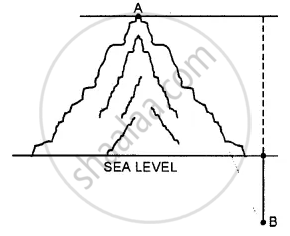
The point A is on a mountain which is 5700 metres above sea level and the point B is in a mine which is 39600 metres below sea level. Find the vertical distance between A and B.
On a day in Srinagar, the temperature at 6 p.m. was 1°C but at midnight that day, it dropped to −4°C. By how many degrees Celsius did the temperature fall?
R.S. Aggarwal solutions for Mathematics [English] Class 6 4 Integers Exercise 4D [Pages 72 - 73]
Multiply: 15 by 9
Multiply: 18 by −7
Multiply: 29 by −11
Multiply: –18 by 13
Multiply: –56 by 16
Multiply: 32 by –21
Multiply: –57 by 0
Multiply: 0 by –31
Multiply: –12 by –9
Multiply: (–746) by (–8)
Multiply: 118 by −7
Multiply: −238 by −143
Find the product: (−2) × 3 × (−4)
Find the product: 2 × (−5) × (−6)
Find the product: (−8) × 3 × 5
Find the product: 8 × 7 × (−10)
Find the product: (−3) × (−7) × (−6)
Find the product: (−8) × (−3) × (−9)
Use convenient groupings and find the value of: 18 × (−27) × 30
Use convenient groupings and find the value of: (−8) × (−63) × 9
Use convenient groupings and find the value of: (−17) × (−23) × 41
Use convenient groupings and find the value of: (−51) × (−47) × (−19)
Verify the following: 18 × [9 + (−7)] = 18 × 9 + 18 × (−7)
Verify the following: (−13) × [(−6) + (−19)] = (−13) × (−6) + (−13) × (−19)
Complete the following multiplication table:
| x | -3 | -2 | -1 | 0 | 1 | 2 | 3 |
| -3 | |||||||
| -2 | |||||||
| -1 | |||||||
| 0 | |||||||
| 1 | |||||||
| 2 | |||||||
| 3 |
Which of the following statements are true and which are false?
The product of a positive integer and a negative integer is negative.
True
False
Which of the following statements are true and which are false?
The product of two negative integers is a negative integer.
True
False
Which of the following statements are true and which are false?
The product of three negative integers is a negative integer.
True
False
Which of the following statements are true and which are false?
Every integer when multiplied with −1 gives its multiplicative inverse.
True
False
Simplify: (−9) × 6 + (−9) × 4
Simplify: 8 × (–12) + 7 × (–12)
Simplify: 30 × (–22) + 30 × (14)
Simplify: (–15) × (–14) + (–15) × (–6)
Simplify: 43 × (–33) + 43 × (–17)
Simplify: (–36) × (72) + (–36) × 28
Simplify: (–27) × (–16) + (–27) × (–14)
R.S. Aggarwal solutions for Mathematics [English] Class 6 4 Integers Exercise 4E [Page 75]
Divide: 85 by −17
Divide: −72 by 18
Divide: −80 by 16
Divide: –121 by 11
Divide: 108 by –12
Divide: –161 by 23
Divide: –76 by –19
Divide: –147 by –21
Divide: –639 by –71
Divide: –15625 by –125
Divide: 2067 by –1
Divide: 1765 by –1765
Divide: 0 by –278
Divide: 3000 by –100
Fill in the blanks:
80 ÷ (......) = −5
Fill in the blanks:
(−84) + (......) = −7
Fill in the blanks:
(......) ÷ (−5) = 25
Fill in the blanks:
(......) ÷ 372 = 0
Fill in the blanks:
(......) ÷ 1 = −186
Fill in the blanks:
(......) ÷ 17 = −2
Fill in the blanks:
(......) ÷ 165 = −1
Fill in the blanks:
(......) ÷ (−1) = 73
Fill in the blanks:
1 ÷ (......) = −1
Write (T) for true and (F) for false for the following statement:
0 ÷ (−6) = 0
True
False
Write (T) for true and (F) for false for the following statement:
(−8) ÷ 0 = 0
True
False
Write (T) for true and (F) for false for the following statement:
15 ÷ (−1) = −15
True
False
Write (T) for true and (F) for false for the following statement:
(−16) ÷ (−4) = −4
True
False
Write (T) for true and (F) for false for the following statement:
(−7) ÷ (−1) = 7
True
False
Write (T) for true and (F) for false for the following statement:
(−18) ÷ 9 = −2
True
False
Write (T) for true and (F) for false for the following statement:
20 ÷ (−5) = −4
True
False
Write (T) for true and (F) for false for the following statement:
(−10) ÷ 1 = −10
True
False
Write (T) for true and (F) for false for the following statement:
(−1) ÷ (−1) = −1
True
False
R.S. Aggarwal solutions for Mathematics [English] Class 6 4 Integers Exercise 4F [Pages 75 - 76]
Which of the following is a true statement?
−4 > −3
True
False
Which of the following is a true statement?
−4 < −3
True
False
Which of the following is a true statement?
−4 and −3 are non-comparable
True
False
2 less than −3 is
-1
1
-5
5
4 more than −5 is
9
-9
-1
1
2 less than −7 is
-9
-5
5
none of these
7 + |−3| = ?
4
10
-10
none of these
(−42) + (−35) = ?
-7
7
-77
none of these
(−37) + 6 = ?
-43
-31
31
none of these
49 + (−27) = ?
-73
73
22
none of these
The successor of −18 is
-19
17
-17
19
The predecessor of −16 is
-15
-17
15
17
The additive inverse of −5 is
5
0
-4
6
−12 − (−5) = ?
-17
-7
7
none of these
−5 − (−8) = ?
3
13
-3
none of these
The sum of two integers is −25. If one of them is 30 then the other is
55
5
-55
none of these
The sum of two integers is 20. If one of them is −5 then the other is
25
-25
15
none of these
The sum of two integers is −13. If one of them is 8 then the other is
-5
-21
21
none of these
On subtracting −8 from 0, we get
-8
8
0
none of these
8 + (−8) = ?
16
-16
0
none of these
(−6) + 4 − (−3) = ?
-5
-1
1
none of these
6 − (−4) = ?
2
-10
10
none of these
(−7) + (−9) + 12 + (−16) = ?
-20
20
-12
none of these
On subtracting 8 from −4, we get
4
12
-12
none of these
On subtracting −9 from −6, we get
-15
-3
3
none of these
On subtracting −5 from 10, we get
5
-15
15
none of these
(−6) × 9 = ?
54
-54
0
none of these
(−9) × 6 + (−9) × 4 = ?
-90
90
-18
18
36 ÷ (−9) = ?
4
-4
0
none of these
R.S. Aggarwal solutions for Mathematics [English] Class 6 4 Integers Test Paper 4 [Pages 78 - 79]
What are integers?
Write all integers from −5 to 5.
In the pair given below, find the larger integer.
0
-3
In the pair given below, find the larger integer.
-4
-6
In the pair given below, find the larger integer.
-99
9
In the pair given below, find the larger integer.
-385
-615
Write the following integers in increasing order:
−18, 16, 0, −5, 8, −36, −1, 1
Find the value of: 9 − |−6|
Find the value of: 6 + |−4|
Find the value of: −8 − |−3|
Write four integers less than −6
Write four integers greater than −6.
Evaluate: 8 + (−16)
Evaluate: (−5) + (−6)
Evaluate: (−6) × (−8)
Evaluate: (−36) ÷ 6
Evaluate: 30 − (−50)
Evaluate: (–40) ÷ (–10)
Evaluate: 8 × (–5)
Evaluate: (–30) – 15
The sum of two integers is −12. If one of them is 34, find the other.
Simplify: (−24) × (68) + (−24) × 32
Simplify: (−9) × 18 − (−9) × 8
Simplify: (−147) ÷ (−21)
Simplify: 16 ÷ (−1)
The successor of −89 is
-90
-88
90
88
The predecessor of −99 is
-98
-100
98
100
Additive inverse of −23 is
`(-1)/23`
`(1)/23`
23
-23
If (-13 + 6) ____ -25 - (-9) then the correct symbol in the place holder is
<
>
=
none of these
? + (−8) = 12
-4
-20
20
4
The integer which is 5 more that (−7) is
-12
12
-2
2
What should be added to 16 to get (−31)?
15
-15
47
-47
When 34 is subtracted from −36, we get
2
-2
70
-70
Fill in the blanks.
−23 − (?) = 15.
Fill in the blanks.
The largest negative integer is ...... .
Fill in the blanks.
The smallest positive integer is ...... .
Fill in the blanks.
(−8) + (−6) − (−3) = ...... .
Fill in the blanks.
The predecessor of −200 is ...... .
Write 'T' for true and 'F' for false for the following:
0 is neither positive nor negative.
True
False
Write 'T' for true and 'F' for false for the following:
−(−36) − 1 = − 37.
True
False
Write 'T' for true and 'F' for false for the following:
On the number line −10 lies to the right of −6.
True
False
Write 'T' for true and 'F' for false for the following:
0 is an integer.
True
False
Write 'T' for true and 'F' for false for the following:
−|−15| = −15.
True
False
Write 'T' for true and 'F' for false for the following:
|−40| + 40 = 0.
True
False
Solutions for 4: Integers
R.S. Aggarwal solutions for Mathematics [English] Class 6 chapter 4 - Integers
Shaalaa.com has the CBSE Mathematics Mathematics [English] Class 6 CBSE solutions in a manner that help students grasp basic concepts better and faster. The detailed, step-by-step solutions will help you understand the concepts better and clarify any confusion. R.S. Aggarwal solutions for Mathematics Mathematics [English] Class 6 CBSE 4 (Integers) include all questions with answers and detailed explanations. This will clear students' doubts about questions and improve their application skills while preparing for board exams.
Further, we at Shaalaa.com provide such solutions so students can prepare for written exams. R.S. Aggarwal textbook solutions can be a core help for self-study and provide excellent self-help guidance for students.
Concepts covered in Mathematics [English] Class 6 chapter 4 Integers are Concept of Perimeter, Perimeter of a Rectangle, Perimeter of Squares, Perimeter of Triangle, Problems based on Perimeter, Perimeter of a Regular Polygon, Concept of Area, Problems based on Area, Area of a Triangle, Exploring Shapes Through Perimeter and Area, Perimeter of an Equilateral Triangle.
Using R.S. Aggarwal Mathematics [English] Class 6 solutions Integers exercise by students is an easy way to prepare for the exams, as they involve solutions arranged chapter-wise and also page-wise. The questions involved in R.S. Aggarwal Solutions are essential questions that can be asked in the final exam. Maximum CBSE Mathematics [English] Class 6 students prefer R.S. Aggarwal Textbook Solutions to score more in exams.
Get the free view of Chapter 4, Integers Mathematics [English] Class 6 additional questions for Mathematics Mathematics [English] Class 6 CBSE, and you can use Shaalaa.com to keep it handy for your exam preparation.
