Advertisements
Online Mock Tests
Chapters
▶ 1: Bricks, Beads And Bones: The Harappan Civilisation
2: Kings, Farmers And Towns: Early States and Economies
3: Kinship, Caste And Class: Early Societies
4: Thinkers, Beliefs And Buildings: Cultural Developments
Part 2
5: Through The Eyes Of Travellers: Perceptions of Society
6: Bhakti –Sufi Traditions: Changes in Religious Beliefs and Devotional Texts
7: An Imperial Capital: Vijayanagara
8: Peasants, Zamindars And The State: Agrarian Society and the Mughal Empire
Part 3
9: Colonialism And The Countryside: Exploring Official Archives
10: Rebels And The Raj: 1857 Revolt and its Representations
11: Mahatma Gandhi And The Nationalist Movement: Civil Disobedience and Beyond
12: Framing The Constitution: The Beginning of a New Era
![NCERT solutions for Themes In Indian History Part I, II, and III [English] Class 12 chapter 1 - Bricks, Beads And Bones: The Harappan Civilisation - Shaalaa.com](/images/themes-in-indian-history-part-i-ii-and-iii-english-class-12_6:81c2d22dfccf437dbdcef1d2cd896e40.jpg "NCERT solutions for Themes In Indian History Part I, II, and III [English] Class 12 chapter 1 - Bricks, Beads And Bones: The Harappan Civilisation")
Advertisements
Solutions for Chapter 1: Bricks, Beads And Bones: The Harappan Civilisation
Below listed, you can find solutions for Chapter 1 of CBSE NCERT for Themes In Indian History Part I, II, and III [English] Class 12.
NCERT solutions for Themes In Indian History Part I, II, and III [English] Class 12 1 Bricks, Beads And Bones: The Harappan Civilisation Intext Questions [Pages 3 - 24]
Discuss
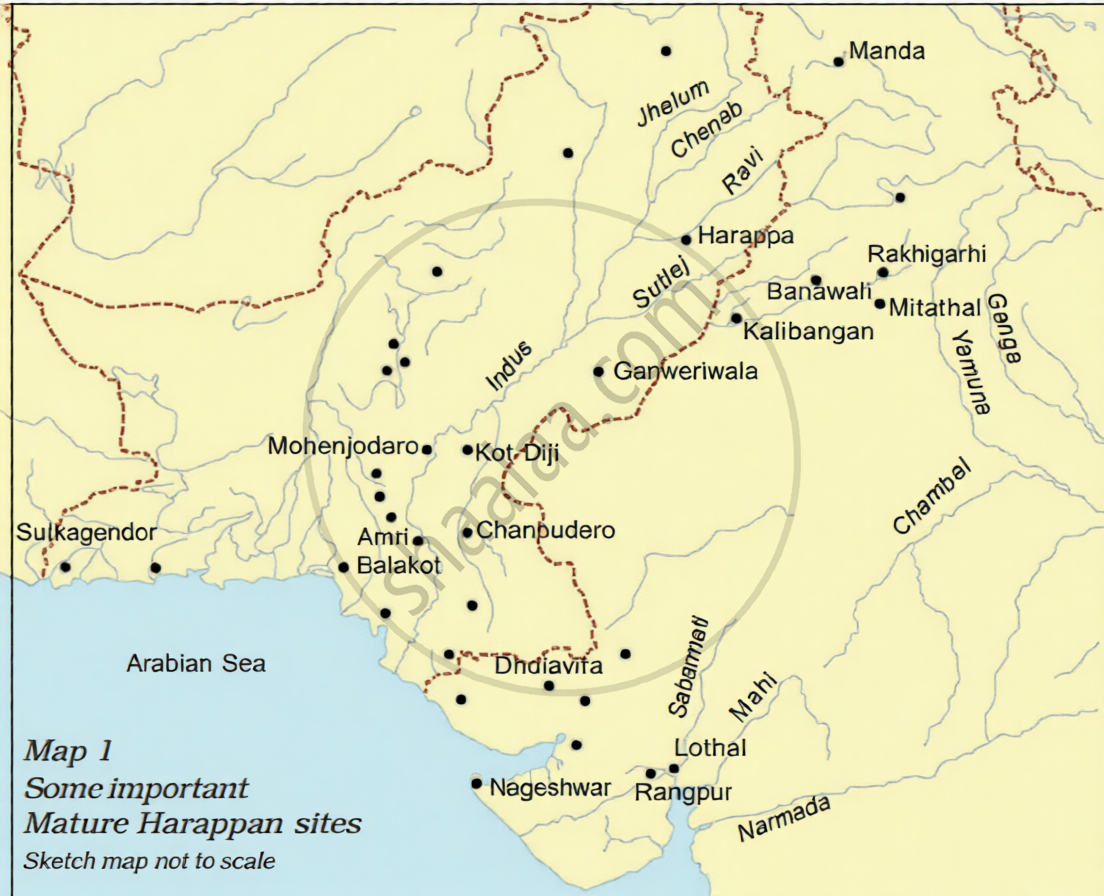
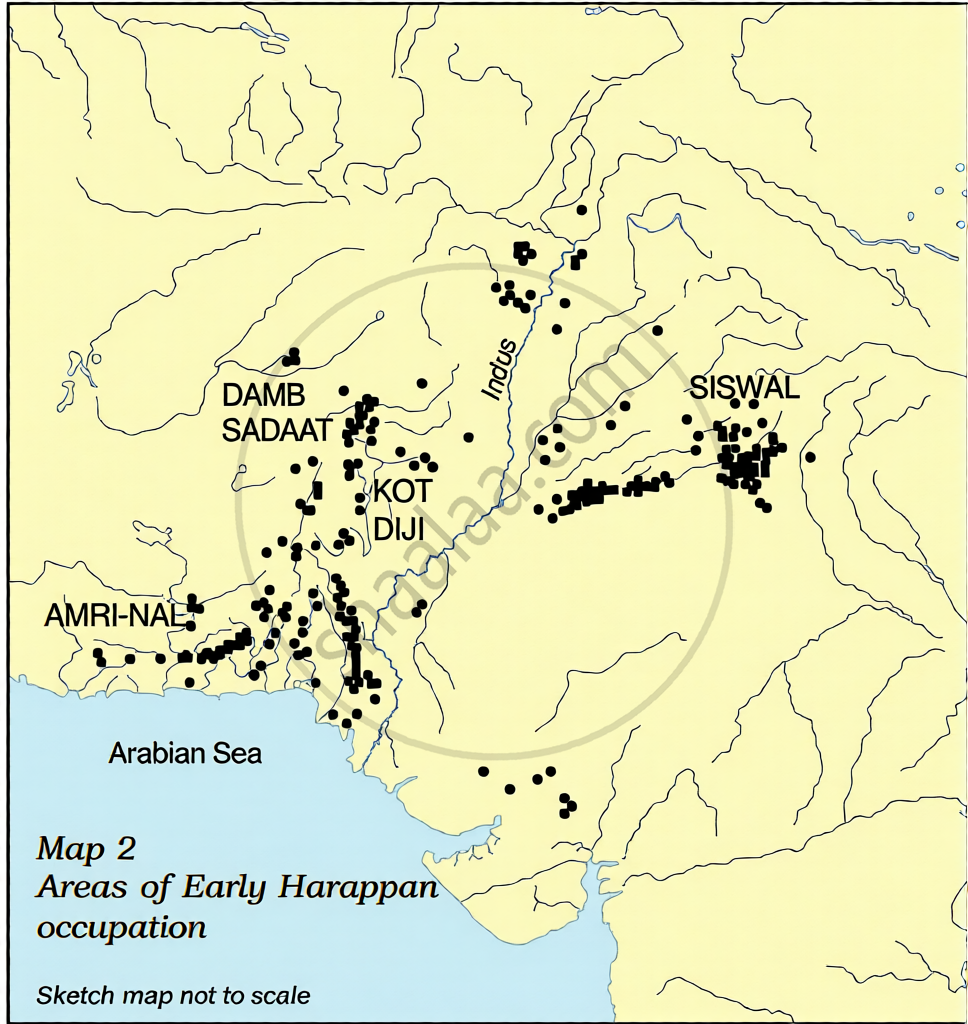
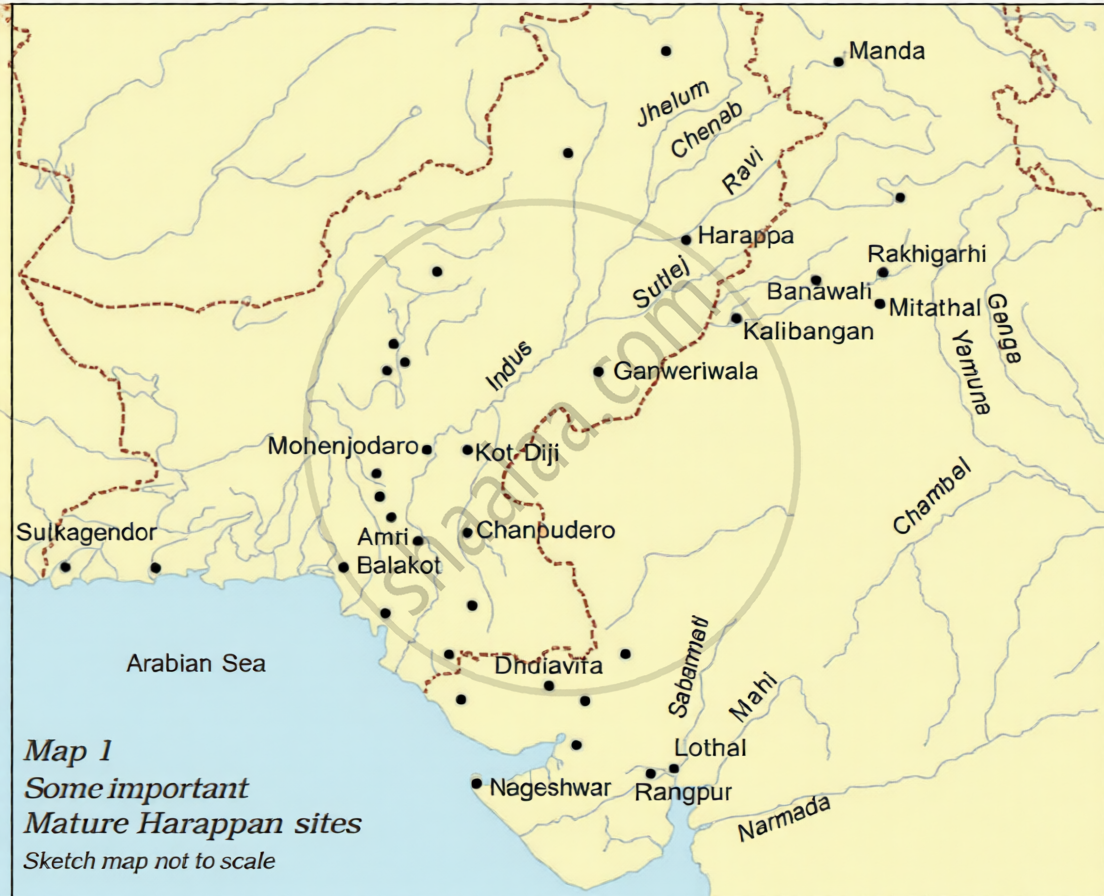
Are there any similarities or differences in the distribution of settlements shown on the maps?
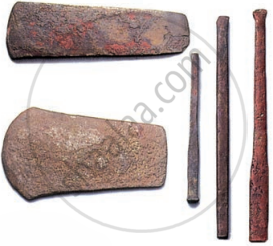
Do you think these Copper tools could have been used for harvesting?
Processing of food required grinding equipment as well as vessels for mixing, blending and cooking. These were made of stone, metal and terracotta. This is an excerpt from one of the earliest reports on excavations at Mohenjodaro, the best-known Harappan site:
Saddle querns … are found in considerable numbers … and they seem to have been the only means in use for grinding cereals. As a rule, they were roughly made of hard, gritty, igneous rock or sandstone and mostly show signs of hard usage. As their bases are usually convex, they must have been set in the earth or in mud to prevent their rocking. Two main types have been found: those on which another smaller stone was pushed or rolled to and fro, and others with which a second stone was used as a pounder, eventually making a large cavity in the nether stone. Querns of the former type were probably used solely for grain; the second type possibly only for pounding herbs and spices for making curries. In fact, stones of this latter type are dubbed “curry stones” by our workmen, and our cook asked for the loan of one from the museum for use in the kitchen.
FROM ERNEST MACKAY, Further Excavations at Mohenjodaro, 1937.
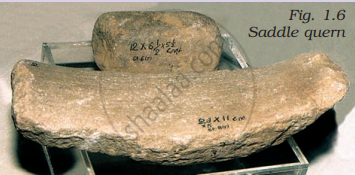
Archaeologists use present-day analogies to try and understand what ancient artefacts were used for. Mackay was comparing present-day querns with what he found. Is this a useful strategy?
Discuss
What is the evidence used by archaeologists to reconstruct dietary practices?
How is the Lower Town different from the Citadel?
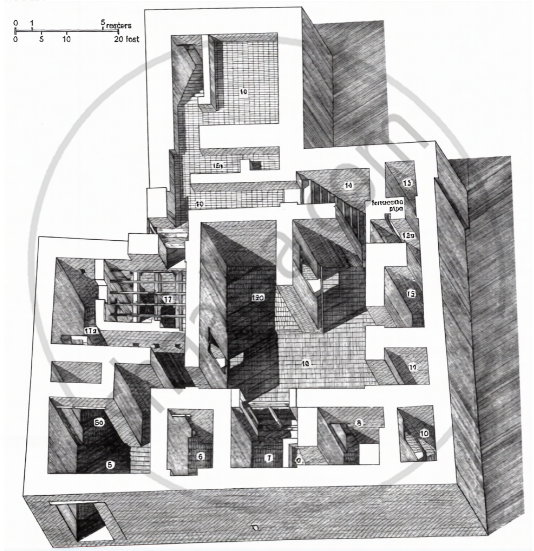
Where is the courtyard? Where are the two staircases? What is the entrance to the house like?
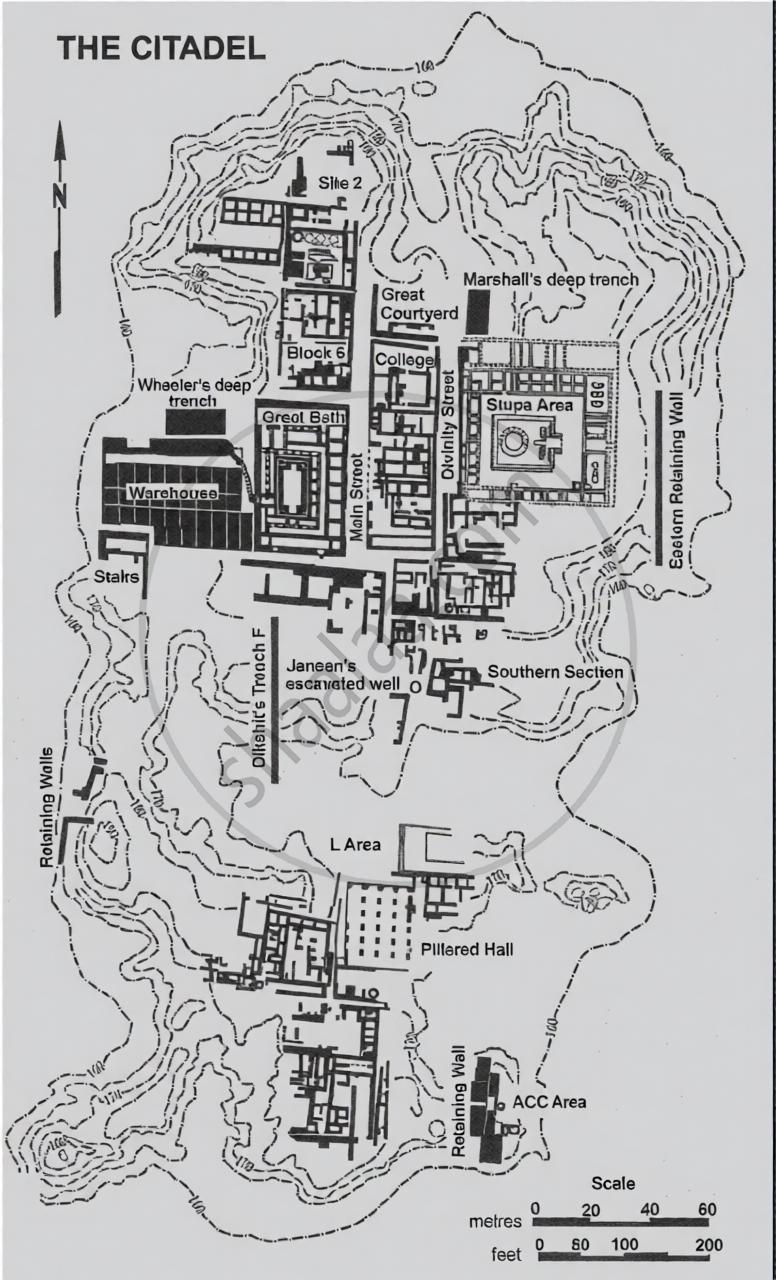
Are there other structures on the Citadel apart from the warehouse and the Great Bath?
Discuss
Which of the architectural features of Mohenjodaro indicate planning?
What are the modes of disposal of the dead prevalent at present? To what extent do these represent social differences?
Should the stone artefacts illustrated in the “Bricks, Beads And Bones: The Harappan Civilisation” be considered as utilitarian objects or as luxuries? Are there any that may fall into both categories?
What were the possible routes from the Harappan region to Oman, Dilmun and Mesopotamia?
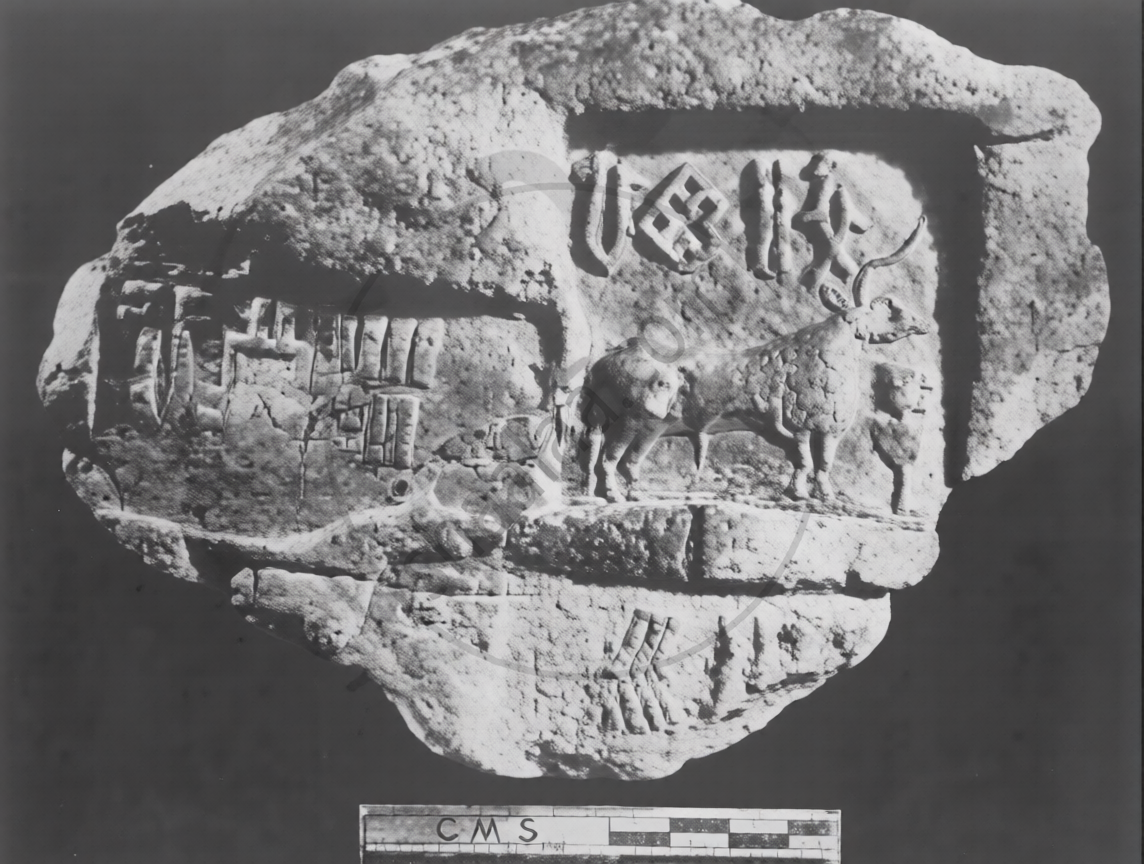
How many seals are impressed on the piece of clay?
Discuss
What are some of the present-day methods used for long-distance exchange of goods? What are their advantages and problems?
Could everybody in Harappan society have been equal?
What are the similarities and differences between Early (Map 2), Mature (Map 1), and Late (Map 4) Harappan?
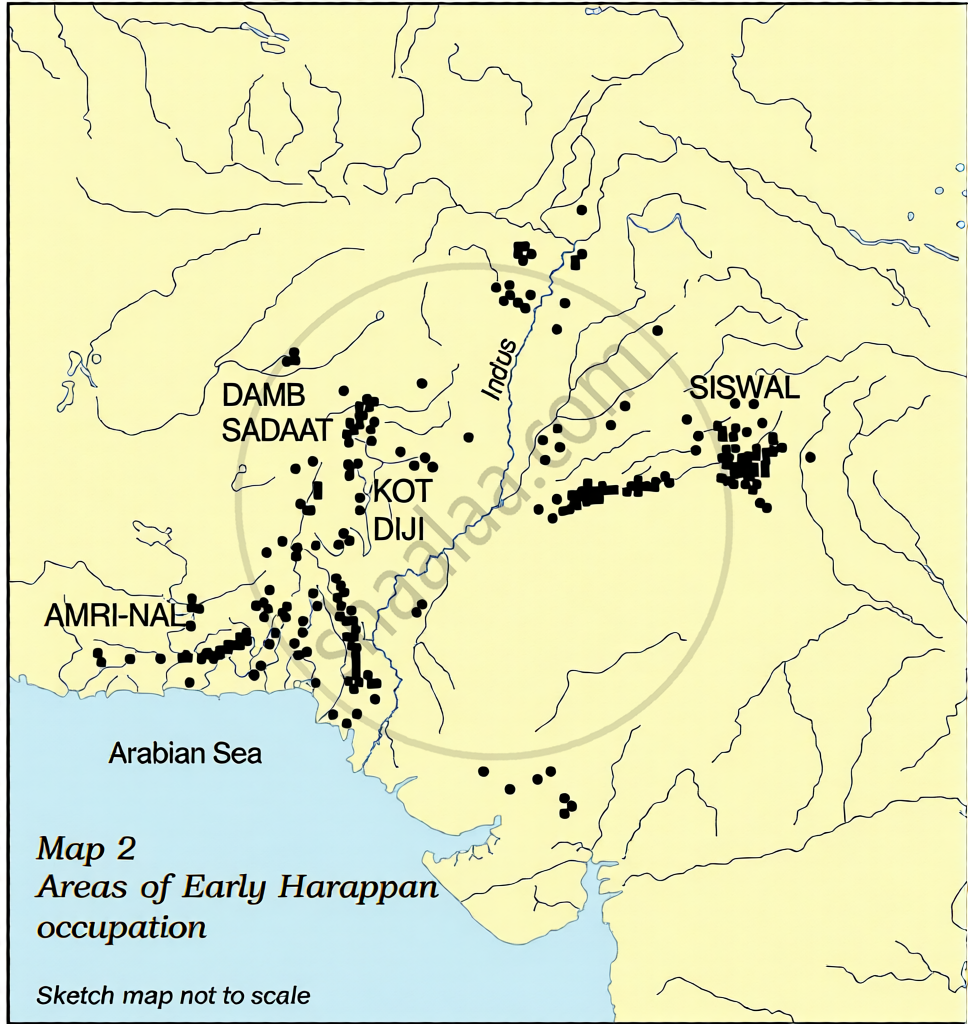
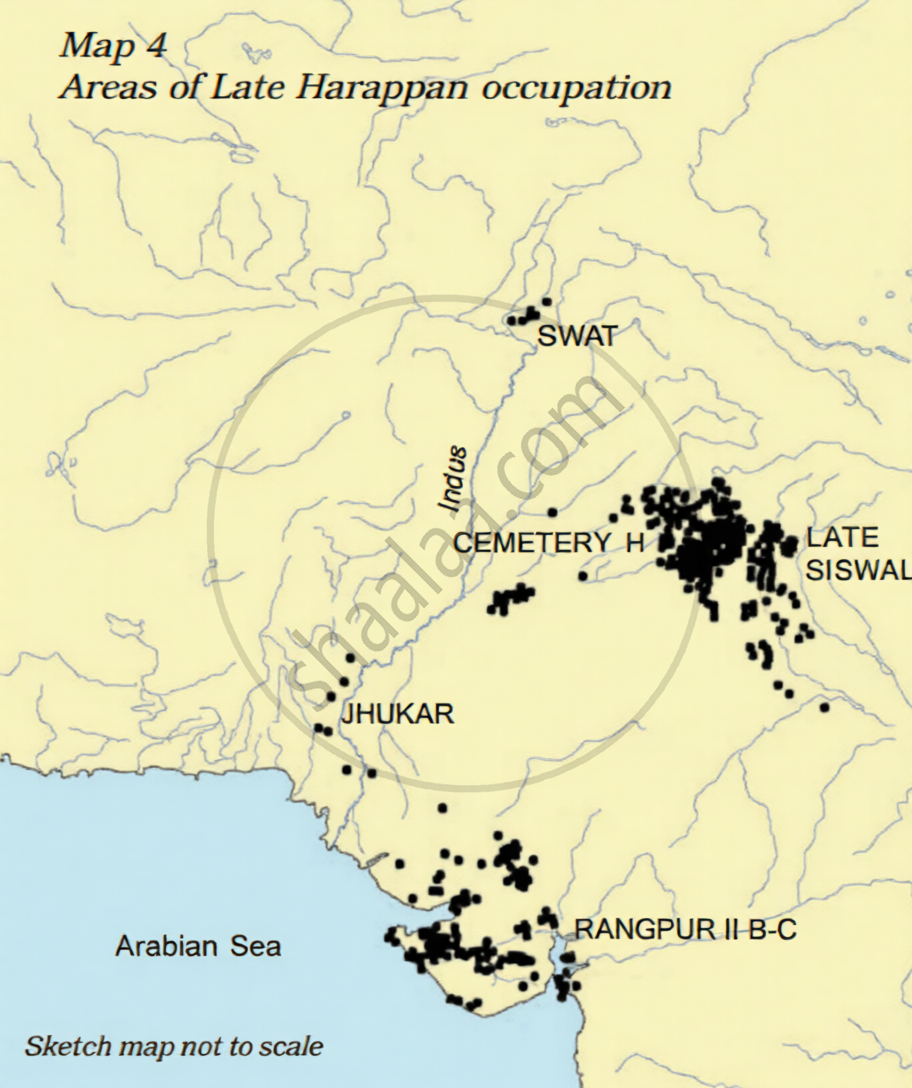
Which of the themes in “Bricks, Beads And Bones: The Harappan Civilisation” would have interested Cunningham? Which are the issues that have been of interest since 1947?
What are the aspects of Harappan economy that have been reconstructed from archaeological evidence?
NCERT solutions for Themes In Indian History Part I, II, and III [English] Class 12 1 Bricks, Beads And Bones: The Harappan Civilisation Exercises [Pages 26 - 27]
Answer in 100-150 words
List the items of food available to people in Harappan cities. Identify the groups who would have provided these.
Answer in 100-150 words
How do archaeologists trace socio-economic differences in Harappan society? What are the differences that they notice?
Answer in 100-150 words
Would you agree that the drainage system in Harappan cities indicates town planning? Give reasons for your answer.
Answer in 100-150 words
List the materials used to make beads in the Harappan Civilisation. Describe the process by which any one kind of bead was made.
Answer in 100-150 words
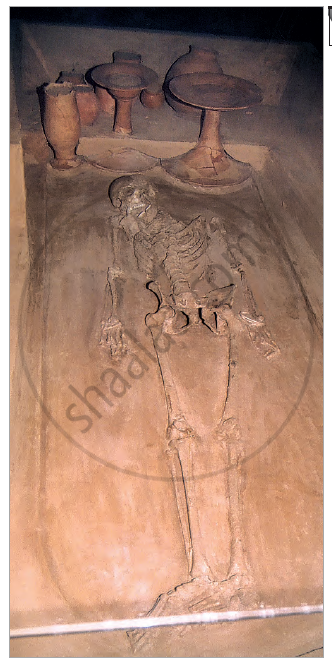
Look at following figure and describe what you see. How is the body placed? What are the objects placed near it? Are there any artefacts on the body? Do these indicate the sex of the skeleton?
Write a short essay (about 500 words) on the following:
Describe some ofthe distinctive features of Mohenjodaro.
Write a short essay (about 500 words) on the following:
List the raw materials required for craft production in the Harappan Civilisation and discuss how these might have been obtained.
Write a short essay (about 500 words) on the following:
Discuss, how archaeologists reconstruct the past.
Write a short essay (about 500 words) on the following:
Discuss the functions that may have been performed by rulers in Harappan society.
Map work
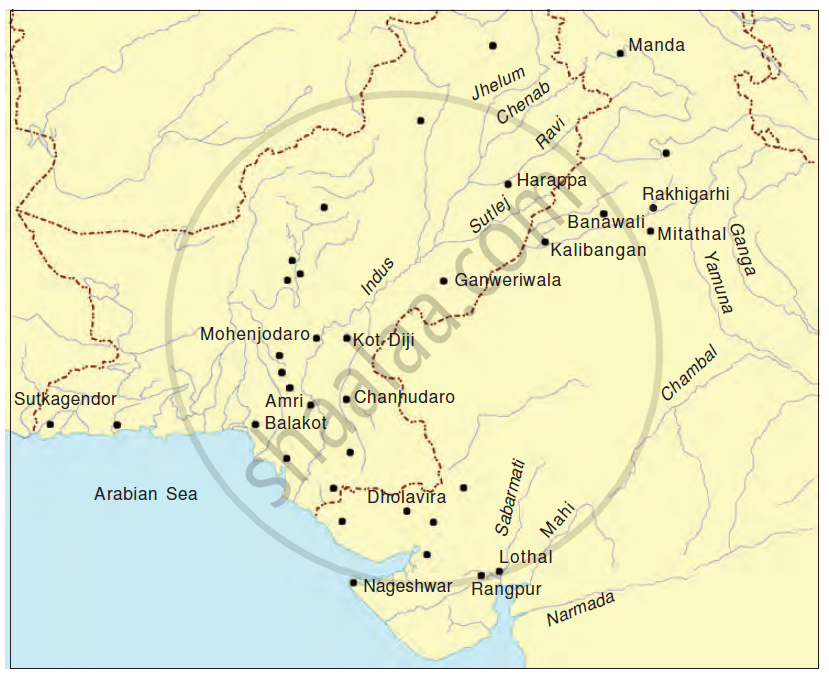
On the given map, use a pencil to circle the sites where evidence of agriculture has been recovered. Mark an X against sites where there is evidence of craft production and R against sites where raw materials were found.
Project (any one)
Find out if there are any museums in your town. Visit one of them and write a report on any ten items, describing how old they are, where they were found, and why you think they are on display.
Collect illustrations of ten things made of stone, metal and clay produced and used at present. Compare these with the pictures of the Harappan civilisation in “Bricks, Beads And Bones: The Harappan Civilisation”, and discuss the similarities and differences that you find.
Solutions for 1: Bricks, Beads And Bones: The Harappan Civilisation
NCERT solutions for Themes In Indian History Part I, II, and III [English] Class 12 chapter 1 - Bricks, Beads And Bones: The Harappan Civilisation
Shaalaa.com has the CBSE Mathematics Themes In Indian History Part I, II, and III [English] Class 12 CBSE solutions in a manner that help students grasp basic concepts better and faster. The detailed, step-by-step solutions will help you understand the concepts better and clarify any confusion. NCERT solutions for Mathematics Themes In Indian History Part I, II, and III [English] Class 12 CBSE 1 (Bricks, Beads And Bones: The Harappan Civilisation) include all questions with answers and detailed explanations. This will clear students' doubts about questions and improve their application skills while preparing for board exams.
Further, we at Shaalaa.com provide such solutions so students can prepare for written exams. NCERT textbook solutions can be a core help for self-study and provide excellent self-help guidance for students.
Concepts covered in Themes In Indian History Part I, II, and III [English] Class 12 chapter 1 Bricks, Beads And Bones: The Harappan Civilisation are Introduction to Harappan Civilisation, Finding Out About Craft Production, Strategies for Procuring Materials, Seals, Script, Weights, Discovering the Harappan Civilisation, Subsistence Strategies, Mohenjodaro: a Planned Urban Centre, Tracking Social Differences, Ancient Authority, The End of the Civilisation, Problems of Piecing Together the Past, Overview of Bricks, Beads and Bones The Harappan Civilisation, Overview of Bricks, Beads and Bones The Harappan Civilisation.
Using NCERT Themes In Indian History Part I, II, and III [English] Class 12 solutions Bricks, Beads And Bones: The Harappan Civilisation exercise by students is an easy way to prepare for the exams, as they involve solutions arranged chapter-wise and also page-wise. The questions involved in NCERT Solutions are essential questions that can be asked in the final exam. Maximum CBSE Themes In Indian History Part I, II, and III [English] Class 12 students prefer NCERT Textbook Solutions to score more in exams.
Get the free view of Chapter 1, Bricks, Beads And Bones: The Harappan Civilisation Themes In Indian History Part I, II, and III [English] Class 12 additional questions for Mathematics Themes In Indian History Part I, II, and III [English] Class 12 CBSE, and you can use Shaalaa.com to keep it handy for your exam preparation.
