Advertisements
Advertisements
Question
Map work
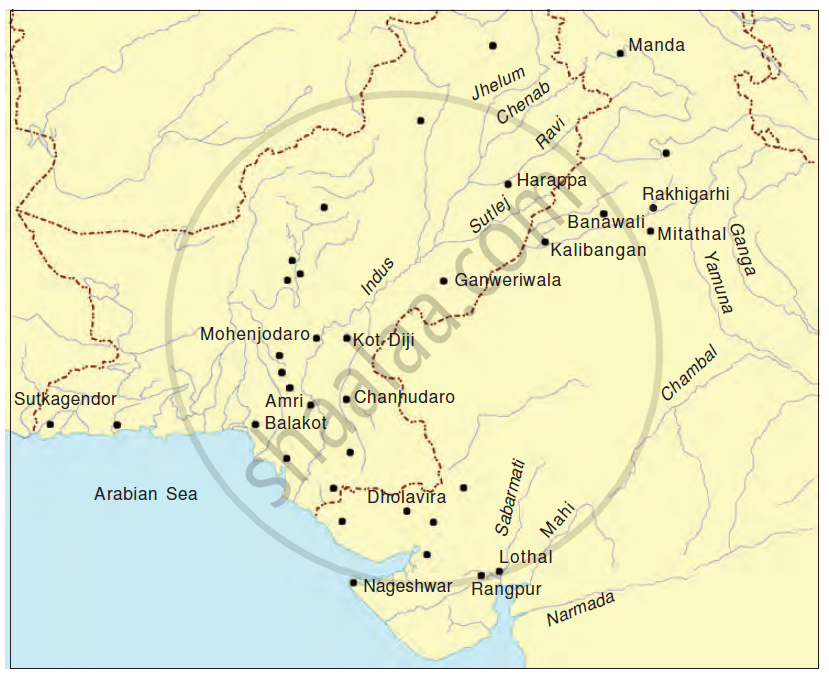
On the given map, use a pencil to circle the sites where evidence of agriculture has been recovered. Mark an X against sites where there is evidence of craft production and R against sites where raw materials were found.
Advertisements
Solution
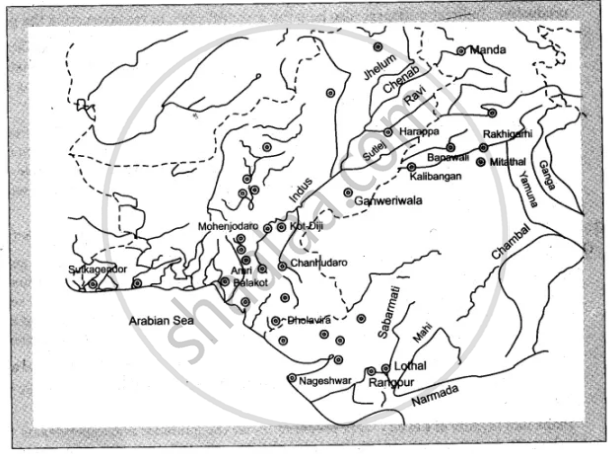
(i)Sites of agriculture:- Harappa, Banawali, Kalibangan, Mohenjodaro, Dholavira (Gujarat).
(ii)Sites of craft production:- Chanhudaro, Nageshwar, Balakot.
(iii)Sites of raw material:- Nageshwar, Balakot, Khetri.
APPEARS IN
RELATED QUESTIONS
Answer in 100-150 words
List the items of food available to people in Harappan cities. Identify the groups who would have provided these.
Answer in 100-150 words
How do archaeologists trace socio-economic differences in Harappan society? What are the differences that they notice?
What was the main feature of the Harappa Civilisation?
Which of these is the other name of Harappan Civilisation?
- Aryan civilisation
- Indus Valley Civilisation
- Vedic Civilisation
- Early Civilisation
Harappa was located on the banks of the river:
The Indus Valley Civilization was initially called:
Which is the biggest Harappan Civilization Site?
First site to be excavated after independence was:
Which of the following is called the 'Provincial capital' of the Harappan Civilization?
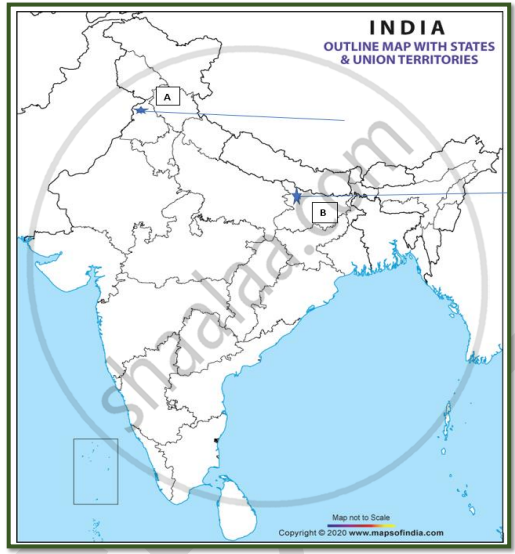
- On the given political map of India, locate and label the following with appropriate symbols:
- Kalibangan, a Harappan site
- Agra, a territory under Babur, Akbar, and Aurangzeb
- Sanchi, a Buddhist site
OR - Ajanta, a Buddhist site
- On the same outline map, two places have been marked as A and B, which are centres of the National movement. Identify them and write their correct names on the lines drawn near them.
Read the source given below and answer the questions that follow:
|
Darbar-i Akbari Abu'l Fazl gives a vivid account of Akbar's darbar: Whenever His Majesty (Akbar) holds court (darbar) a large drum is beaten, the sounds of which are accompanied by Divine praise. In this manner, people of all classes receive notice. His Majesty's sons and grandchildren, the grandees of the Court, and all other men who have admittance,' attend to make the kornish, and remain standing in their proper places. Learned men of renown and skillful mechanics pay their respects; and the officers of justice present their reports. His Majesty, with his usual insights, gives orders, and settles everything in a satisfactory manner. During the whole time, skillful gladiators and wrestlers from all countries hold themselves in readiness, and singers, male and female, are in waiting. Clever jugglers and funny tumblers also are anxious to exhibit their dexterity and agility. |
- How were the people informed about the conduct of the court?
- How was the social control exercised in the court?
- How did Akbar dispose of the appeals or cases in the court?
Read the source given below and answer the questions that follow.
|
“There cannot be any divided loyalty” Govind Ballabh Pant argued that in order to become loyal citizens people had to stop focusing only on the community and the self: For the success of democracy one must train himself in the art of self-discipline. In democracies, one should care less for himself and more for others. There cannot be any divided loyalty. All loyalties must exclusively be centered around the State. If in a democracy, you create rival loyalties, or you create a system in which any individual or group, instead of suppressing his extravagance, cares naught for larger or other interests, then democracy is doomed. |
- How did G.B. Pant encourage citizens to make a unified nation?
- Why did he urge citizens for loyal towards nation?
- How was loyalty considered the base of the social pyramid?
Read the source given below and answer the questions that follow:
|
Darbar-i Akbari Abu'l Fazl gives a vivid account of Akbar's darbar: Whenever His Majesty (Akbar) holds court (darbar) a large drum is beaten, the sounds of which are accompanied by Divine praise. In this manner, people of all classes receive notice. His Majesty's sons and grandchildren, the grandees of the Court, and all other men who have admittance,' attend to make the kornish, and remain standing in their proper places. Learned men of renown and skillful mechanics pay their respects, and the officers of justice present their reports. His Majesty, with his usual insights, gives orders and settles everything in a satisfactory manner. During the whole time, skillful gladiators and wrestlers from all countries hold themselves in readiness, and singers, male and female, are in waiting. Clever jugglers and funny tumblers also are anxious to exhibit their dexterity and agility. |
- How were the people informed about the conduct of the court?
- How was the social control exercised in the court?
- How did Akbar dispose of the appeals or cases in the court?
Read the source given below and answer the · questions that follow:
|
Darbar-i Akbari Abul Fazl gives a vivid account of Akbar's darbar: Whenever His Majesty (Akbar) holds Court (darbar), a large drum is beaten, the sounds of which are accompanied by Divine praise. In this manner, people of all classes receive notice. His. Majesty's sons and grandchildren, the grandees of the Court, and all other men who have admittance,' attend to make the garnish and remain standing in their proper places. Learned men of renown and skilful mechanics pay their respects, and the officers of justice present their reports. His Majesty, with his usual insights, gives orders and settles everything in a satisfactory manner. During the whole time, skilful gladiators and wrestlers from all countries · hold themselves in readiness, and male and female singers are in waiting. Clever jugglers and funny tumblers are also anxious. To exhibit their skill and agility. |
- How were the people informed about the conduct of the Court?
- How was the social control exercised in the Court?
- How did Akbat dispose of the appeals or cases in the Court?
Read the source given below and answer the questions that follow.
|
“There cannot be any divided loyalty” Govind Ballabh Pant argued that in order to become loyal citizens people had to stop focusing only on the community and the self: For the success of democracy one must train himself in the art of self-discipline. In democracies, one should care less for himself and more for others. There cannot be any divided loyalty. All loyalties must exclusively be centred around the State. If in a democracy, you create rival loyalties, or you create a system in which any individual or group, instead of suppressing his extravagance, cares nought for larger or other interests, then democracy is doomed. |
- How did G.B Pant encourage citizens to make a unified nation?
- Why did he urge citizens for loyal towards nation?
- How was loyalty considered the base of the social pyramid?
Read the source given below and answer the questions that follow:
|
Darbar-i Akbari Abu'l Fazl gives a vivid account of Akbar's darbar: Whenever His Majesty (Akbar) holds court (darbar) a large drum is beaten, the sounds of which are accompanied by Divine praise. In this manner, people of all classes receive notice. His Majesty's sons and grandchildren, the grandees of the Court, and all other men who have admittance attend to make the kornish and remain standing in their proper places. Learned men of renown and skillful mechanics pay their respects, and the officers of justice present their reports. His Majesty, with his usual insights, gives orders and settles everything in a satisfactory manner. During the whole time, skilful gladiators and wrestlers from all countries hold themselves in readiness, and singers, male and female, are in waiting. Clever jugglers and funny tumblers are also anxious to exhibit their dexterity and agility. |
- How were the people informed about the conduct of the court?
- How was the social control exercised in the court?
- How did Akbar dispose of the appeals or cases in the court?
Read the source given below and answer the questions that follow.
|
“There cannot be any divided loyalty.” Govind Ballabh Pant argued that in order to become loyal citizens, people had to stop focusing only on the community and the self. For the success of democracy, one must train himself in the art of self-discipline. In democracies, one should care less for himself and more for others. There cannot be any divided loyalty. All loyalties must exclusively be centred around the State. If in a democracy, you create rival loyalties, or you create a system in which any individual or group, instead of suppressing his extravagance, cares nought for larger or other interests, then democracy is doomed. |
- How did G.B Pant encourage citizens to make a unified nation?
- Why did he urge citizens to be loyal to nation?
- How was loyalty considered the base of the social pyramid?
Read the source given below and answer the questions that follow:
|
Darbar-i Akbari Abu'l Fazl gives a vivid account of Akbar's darbar: Whenever His Majesty (Akbar) holds court (darbar) a large drum is beaten, the sounds of which are accompanied by Divine praise. In this manner, people of all classes receive notice. His Majesty's sons and grandchildren, the grandees of the Court, and all other men who have admittance,' attend to make the kornish, and remain standing in their proper places. Learned men of renown and skillful mechanics pay their respects; and the officers of justice present their reports. His Majesty, with his usual insights, gives orders, and settles everything in a satisfactory manner. During the whole time, skillful gladiators and wrestlers from all countries hold themselves in readiness, and singers, male and female, are in waiting. Clever jugglers and funny tumblers also are anxious to exhibit their dexterity and agility. |
- How were the people informed about the conduct of the court?
- How was the social control exercised in the court?
- How did Akbar dispose of the appeals or cases in the court?
Read the source given below and answer the questions that follow:
|
Darbar-i Akbari Abu'l Fazl gives a vivid account of Akbar's darbar: Whenever His Majesty (Akbar) holds court (darbar) a large drum is beaten, the sounds of which are accompanied by Divine praise. In this manner, people of all classes receive notice. His Majesty's sons and grandchildren, the grandees of the Court, and all other men who have admittance, attend to make the kornish, and remain standing in their proper places. Learned men of renown and skillful mechanics pay their respects; and the officers of justice present their reports. His Majesty, with his usual insights, gives orders, and settles everything in a satisfactory manner. During the whole time, skillful gladiators and wrestlers from all countries hold themselves in readiness, and singers, male and female, are in waiting. Clever jugglers and funny tumblers also are anxious to exhibit their dexterity and agility. |
- How were the people informed about the conduct of the court?
- How was the social control exercised in the court?
- How did Akbar dispose of the appeals or cases in the court?
Read the source given below and answer the questions that follow:
|
Darbar-i Akbari Abul Fazl gives a vivid account of Akbar's darbar: Whenever His Majesty (Akbar) holds court (darbar) a large drum is beaten, the sounds of which are accompanied by Divine praise. In this manner, people of all classes receive notice. His. Majesty's sons and grandchildren, the grandees of the Court, and all other men who have admittance, 'attend to make the kornish and remain standing in their proper places. Learned men of renown and skillful mechanics pay their respects; and the officers of justice present their reports: His Majesty, with his usual insights, gives orders, and settles everything in a satisfactory manner. During the whole time, skillful gladiators and wrestlers from all countries hold themselves in readiness, and singers, male . and female, are in waiting. Clever jugglers and funny tumblers are also are ailxious to exhibit their dexterity and agility. |
- How were the people informed about the conduct of the court?
- How was the social control exercised in the court?
- How did Akbar dispose of the appeals or cases in the court?
Read the source given below and answer the questions that follow.
|
“There cannot be any divided loyalty” Govind Ballabh Pant argued that in order to become loyal citizens people had to stop focusing only on the community and the self: For the success of democracy one must train himself in the art of self-discipline. In democracies, one should care less for himself and more for others. There cannot be any divided loyalty. All loyalties must exclusively be centred around the State. If in a democracy, you create rival loyalties, or you create a system in which any individual or group, instead of suppressing his extravagance, cares nought for larger or other interests, then democracy is doomed. |
- How did G.B Pant encourage citizens to make a unified nation?
- Why did he urge citizens for loyal towards nation?
- How was loyalty considered the base of the social pyramid?
Read the source given below and answer the questions that follow.
|
“There cannot be any divided loyalty” Govind Ballabh Pant argued that in order to become loyal citizens people had to stop focusing only on the community and the self: For the success of democracy one must train himself in the art of self-discipline. In democracies, one should care less for himself and more for others. There cannot be any divided loyalty. All loyalties must exclusively be centred around the State. If in a democracy, you create rival loyalties, or you create a system in which any individual or group, instead of suppressing his extravagance, cares nought for larger or other interests, then democracy is doomed. |
- How did G.B Pant encourage citizens to make a unified nation?
- Why did he urge citizens for loyal towards nation?
- How was loyalty considered the base of the social pyramid?
Read the source given below and answer the questions that follow.
|
“There cannot be any divided loyalty” Govind Ballabh Pant argued that in order to become loyal citizens people had to stop focusing only on the community and the self: For the success of democracy one must train himself in the art of self-discipline. In democracies, one should care less for himself and more for others. There cannot be any divided loyalty. All loyalties must exclusively be centred around the State. If in a democracy, you create rival loyalties, or you create a system in which any individual or group, instead of suppressing his extravagance, cares nought for larger or other interests, then democracy is doomed. |
- How did G.B Pant encourage citizens to make a unified nation?
- Why did he urge citizens for loyal towards nation?
- How was loyalty considered the base of the social pyramid?
