Advertisements
Chapters
▶ 1: Natural Resources – Air, Water and Land
2: The Living World
3: Diversity in Living Things and their Classification
4: Disaster Management
Part 2
5: Substances in the Surroundings—Their States and Properties
6: Substances in Daily Use
7: Nutrition and Diet
8: Our Skeletal System and the Skin
Part 3
9: Motion and Types of Motion
10: Force and Types of Force
11: Work and Energy
12: Simple Machines
Part 4
13: Sound
14: Light and the Formation of Shadows
15: Fun with Magnets
16: The Universe
![Balbharati solutions for General Science Integrated [English] Standard 6 Maharashtra State Board chapter 1 - Natural Resources – Air, Water and Land - Shaalaa.com](/images/general-science-integrated-english-standard-6-maharashtra-state-board_6:16ccdac16bb449e39ef419deb5dc6b8d.jpg "Balbharati solutions for General Science Integrated [English] Standard 6 Maharashtra State Board chapter 1 - Natural Resources – Air, Water and Land")
Advertisements
Solutions for Chapter 1: Natural Resources – Air, Water and Land
Below listed, you can find solutions for Chapter 1 of Maharashtra State Board Balbharati for General Science Integrated [English] Standard 6 Maharashtra State Board.
Balbharati solutions for General Science Integrated [English] Standard 6 Maharashtra State Board 1 Natural Resources – Air, Water and Land Intext Questions [Pages 67 - 73]
Observe.
Observe the picture alongside and answer the questions.
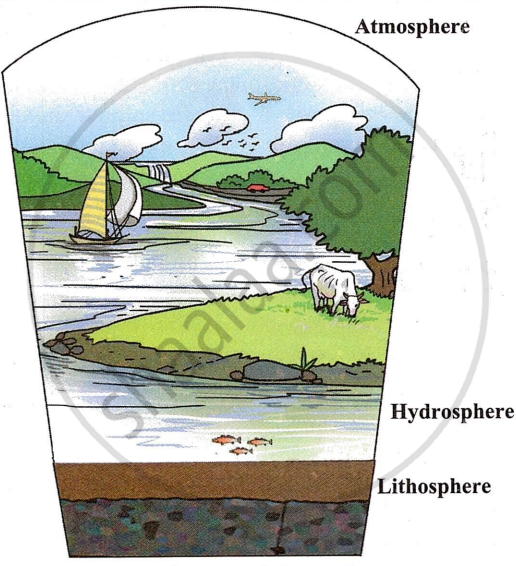
- Where do we see the birds?
- Where is the cow grazing?
- Locate the trees and the road.
- Where does the river come from? How does it flow?
- Where is the aeroplane?
- Where are the fish seen?
- On what is the sailboat floating?
Can you recall?
Briefly explain main layers of the atmosphere.
Observe and discuss.
What is the similarity in the three pictures below?
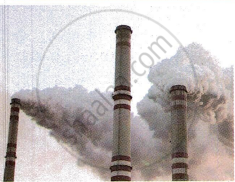 |
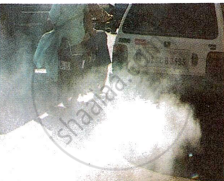 |
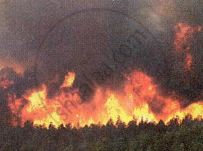 |
Use your brain power!
What would have happened if there were no air on the earth?
Try this.
Observe how much water is used and for what purposes it is used in your house for a whole day. Record it in a chart like the one shown here. Discuss this data in the class. Divide the total amount of water used in your house by the number of persons to find out how much water each person needs.
You will see that it is almost impossible for us to spend even a single day without water. We need to drink three to four litres of water every day so that all our bodily functions run smoothly. Other living things also require water, although the amount of water they need may vary according to the size of their body. Thus, we see that water is very important.
If hydrogen gas burns in air, it combines with oxygen and water is formed. We have learnt about some characteristics of water in the previous standards.
| Purpose for which water is used |
Amount of Water (approx.) in litres |
| Bath | |
| Brushing teeth | |
| Washing clothes and utensils | |
| Mopping the floor | |
| Drinking | |
| Cooking | |
| Total use of water |
Observe and discuss.
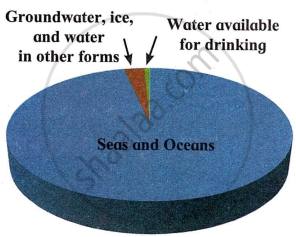
| Water available on Earth | Percentage |
| Seas, Oceans | 97% |
| 2.7% | |
| Water available for drinking (fresh water) | |
| Total | 100% |
Observe and discuss.
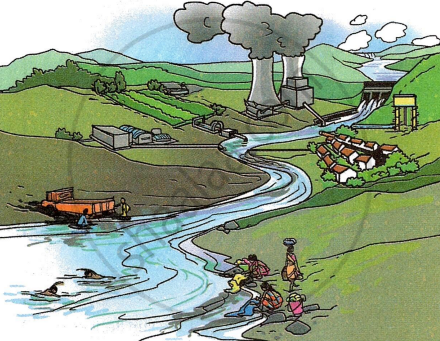
- For which purposes is water being used?
- Do other living things use water like we do ?
Can you tell?
What is land made of?
What do you see on land?
What has man created on land?
If a deep pit is dug in the ground, what do you find there?
Is the land flat everywhere?
Does man produce soil/land?
Let's try this.
- Take a transparent plastic bottle, a handful of soil, some stones, sand, some dry leaves and water.
- Cut off the upper tapering part of the bottle. Put the rest of the materials in the lower part and add water.
- Stir the mixture thoroughly and put it aside.
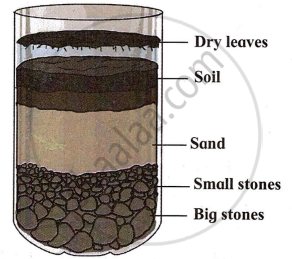
Observe it the next day and answer.
- How does the mixture in the bottle look now?
- Do you see layers in it?
- What is seen in the different layers from top to bottom?
Explain, with the help of a diagram, the various layers of the land.
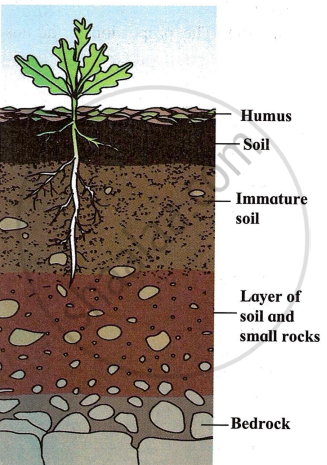
Try this.
Obtain specimens of soil from various places in your surroundings. Try this. such as your own yard, a garden, hills, river banks, fields and rocky ground.
Use your brain power!
What are the constituents of soil? Classify them as biotic and abiotic constituents.
Balbharati solutions for General Science Integrated [English] Standard 6 Maharashtra State Board 1 Natural Resources – Air, Water and Land Exercise [Page 74]
Fill in the blanks.
The layer of ozone gas absorbs ______ rays that come from the sun to the earth.
Of the total water available on the earth, fresh water forms ______ percent.
Both ______ and ______ constituents are present in the soil.
Why is it said that the ozone layer is a protective shell of the earth?
Why is it said that water is life?
Why is it said that seawater is useful even though it is not potable?
What will happen if microbes in the soil get destroyed?
What will happen if the number of vehicles and factories in your surroundings increases?
What will happen if the total supply of potable water is finished?
Match the following.
| Group ‘A’ | Group ‘B’ |
| (1) Carbon dioxide | (a) Generation of soil |
| (2) Oxygen | (b) Rain |
| (3) Water vapour | (c) Plants and food production |
| (4) Microbes | (d) Combustion |
Name the following.
Constituents of the biosphere
Name the following.
Biotic constituents of soil.
Name the following.
Fossil fuel
Name the following.
Inert gases in the air
Name the following.
Gases that are harmful to the ozone layer
True or false?
Land and soil are the same things.
True
False
The water in a lake is called ground water.
True
False
It takes about 1000 years to form a 25 cm thick layer of soil.
True
False
Radon is used in decorative lights.
True
False
Answer in your own words.
Explain with the help of a diagram of how soil is formed.
Answer in your own words.
Why is there a shortage of water even though it occupies about 71% of the earth’s surface?
Answer in your own words.
What are the various constituents of air? Write their uses.
Answer in your own words.
Why are air, water, and land considered to be valuable natural resources?
Obtain detailed information about the work of the India Meteorological Department.
Find a remedy for water scarcity.
Solutions for 1: Natural Resources – Air, Water and Land
Balbharati solutions for General Science Integrated [English] Standard 6 Maharashtra State Board chapter 1 - Natural Resources – Air, Water and Land
Shaalaa.com has the Maharashtra State Board Mathematics General Science Integrated [English] Standard 6 Maharashtra State Board Maharashtra State Board solutions in a manner that help students grasp basic concepts better and faster. The detailed, step-by-step solutions will help you understand the concepts better and clarify any confusion. Balbharati solutions for Mathematics General Science Integrated [English] Standard 6 Maharashtra State Board Maharashtra State Board 1 (Natural Resources – Air, Water and Land) include all questions with answers and detailed explanations. This will clear students' doubts about questions and improve their application skills while preparing for board exams.
Further, we at Shaalaa.com provide such solutions so students can prepare for written exams. Balbharati textbook solutions can be a core help for self-study and provide excellent self-help guidance for students.
Concepts covered in General Science Integrated [English] Standard 6 Maharashtra State Board chapter 1 Natural Resources – Air, Water and Land are Soil Formation, Natural Resources, Atmosphere and Its Layers, Air Around Us, Composition and Components of Air, Importance of Air, Water: Our Lifeline, Availability of Water, Composition of Water, Importance of Water, Scarcity of Water, Land, Air Pollution, The Importance of Conserving Earth’s Natural Resources.
Using Balbharati General Science Integrated [English] Standard 6 Maharashtra State Board solutions Natural Resources – Air, Water and Land exercise by students is an easy way to prepare for the exams, as they involve solutions arranged chapter-wise and also page-wise. The questions involved in Balbharati Solutions are essential questions that can be asked in the final exam. Maximum Maharashtra State Board General Science Integrated [English] Standard 6 Maharashtra State Board students prefer Balbharati Textbook Solutions to score more in exams.
Get the free view of Chapter 1, Natural Resources – Air, Water and Land General Science Integrated [English] Standard 6 Maharashtra State Board additional questions for Mathematics General Science Integrated [English] Standard 6 Maharashtra State Board Maharashtra State Board, and you can use Shaalaa.com to keep it handy for your exam preparation.
