Advertisements
Chapters
1: Natural Resources – Air, Water and Land
▶ 2: The Living World
3: Diversity in Living Things and their Classification
4: Disaster Management
Part 2
5: Substances in the Surroundings—Their States and Properties
6: Substances in Daily Use
7: Nutrition and Diet
8: Our Skeletal System and the Skin
Part 3
9: Motion and Types of Motion
10: Force and Types of Force
11: Work and Energy
12: Simple Machines
Part 4
13: Sound
14: Light and the Formation of Shadows
15: Fun with Magnets
16: The Universe
![Balbharati solutions for General Science Integrated [English] Standard 6 Maharashtra State Board chapter 2 - The Living World - Shaalaa.com](/images/general-science-integrated-english-standard-6-maharashtra-state-board_6:16ccdac16bb449e39ef419deb5dc6b8d.jpg "Balbharati solutions for General Science Integrated [English] Standard 6 Maharashtra State Board chapter 2 - The Living World")
Advertisements
Solutions for Chapter 2: The Living World
Below listed, you can find solutions for Chapter 2 of Maharashtra State Board Balbharati for General Science Integrated [English] Standard 6 Maharashtra State Board.
Balbharati solutions for General Science Integrated [English] Standard 6 Maharashtra State Board 2 The Living World Intext Questions [Pages 75 - 82]
Can you recoil?
List the things seen in the picture. Say whether they are living or non-living things.
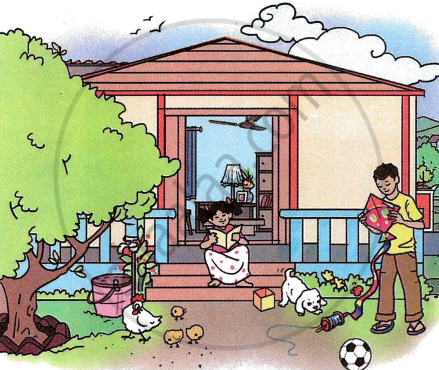
Can you tell?
What differences do we see between the young ones and the adults in the picture?
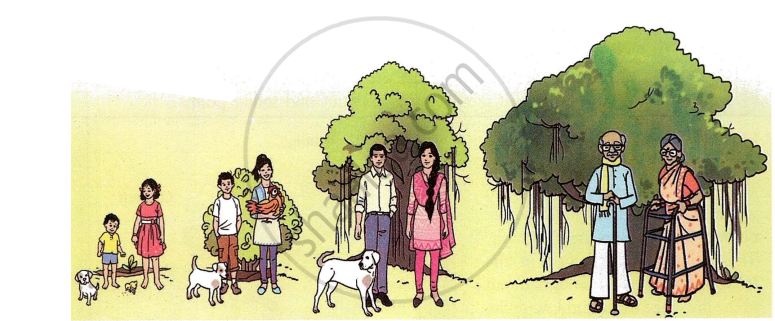
Use your brain power!
What differences do you see in the growth of trees like the mango, banyan and peepal and that of the bamboo, coconut and toddy palms?
Can you recall?
Is all the food we eat used by the body?
What is the unused part of food converted into?
Observe and discuss.
Hold your hand in front of your nose or keep your hand on your chest. What do you feel?
If we observe a sleeping dog, what movement of its belly do we see?
Try this.
Take a transparent plastic bag. Tie it over a leaf of a plant as shown in the picture. Observe it after six to seven hours. What do you see?
Droplets of water collect on the inside of the bag. It means· that, plants excrete water in the form of vapour.

Use your brain power!
What is the sticky substance seen on the stems of the babul (Acacia) or drumstick trees?
Observe and discuss.
Have you experienced this? What happened immediately after the following actions?
- Light flashed suddenly into your eyes.
- Suddenly you felt a pinprick.
- The leaves of the mimosa plant were touched.
- At sunset, lamps on the street or courtyard are lit and insects gather around the lamps.
Use your brain power!
In each of the examples given above, what is the stimulus and what is the response?
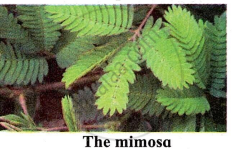 |
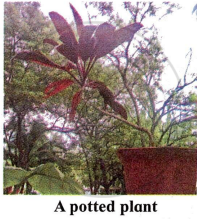 |
What is the main difference between the movements of plants and animals?
Con you tell?
What do we learn from these pictures?
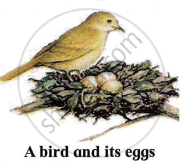 |
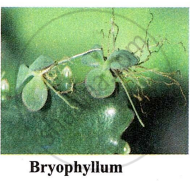 |
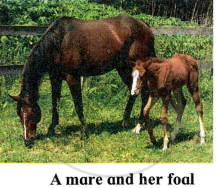 |
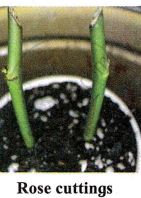 |
Use your brain power!
Why have so many types of plants and animals been able to survive on Earth even today?
Can you tell?
Observe a honeycomb and a wall. What are they made of?
Can you tell?
In what way are plants and animals useful to us?
Find out.
Watch TV channels such as National Geographic, Discovery and collect information regarding various plants and animals found in our surroundings. Have a class discussion with reference to the collected information.
Balbharati solutions for General Science Integrated [English] Standard 6 Maharashtra State Board 2 The Living World Exercise [Page 83]
Write the answer to the following question in your own words.
What are the differences between plants and animals?
Write the answer to the following question in your own words.
What are the similarities between plants and animals?
Write the answer to the following question in your own words.
How is the plant kingdom useful to us?
Write the answer to the following question in your own words.
How is the animal kingdom useful to us?
Write the answer to the following question in your own words.
What makes living things different from non-living things?
What helps them to breathe?
A fish
What helps them to breathe?
A snake
What helps them to breathe?
A crane
What helps them to breathe?
An earthworm
What helps them to breathe?
Man
What helps them to breathe?
A banyan tree
What helps them to breathe?
A caterpillar
Fill in the blanks with the proper words from the brackets.
The process by which plants make their own food is called ______.
oxygen
dies
excretion
carbon dioxide
responsiveness
photosynthesis
stimuli
To inhale ______ and to exhale ______ is called respiration.
oxygen
dies
excretion
carbon dioxide
responsiveness
photosynthesis
stimuli
The elimination of waste substances from the body is called ______.
oxygen
dies
excretion
carbon dioxide
responsiveness
photosynthesis
stimuli
The ability to respond to an event is called ______ to ______.
oxygen
dies
excretion
carbon dioxide
responsiveness
photosynthesis
stimuli
On completing their lifespan, every living thing ______.
oxygen
dies
excretion
carbon dioxide
responsiveness
photosynthesis
stimuli
Write the uses of this animal.
Honeybees
Write the uses of this animal.
Sharks
Write the uses of this animal.
Yaks
Write the uses of this animal.
Sheep
Write the uses of this animal.
Earthworms
Write the uses of this animal.
Dogs
Write the uses of this animal.
Bivalves
Write the uses of this animal.
Horses
Write the uses of this animal.
Mice.
Write the use of the given plant.
Ginger
Write the use of the given plant.
Mango
Write the use of the given plant.
Eucalyptus
Write the use of the given plant.
Babul (acacia)
Write the use of the given plant.
Teak
Write the use of the given plant.
Spinach
Write the use of the given plant.
Aloe vera
Write the use of the given plant.
Turmeric
Write the use of the given plant.
Holy basil
Write the use of the given plant.
Karanja
Write the use of the given plant.
Moh
Write the use of the given plant.
Mulberry
Write the use of the given plant.
Grapevine
What are the peculiarities of the movements of these living things?
Living things: Snakes, tortoises, kangaroos, eagles, chameleons, frogs, gulmohur, sweet potato creeper, dolphins, ants, rattlesnakes, grasshoppers, earthworms.
Write in detail about how the plants and animals found in your surroundings prove useful or harmful.
Activity
Obtain information about the work of the Botanical Survey of India and the Zoological Survey of India by visiting the websites:
WWW.bsi.gov.in www.zsi.gov.in
Collect information about the lifespan of various animals, make a chart and display it in your class.
Gather information about the poisonous snakes found in India and present it in a Science Exhibition.
Solutions for 2: The Living World
Balbharati solutions for General Science Integrated [English] Standard 6 Maharashtra State Board chapter 2 - The Living World
Shaalaa.com has the Maharashtra State Board Mathematics General Science Integrated [English] Standard 6 Maharashtra State Board Maharashtra State Board solutions in a manner that help students grasp basic concepts better and faster. The detailed, step-by-step solutions will help you understand the concepts better and clarify any confusion. Balbharati solutions for Mathematics General Science Integrated [English] Standard 6 Maharashtra State Board Maharashtra State Board 2 (The Living World) include all questions with answers and detailed explanations. This will clear students' doubts about questions and improve their application skills while preparing for board exams.
Further, we at Shaalaa.com provide such solutions so students can prepare for written exams. Balbharati textbook solutions can be a core help for self-study and provide excellent self-help guidance for students.
Concepts covered in General Science Integrated [English] Standard 6 Maharashtra State Board chapter 2 The Living World are Harmful Living Things, Characteristics of Organisms, Useful living things, Wild Animals, Growth, Excretion, Responsiveness to stimuli and movement, A definite lifespan, A cellular structure, Reproduction.
Using Balbharati General Science Integrated [English] Standard 6 Maharashtra State Board solutions The Living World exercise by students is an easy way to prepare for the exams, as they involve solutions arranged chapter-wise and also page-wise. The questions involved in Balbharati Solutions are essential questions that can be asked in the final exam. Maximum Maharashtra State Board General Science Integrated [English] Standard 6 Maharashtra State Board students prefer Balbharati Textbook Solutions to score more in exams.
Get the free view of Chapter 2, The Living World General Science Integrated [English] Standard 6 Maharashtra State Board additional questions for Mathematics General Science Integrated [English] Standard 6 Maharashtra State Board Maharashtra State Board, and you can use Shaalaa.com to keep it handy for your exam preparation.
