Please select a subject first
Advertisements
Advertisements
Write the structures and IUPAC names of the :Adipic acid compound
Concept: undefined >> undefined
Write the structures and IUPAC names of the α - methyl butyraldehyde.
Concept: undefined >> undefined
Advertisements
Define lanthanoid contraction.
Concept: undefined >> undefined
0.1 mole of Buckminster fullerene contains how many kg of carbon? [Atomic mass of carbon = 12]
Concept: undefined >> undefined
Define Hydrometallurgy?
Concept: undefined >> undefined
What is the position of iron (Z = 26) in periodic table?
Concept: undefined >> undefined
What is the position of iron (Z = 26) in periodic table?
Concept: undefined >> undefined
What is the process in which concentrated ore is reduced to the corresponding metal by heating at high temperature with a reducing agent?
(a) Polling
(b) Pyrometallurgy
(c) Hydrometallurgy
(d) Calcination
Concept: undefined >> undefined
Describe anomalous behaviour of oxygen as compared with other elements of group 16 with reference to -
(a) Magnetic property
(b) Oxidation state
(c) Hydrides
Concept: undefined >> undefined
Vitamin ‘C’ belongs to the class of—
(a) Vitamins of aliphatic series
(b) Vitamins of aromatic series
(c) Vitamins of alicyclic series
(d) Vitamins of heterocyclic series
Concept: undefined >> undefined
Which among the following molecular formulae represents urotropine?
(a) C6H12N4
(b) C6H24H4
(c) C6H12N4O2
(d) C6H24N4O2
Concept: undefined >> undefined
What are chemical twins? Write ‘two’ examples.
Concept: undefined >> undefined
A reaction is second order in A and first order in B.
(i) Write the differential rate equation.
(ii) How is the rate affected on increasing the concentration of A three times?
(iii) How is the rate affected when the concentrations of both A and B are doubled?
Concept: undefined >> undefined
Distinguish between crystalline solid and amorphous solid.
Concept: undefined >> undefined
What is pseudo first order reaction? Give one· example of it.
Concept: undefined >> undefined
which of the following carbocations is least stable?
(A) 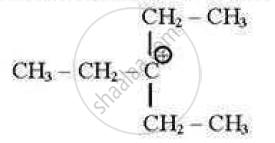
(B)
(C)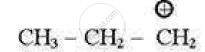
(D)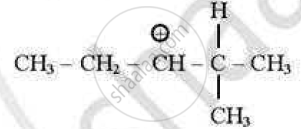
Concept: undefined >> undefined
Compound having general formula  is called
(A) diester
(B) acid anhydride
(C) hemiacetal
(D) acetal
Concept: undefined >> undefined
Write molecularity of the following reaction:
2NO(g)+O2(g)→2NO2(g)
Concept: undefined >> undefined
Describe anomalous behaviour of fluorine with the other elements of group 17 wilh reference to :
(a) Hydrogen bonding
(b) Oxidation state
(c) Polyhalide ions
Concept: undefined >> undefined
