Advertisements
Advertisements
Arrange the following compounds in increasing order of rate of reaction towards nucleophilic substitution.
| (a) |  |
| (b) | 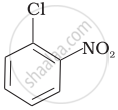 |
| (c) |  |
Concept: undefined >> undefined
Arrange the following compounds in increasing order of rate of reaction towards nucleophilic substitution.
| (a) |  |
| (b) |  |
| (c) |  |
Concept: undefined >> undefined
Advertisements
Arrange the following compounds in increasing order of rate of reaction towards nucleophilic substitution.
| (a) |  |
| (b) |  |
| (c) |  |
Concept: undefined >> undefined
Arrange the following compounds in increasing order of rate of reaction towards nucleophilic substitution.
| (a) | 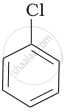 |
| (b) | 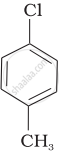 |
| (c) |  |
Concept: undefined >> undefined
Haloarenes are less reactive than haloalkanes and haloalkenes. Explain.
Concept: undefined >> undefined
Allyl chloride is hydrolysed more readily than n-propyl chloride. Why?
Concept: undefined >> undefined
Give reasons for the following observation:
Primary amine on treatment with benzenesulphonyl chloride forms a product which is soluble in NaOH however secondary amine gives product which is insoluble in NaOH.
Concept: undefined >> undefined
What is the quantity of electricity in Coulombs required to produce 4.8 g of Mg from molten MgCl2? How much Ca will be produced if the same amount of electricity was passed through molten CaCl2? (Atomic mass of Mg = 24 u, atomic mass of Ca = 40 u).
Concept: undefined >> undefined
A primary amine 'A' C2H7N reacts with alkyl halide (C2H5l) to give secondary amine 'B'. 'B' reacts with C6H5SO2Cl to give a solid 'C' which is insoluble in alkali. Identify 'A', 'B', 'C' and write all the chemical reaction involved.
Concept: undefined >> undefined
Assertion (A): The enthalpy of mixing Δmix H is equal to zero for an ideal solution.
Reason (R): For an ideal solution the interaction between solute and solvent molecules is stronger than the interactions between solute-solute or solvent-solvent molecules.
Concept: undefined >> undefined
Assertion: Chlorobenzene is resistant to nucleophilic substitution reaction at room temperature.
Reason (R): C–Cl bond gets weaker due, to resonance.
Concept: undefined >> undefined
1 mole of liquid A and 2 moles of liquid B make a solution having a total vapour pressure of 40 torr. The vapour pressure of pure A and pure B are 45 torr and 30 torr, respectively. The above solution ______.
Concept: undefined >> undefined
Explain [Fe(CN)6]3− is an inner orbital complex, whereas [FeF6]3− is an outer orbital complex.
[Atomic number: Fe = 26]
Concept: undefined >> undefined
Why haloarenes are not reactive towards nucleophilic substitution reaction? Give two reactions.
Concept: undefined >> undefined
What type of deviation from Roult’s Law is expected when phenol and aniline are mixed with each other? What change in the net volume of the mixture is expected? Graphically represent the deviation.
Concept: undefined >> undefined
Assertion (A): During electrolysis of aqueous copper sulphate solution using copper electrodes hydrogen gas is released at the cathode.
Reason (R): The electrode potential of Cu2+/Cu is greater than that of H+/H2.
Select the most appropriate answer from the options given below:
Concept: undefined >> undefined
What is the basicity of \[\ce{H3PO4}\]?
Concept: undefined >> undefined
Suggest the most important type of intermolecular attractive interaction in the following pair.
n-hexane and n-octane
Concept: undefined >> undefined
Suggest the most important type of intermolecular attractive interaction in the following pair:
I2 and CCl4
Concept: undefined >> undefined
