Advertisements
Advertisements
Question
Write short note:
Five Kingdom system
Advertisements
Solution
The Five Kingdom System, proposed by Robert Whittaker (1969), classifies all living organisms into five kingdoms based on their cell type, body organization, mode of nutrition, and reproduction. The five kingdoms are:
- Monera: Unicellular, prokaryotic organisms (e.g., bacteria). No true nucleus or membrane-bound organelles. It is an asexual (binary fission) reproduction.
- Protista: Mostly unicellular, eukaryotic organisms (e.g., amoeba, algae). Show traits of both plants and animals.
- Fungi: Multicellular or unicellular, heterotrophic (e.g., yeast, mushrooms). Cell walls contain chitin, and they decompose organic matter.
- Plantae: Multicellular, autotrophic (e.g., trees, grass). Perform photosynthesis and have cell walls made of cellulose.
- Animalia: Multicellular, heterotrophic, eukaryotic organisms without cell walls. (e.g., insects, mammals). Reproduce sexually and have complex organ systems.
This system helps in understanding the diversity and evolution of life.
APPEARS IN
RELATED QUESTIONS
Choose the correct option:
Causative agent of red tide is ______.
Choose the correct option:
Select odd one out for Heterotrophic bacteria.
Choose the correct option:
Paramoecium : Ciliated Protist Plasmodium : ____________
Answer the following:
What will be the shape of bacillus and coccus type of bacteria?
Answer the following:
Why is binomial nomenclature important?
Write short notes:
Useful and harmful bacteria
Write short notes:
Useful Fungi
Complete tree diagram in detail:

Identify the following diagram, label it and write detail information in your words:
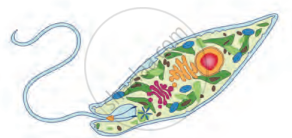
Identify the following diagram, label it and write detail information in your words:

Identify the following diagram, label it and write detail information in your words:

Identify the following diagram, label it and write detail information in your words:
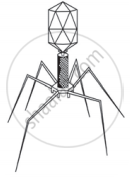
Identify the following diagram, label it and write detail information in your words:

The scientific name of the sunflower is given below. Identify the correctly written name.
Match the following:
| Kingdom | Example |
| i. Monera | a. Riccia |
| ii. Protista | b. Cyanobacteria |
| iii. Plantae | c. Rhizopus |
| iv. Fungi | d. Diatoms |
Match List I with List II -
| List-I | List-II |
| A. Rhizopus | I. Mushroom |
| В. Ustilago | II. Smut fungus |
| C. Puccinia | IIΙ. Bread mould |
| D. Agaricus | IV. Rust fungus |
