Advertisements
Advertisements
Question
Write a note on Down’s syndrome.
Advertisements
Solution
Down syndrome:
- Individuals suffering from Down syndrome will have 47 chromosomes instead of the normal number 46.
- 21st Trisomy occurs due to non-disjunction or failure of separation of chromosomes (autosomes) during gamete formation.
- Following are the symptoms of Down syndrome:
- Mild or moderate mental retardation and poor skeletal development.
- Distinct facial features like small head, ears, and mouth.
- The face is typically flat and rounded with a flat nose, open mouth, and protruding tongue.
- Eyes slant up and out with internal epicanthal folds.
- Flat hands and stubby fingers, the palm is broad with a single palmer crease.
APPEARS IN
RELATED QUESTIONS
If only one 'X' chromosome is found in a female person, which of the following symptoms she will show?
- epicanthal skin fold
- webbing of neck
- small testis and absence of spermatogenesis
- presence of simian crease on the palm
Which of the following traits is never observed in a human female?
Thalassemia and sickle cell anaemia are caused due to a problem in globin molecule synthesis. Identify the correct statement from the following.
Where are the genes for cytoplasmic male sterility in plants located?
Select the incorrect statement regarding pedigree analysis.
Trisomy is represented by ______.
It is said, that the harmful alleles get eliminated from population over a period of time, yet sickle cell anaemia is persisting in human population. Why?
What is the genotype of Turner's Syndrome?
Jacob is genetically a carrier of the disorder that affects the shape of the RBCs, as shown in the diagram below. His son James suffers from the same disorder.
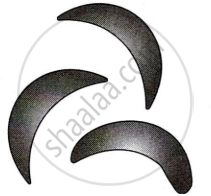
- Give the biochemical reason for the disorder that changes the shape of the RBCs, as shown above.
- Draw a Punnett square to show the genotype of the mother of James.
- Name and define the type of 'point mutation' responsible for this disorder.
What is the primary cause of chromosomal disorders?
