Advertisements
Advertisements
Question
What is ‘syndrome’?
Advertisements
Solution
Appearance of different types of symptoms is called syndrome
APPEARS IN
RELATED QUESTIONS
Give the genotype of Turner’s syndrome.
Why are thalassemia and haemophilia categorized as Mendelian disorders? Write the symptoms of these diseases. Explain their pattern of inheritance in humans.
A couple with normal vision bear a colour blind child. Work out a cross to show how it is possible and mention the sex of the affected child.
Identify I and II in the given diagram of chromosome.
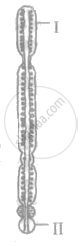
Identify the disease caused by an autosomal primary non-disjunction.
Thalassemia and sickle cell anemia are caused due to a problem in globin molecule synthesis. Select the correct statement.
A disease caused by an autosomal primary non-disjunction is ______.
Sickel-cell anaemia is an example of ______.
Which of the following is called as Royal disease?
At what level does the defect occur in Mendelian disorders?
