Advertisements
Advertisements
Question
Write a brief note on the causes of infertility.
Advertisements
Solution
- Poor sperm production: Sperm production takes place in the testes starting from puberty and can continue into a man's 60s or beyond. When sperm production is poor or the number of sperm cells is low (a condition called oligospermia), it may be caused by damage to the sperm-producing cells. This can result in a reduced sperm count in the semen, sperm that do not have the necessary motility to reach the egg, or sperm that are malformed or nonviable. Infections can cause blockages in the tubes connecting the testes to the seminal vesicles, or sperm may get infected within the vesicles. Additionally, the prostate may produce insufficient fluid or fluid that cannot maintain sperm viability. The complete absence of sperm production is known as azoospermia. Reduced sperm movement is called asthenozoospermia, while abnormalities in sperm structure are termed teratozoospermia. Other factors contributing to male infertility include undescended testes (cryptorchidism), elevated scrotal temperature due to tight clothing (hyperthermia), blockages in the vas deferens, alcohol abuse, mumps infection after puberty, hormonal deficiencies (gonadotropins), problems with ejaculation, and exposure to radiation.
- Poor egg production: The egg cells needed for egg production are found in a woman’s ovaries. These eggs develop from the cells when stimulated by gonadotrophin hormones released by the pituitary gland. Typically, this process leads to the formation of one, sometimes two, mature eggs midway through each menstrual cycle. Once mature, the egg is released from the ovary’s surface. Structures called fimbriae at the end of the fallopian tube then surround the ovary and capture the released egg to guide it into the tube.
- Blockage between the sperm and the egg: Even if some sperm manage to travel from the vagina into the cervix, they may face blockages that prevent them from reaching the egg. The mucus produced by glands in the cervix and uterus can be extremely thick and sticky, making it impossible for sperm to pass through. More often, sperm that reach the fallopian tubes might be halted by a blockage within the tube itself, typically caused by previous inflammation or infection. In rarer cases, sperm may reach the egg in the tube, but damage to the tube's lining can impede the movement of the fertilized egg towards the uterus. This highlights potential obstacles for sperm along the reproductive tract: thick cervical mucus, blocked fallopian tubes from past infections, or impaired tubal function affecting embryo transport.
- Hostile response to sperm: A woman, after being exposed to and absorbing sperm from a man, may develop antibodies against those sperm in her bloodstream. These antibodies then react against sperm from the same man during later encounters. Additionally, the man himself can sometimes produce antibodies directed against his own sperm. This immune reaction can contribute to infertility issues by creating a hostile environment for the sperm either within the woman or in the man himself.
APPEARS IN
RELATED QUESTIONS
An infertile couple is advised to adopt test-tube baby programme. Describe two principle procedures adopted for such technologies.
State True/False with explanation.
Infertility is defined as the inability to produce a viable offspring and is always due to abnormalities/defects in the female partner.
Correct the following statement:
In E. T. techniques, embryos are always transferred into the uterus.
Multiple choice question.
Test tube baby technique is called _______.
Identify the IUD in the given diagram.
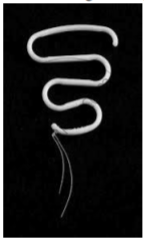
Which Artificial Reproductive Technique can help a lady conceive a child if both her fallopian tubes are blocked?
The highly sophisticated procedure of directly injecting a sperm into an egg is called ______.
Which of these can be used to cure infertility in couples where male partner has very low sperm count?
Read the given below statements carefully and state whether the following are true (T) or false (F).
- I - MOET is one of the methods of IVF.
- II - ICSI is a method useful only for males who are unable to inseminate.
- III - MTP is considered safe during the first 1 week of pregnancy.
- IV - LNG-20, multi-load 375 are hormone-releasing IUDs.
- V - Steroids inhibit ovulation and implantation.
Choose the correct option regarding the above-given statements.
What does Pelvic Inflammatory Disease (PID) primarily affect in female infertility?
