Advertisements
Advertisements
Question
Why does the author prefer the cylindrical cup to a flat cup?
Advertisements
Solution
Cylindrical cups (i.e.) breakfast cup holds more tea. But in the shallow and flat cup, the tea turns half cold before one starts drinking it.
APPEARS IN
RELATED QUESTIONS
Were the boys saving money to go to the States? How do you know?
You would have seen lovely packets of tea on the shelves in supermarkets and shops. Have you ever wondered how tea powder is obtained from the plants? Look at the pictures and describe the process.
What seems ‘curious’ to the author?
Why does the author say that it is important to include a tea recipe in cookery books?
Mention the countries in which tea is a part of civilization.
What should be poured into the cup first–tea or milk?
Whom does the author call ‘misguided people’? What is his advice to them?
What are the author’s views on China tea?
Elucidate the author’s ideas about teapots.
Based on your understanding of the text, complete the chart given below by choosing the appropriate words or phrases given in brackets.
Golden Rules of Tea Preparation
(add sugar, shaken, milk, infused properly, strainers, without cream, taken to the kettle, small quantities, China or earthenware, stirred, warmed)
| Tea should be made in ______in a teapot. |
↓
| The teapot should be made of ______ |
↓
| The pot should be ______beforehand. |
↓
| The pot should not have ______ |
↓
| While pouring water the teapot should be ______ |
↓
| The tea leaves should be ______ |
↓
| After making tea, it should be ______or the pot should be ______ |
↓
| The milk for the tea should be ______ |
↓
| The author does not like to ______to tea. |
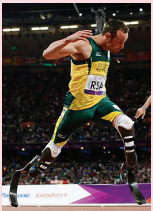
There are several physically-challenged people who have lived successful and meaningful lives. Here are a few personalities who have fought great odds and lived a life of blazing achievements. Let’s share what we know about each of them and complete the table below.
| Name of the personality | Nature of challenge | Field of achievement |
| e.g. Beethoven | Hearing impairment | Music |
| Demosthenes | ||
| Helen Keller | ||
| Mariyappan Thangavelu | ||
| Mozart | ||
| John Milton | ||
| Sudha Chandran |
How was the unattended trolley put to use?
What happened when the doctor couple were crossing the street?
What injuries did they sustain in the accident?
Tick the qualities that are required to achieve such a feat.
| passion | reward | determination | physical |
| fame | faith | courage | money |
| drive | vengeance | inspiration | self-satisfaction |
| vision | undying spirit | inner-urge | perseverance |
How did the mountaineers belay?
What did Edmund Hillary do to escape the large overhanging ice cornices?
What did Tenzing and Edmund Hillary gift to the Gods of lofty Summit? How did they do it?
What was offered to Maamanaar by their mother?
What happened to the visitor when he sat on the stool?
From the pictures given below, identity the actions that may cause inconvenience and discomfort to others. Discuss.

How would a reasonable person react when his actions affect other person’s liberty?
According to the author, what are we more conscious of?
What is the foundation of social conduct?
How can we sweeten our life’s journey?
What is ‘liberty’ according to the old lady?
Why is there a danger of the world getting ‘liberty drunk’?
Para 15
For a few moments, I lay regaining
my breath, and for the first time really
felt the fierce determination that nothing
now could stop us from reaching the top. I took
a firm stance on the ledge and signaled
to Tenzing to come on up. As I heaved
hard on the rope, Tenzing wriggled his
way up the crack, and finally collapsed at
the top like a giant fish when it has just
been hauled from the sea after a terrible
struggle.
Para 16
The ridge continued as before:
giant cornices on the right; steep rock
sloped on the left. The ridge curved away
to the right and we have no idea where the
top was. As I cut around the back of one
hump, another higher one would swing
into view. Time was passing and the ridge
seemed never-ending.
Para 17
Our original zest had now quite
gone, and it was turning more into a grim
struggle. I then realized that the ridge
ahead, instead of rising, now dropped
sharply away. I looked upwards to see a
narrow snow ridge running up to a snowy
summit. A few more whacks of the ice-ax
in the firm snow and we stood on top.
The ridge had taken us two and half hours, but it seemed like lifetime. Why? (Para 15 to 17)
‘There is no height, no depth that the spirit of man, guided by higher Spirit cannot attain’. Discuss the above statement in the context of the achievement of Edmund Hillary and Tenzing.
How responsible and capable are you at home?
