Advertisements
Advertisements
Question
What happens to the energy liberated during respiration?
Advertisements
Solution
The energy liberated during respiration is utilised for carrying out various life processes.
Some of the energy liberated during the breakdown of 03 the glucose molecule, is in the form of heat, but a large part of it is converted into chemical energy called Adenosine Triphosphate (ATP). Any activity inside the cell is carried out by the energy released by these ATP molecules.
RELATED QUESTIONS
Differentiate between Respiration and Combustion.
Glycolysis is a process ___________.
Do the plants respire all day and all night or only at night?
Name the following:
Energy currency of cell.
Why is it usually difficult to demonstrate respiration in green plants?
Fill in the blank :
_________ are the openings found on older stems.
Fill in the blank :
Glycolysis occurs in the _______of the cells.
Fill in the blank:
_____________ is a respiratory substrate
The following diagram refers to an apparatus which is used to demonstrate a physiological process:
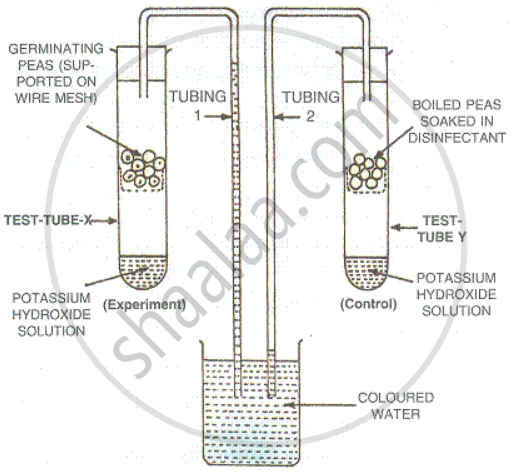
What is the purpose of keeping boiled peas soaked in a disinfectant in test tube Y?
The following diagram refers to an apparatus which is used to demonstrate a physiological process:
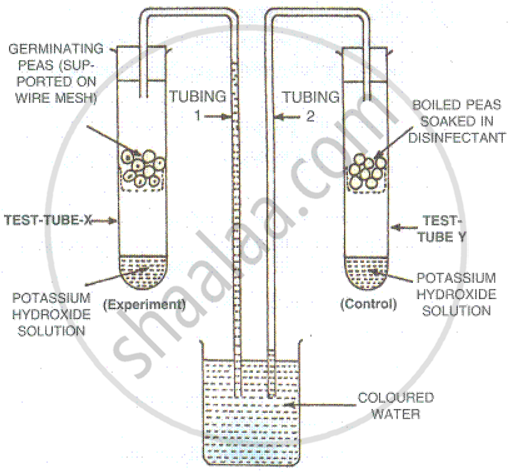
Define the biological process shown in the experiment.
What do you understand by respiration?
Complete the following statement by choosing the correct alternative out of those given below.
Every living cell of the plant
Observe the figure carefully and answer the following questions.
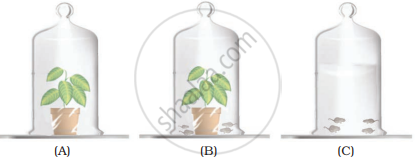
- In which jar, will the amount of CO2 be the highest and why?
- In which jar, will the amount of CO2 be the lowest and why?
A food stall owner was preparing dough for making bhaturas. He added a pinch of yeast and sugar to the dough and left it in a warm place. After few hours, the dough had risen. There was a sour smell too.
Why did the dough smell sour?
Explain the term “Energy Currency”. Which substance acts as energy currency in plants and animals?
When a substrate is being metabolized, why does not all the energy that released in one step. It is released in multiple steps.What is the advantage of step-wise release?
It is known that red muscle fibres in animals can work for longer periods of time continuously. How is this possible?
RuBP carboxylase, PEP carboxylase, Pyruvate dehydrogenase, ATPase, cytochrome oxidase, Hexokinase, Lactate dehydrogenase.
Select/choose enzymes from the list above which are involved in
- Photosynthesis
- Respiration
- Both in photosynthesis and respiration
