Advertisements
Advertisements
Question
To ensure a steady supply of water throughout the year, the Mesopotamian built an ______ and highly developed irrigation system. They also built _______ to control floods.
Advertisements
Solution
To ensure a steady supply of water throughout the year, the Mesopotamian built an elaborate and highly developed irrigation system. They also built dykes to control floods.
APPEARS IN
RELATED QUESTIONS
Give reasons why we say that the people of the Indus Valley Civilisation Had an idea of metallurgy
Explanation of keyword:
Public building
Explanation of keyword:
Mother Goddess
Describe the dress
Write a short note on the following:
Trade
Text Book Keyword
Cuneiform
Text Book Keyword
Ptolemy
Match the Following
| Column A | Column B |
| 1. Ziggurats | (a) one of the seven wonders of the ancient world |
| 2. Hanging Gardens of Babylon | (b) temple-tower |
| 3. Cuneiform | (c) sharp reed pen |
| 4. Stylus | (d) code of law |
| 5. Hammurabi | (e) Mesopotamian script |
How do we know that the Mesopotamians had trade links with the people of the Indus Valley?
State whether the following is true or false.
The Mesopotamians used the figure of 50 for measuring time.
Choose the correct answer:
Ptolemy/Herodotus/Alexander called Egypt the ‘Gift of the Nile’.
Answer the following question in one or two words/sentences:
Which Egyptian monument is one of the Seven Wonders of the Ancient World?
Answer the following question briefly:
Describe briefly the social structure of ancient Egypt.
The figure on the right is of gods and goddesses.
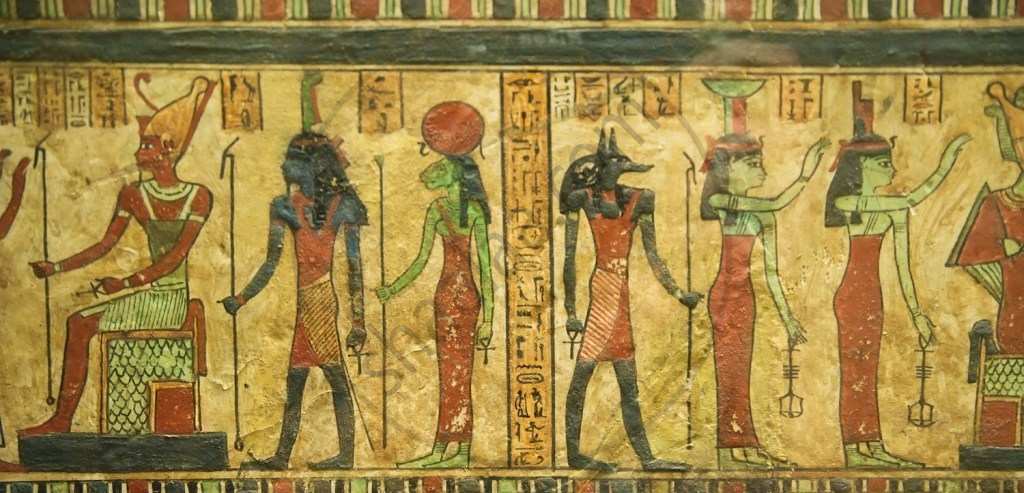
How do we know that they believed in life after death?
State whether the following is true or false.
Invasion by foreign tribes like the Aryans might have led to the collapse of the Indus Valley civilization.
Describe ornaments of the Indus Valley people.
Name some major sites of the Indus Valley civilization?
Briefly discuss the characteristic of the Chinese civilization with reference to society
Describe the religious beliefs of people in ancient Chinese civilization.
